It Started With a Party Balloon Now Georgia Is Burning.
April 25, 2026 · Capital Bridge Staff
120+homes destroyed
31,000+ acres burned (Pineland fire)
91 Georgia counties under emergency
10% contained as of Friday
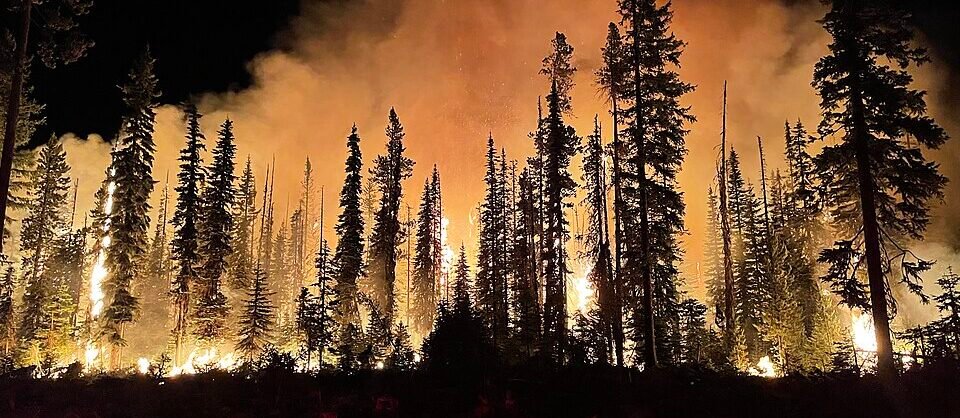
Nobody is quite sure how to process the idea that one of the most destructive wildfires in Georgia’s history may have been started by a child’s party balloon. But that’s what Governor Brian Kemp told reporters on Friday — that a stray balloon drifted into a powerline in Brantley County, caused an arc, and set off a chain of events that has now consumed thousands of acres and left more than 120 families with nothing to go home to.
The second major fire, burning across Clinch and Echols counties near the Florida state line, is believed to have been sparked by someone welding a gate. Two separate accidents. Two catastrophes running simultaneously. And right now, the state of Georgia is fighting both of them with an entire country watching.
“There’s no way to stop this fire,” Gov. Kemp said Friday. “They’re having to contain the flanks and the back of it and then, hopefully, we get a change in the weather.”
The Pineland Road Fire in Clinch County — the larger of the two — has scorched more than 31,000 acres and is just 10% contained. The Highway 82 Fire in Brantley County, which has destroyed more homes in a single fire than anything Georgia has ever seen, was 15% contained as of Friday afternoon. Together, Gov. Kemp confirmed, they currently rank as the No. 1 and No. 2 most dangerous active wildfires in the entire United States.
To understand why these fires are so difficult to fight, you have to go back to September 2024. When Hurricane Helene tore through the Southeast, it felled millions of trees across the region. That fallen timber never fully cleared. It’s been sitting in the undergrowth ever since — dry, decomposing, and waiting. The Georgia Forestry Commission has confirmed this debris is acting like tinder, accelerating fire spread through wooded areas in ways that would be dangerous even under normal conditions. Conditions right now are far from normal. The entire Southeast is under at least a moderate drought, and nearly half the region is classified as extreme drought or worse. There has been no significant rain.
WHERE THE FIRES ARE SPREADING
Pineland Road Fire — Clinch & Echols Counties, GA
31,000+ acres · 10% contained · sparked by gate welding
Highway 82 Fire — Brantley County, GA
7,500+ acres · 15% contained · 87+ homes destroyed · sparked by party balloon on powerline
Northern Florida — including near the Everglades
6,500+ acres burned · 120+ active wildfires statewide
The fires have already crossed into Florida, with over 6,500 acres burned near the Everglades and more than 120 active fires burning across the state’s northern half as of Friday. It’s a picture that extends well beyond the Southeast — fire weather alerts are currently in effect across 10 states, stretching from Arizona and Texas all the way north to South Dakota and Minnesota.
Back in Brantley County, the human cost is still being counted. Around 200 residents have been ordered to evacuate, and many are sitting in shelters uncertain whether they have homes to return to. Local churches are feeding evacuees. Firefighters are literally hosing down houses in the path of the fire, trying to buy time against something that, for now, can’t be fully stopped. The county sheriff’s donation drop-off has already hit capacity.
The frustrating truth is that there’s no fast fix here. Forecasters say the region has a 20-to-40 percent chance of showers this weekend — which sounds hopeful until you hear what fire officials actually need. Georgia Forestry Commission spokesperson Seth Hawkins put it plainly: “We’re going to need several inches of rain, and then maybe another blast of several inches, to extinguish this thing.” Weekend showers won’t do it. And lightning from those same storms could spark new fires entirely.
Scientists have been warning for years that the Eastern U.S. faces growing wildfire risk — not because of any single factor, but because drought, climate shifts, and storm damage have combined to create conditions the region simply wasn’t built to handle. Georgia is living that warning right now. The question is whether what’s burning through Brantley County is a one-time disaster or a preview of what late-spring looks like from here on out.
For the families who lost their homes this week, that question can wait. Right now, they just need rain.