
Iran is running out of time — and Washington knows it
NATIONAL SECURITY Analysis · 4 min read
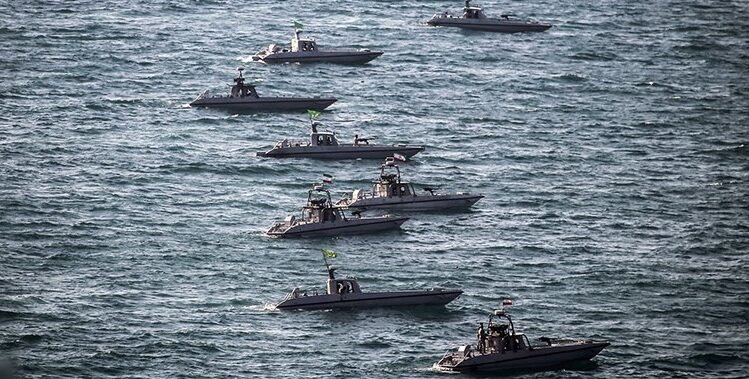
A retired Navy commander says the real power in Tehran isn’t the Ayatollah anymore. The military has taken over — and that may actually make them a cleaner target.
For years, Western analysts treated Iran’s Supreme Leader as the center of gravity — the man you had to get to the table to get anything done. But retired Navy Commander Kirk Lippold thinks that framing is dangerously out of date, and he made that case bluntly in a recent television interview that’s drawing attention in defense circles.
“The Ayatollah doesn’t matter anymore,” Lippold said flatly. His argument: the Islamic Revolutionary Guard Corps has quietly absorbed control of Iran’s government, military, and economy. What was once a theocracy, he said, has become something closer to a military junta — what he called a “thug-ocracy.”
That distinction matters more than it might seem. If the IRGC is actually running the show, then it’s also the primary target — both diplomatically and, if negotiations collapse, militarily. Lippold suggested that U.S. military planners have already updated their targeting accordingly, and that the President has been briefed on a refined set of strike options designed to hit the IRGC where it actually holds power.
“They are now the target. I’m sure that Admiral Cooper laid out a very distinct set of target options available for the President.”
— Kirk Lippold, Retired U.S. Navy Commander
Lippold was notably unworried about the Congressional clock ticking in the background. The 60-day War Powers timeline, he argued, is less binding than critics claim — the President’s constitutional authority over national security, in his view, gives the executive branch meaningful room to act. Whether that’s a reassuring legal argument or a convenient one probably depends on where you sit politically.
On the question of what should come next, Lippold laid out a fairly hawkish wish list: Iran’s nuclear program eliminated entirely, its ballistic missile capability dismantled, proxy militia networks shut down, and the Strait of Hormuz kept open for international shipping. He stopped short of calling for a ground invasion — “just air strikes,” he said — but framed the current moment as an opportunity to settle multiple outstanding disputes in one strategic push.
One of his more pointed recommendations was geopolitical rather than military: pull Pakistan out of any mediator role entirely. Lippold was direct about his distrust of Islamabad, citing its historical ties to the Taliban and arguing that Pakistan has “never been a good ally.” His preferred alternative: hand the brokerage role to the UAE, which he called “an incredible ally” and sees as an emerging power center in the region worth cultivating.
The broader strategic picture Lippold sketched isn’t just about Iran. He connected it to developments in Venezuela, the UAE’s recent exit from OPEC, and semiconductor chip deals in the Middle East — suggesting the administration is playing a longer game across multiple theaters simultaneously. Whether that reads as reassuring grand strategy or geopolitical overreach probably comes down to your confidence in the current foreign policy team.
What’s clear is that the military calculus around Iran is shifting. Whether that leads back to the negotiating table — or somewhere much more consequential — is a question neither Washington nor Tehran has fully answered yet.
One thought on “Iran is running out of time — and Washington knows it”
Leave a Reply




Who is profiting from the turbulence in the oil market?