
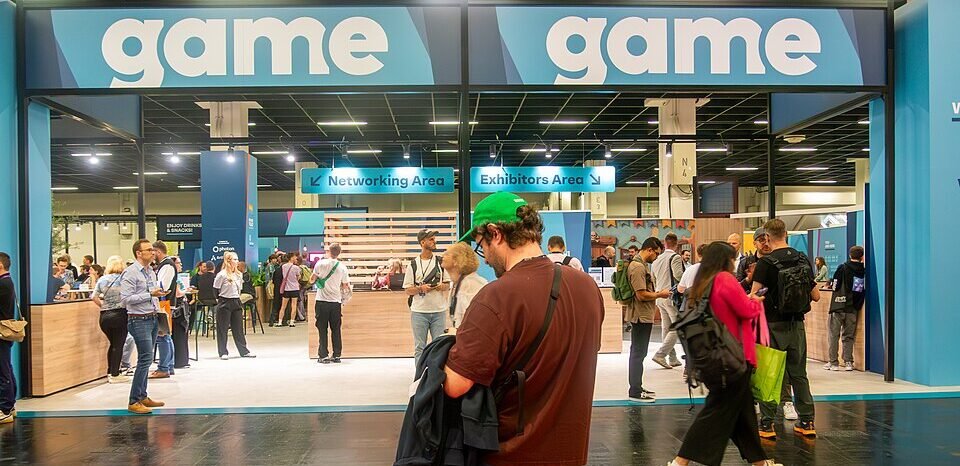
Gamescom 2026 Shows the Power of Competition, Innovation and Free Enterprise
COLOGNE, Germany — A $200 Billion Industry Built on Choice
Gamescom 2026 is putting the enormous scale of the video game business on full display in Cologne this week, with major publishers, technology companies and independent developers gathering for one of the world’s biggest gaming events.
The show runs through August 30 and has arrived at a moment when the global games business is generating more than $200 billion in annual revenue, according to Germany’s Games Industry Association.
For conservatives and supporters of free-market economics, there is an obvious lesson in that success: consumers ultimately decide what survives.
Unlike industries where audiences have limited choices, gaming gives customers thousands of competing products, platforms and experiences. Developers can build something new, put it in front of the public and allow players to determine whether it succeeds.
That competitive environment is one reason the Gamescom 2026 gaming industry boom deserves attention far beyond the convention floor.
A Global Industry Still Growing
Gamescom organizers say this year’s event features more than 1,600 exhibitors from 67 countries, with approximately 233,000 square meters of exhibition space. The exhibition area is fully booked for the first time, while demand for tickets has also been exceptionally strong.
Those figures demonstrate how far gaming has moved beyond its old image as a niche entertainment business.
Today, games represent a major global economic ecosystem involving software developers, hardware manufacturers, artists, programmers, writers, musicians, streamers, esports professionals and thousands of smaller businesses.
The industry’s reach is particularly striking in Germany. Gamescom reports that games, hardware and online gaming services generated 4.2 billion euros in Germany during the first half of 2026.
That is not simply an entertainment story. It is a technology and jobs story.
The Independent Developer Still Has a Seat at the Table
Perhaps the most interesting part of Gamescom is the contrast between enormous companies and tiny development teams.
A global publisher can spend years and millions of dollars producing a major release. At the same time, a small independent studio can create a completely different experience and compete for the same player’s attention.
Gamescom itself is expanding its indie presence in 2026, reflecting the growing importance of smaller creators.
That is where the free-market argument becomes particularly compelling.
A talented programmer does not necessarily need a giant corporation behind him or her to reach an audience. Digital distribution has dramatically reduced some of the traditional barriers between creators and consumers.
The result is an ecosystem where creativity can come from almost anywhere.
For people who favor the economic philosophy associated with the America First and MAGA movements—greater emphasis on entrepreneurship, private enterprise and domestic technological strength—the gaming industry provides an interesting example of what competition can produce.
The broader political debate is complicated, but the underlying economic reality is straightforward: consumers have enormous power when they have meaningful choices.
Gamescom’s Global Reach Is Impossible to Ignore
Gamescom is also a reminder that gaming is no longer dominated by one country or one culture.
Companies from Europe, North America and Asia compete alongside independent creators from around the world. Country pavilions representing dozens of nations are part of the 2026 event.
That international competition can be viewed as a strength rather than a weakness.
American companies remain major players, while Japanese, European, Korean and other developers continue introducing new ideas and franchises to global audiences.
Competition between these markets pushes developers to innovate.
And consumers benefit when companies have to earn their loyalty rather than assume it.
Big Franchises Still Drive Excitement
Major releases remain an important part of the Gamescom experience.
One of the headline attractions this year is SILENT HILL: Townfall, the upcoming psychological horror game from Screen Burn Interactive, Konami and Annapurna Interactive.
The game is set on the fictional Scottish island of St. Amelia in 1996 and is presented entirely from a first-person perspective. Konami also unveiled additional cast details during Gamescom Opening Night Live, including actors Jovan Adepo and Terry O’Quinn.
The game is scheduled for release on September 24, 2026.
Other major announcements during Gamescom Opening Night Live included new material involving franchises such as Gears of War, The Witcher, Final Fantasy, Rainbow Six and Mega Man.
That combination of established franchises and new ideas is part of what keeps the industry moving.
The Numbers Tell a Bigger Story
It is important to distinguish between confirmed 2026 figures and previous attendance records.
Gamescom organizers report that 357,000 visitors attended in 2025, coming from 128 countries. The event also welcomed 1,568 exhibitors from 72 countries.
Organizers have not presented 350,000 as a confirmed 2026 attendance figure. In fact, before this year’s show, officials said breaking the previous attendance record was not necessarily the objective because excessive crowds could hurt the visitor experience.
That distinction matters. The real story is not simply whether Gamescom beats one attendance number.
It is that the event continues attracting enormous international interest while its exhibition space has sold out and its industry participation has expanded.
A Lesson in Consumer Power
The political arguments surrounding capitalism, regulation and cultural issues will continue.
But Gamescom offers a simpler lesson.
Give talented people the opportunity to build. Give businesses room to compete. Give consumers choices. Then let audiences decide what deserves their money and attention.
That does not guarantee every game will succeed. It guarantees something arguably more important: an environment where success remains possible.
The Gamescom 2026 gaming industry boom is therefore about more than crowded halls in Cologne. It is about an industry that has grown into a global economic powerhouse while continuing to make room for both billion-dollar companies and independent creators.
For conservatives looking at the future of technology and entertainment, that is a story worth watching.
The next generation of gaming will not be decided by politicians alone. It will be shaped by programmers, entrepreneurs, artists, investors—and ultimately by millions of consumers choosing what they want to play.
That is the marketplace at work.



One thought on “Gamescom 2026 Shows the Power of Competition, Innovation and Free Enterprise”