Dolores Huerta, Labor Leader Who Co-Founded the United Farm Workers, Dies at 96
BAKERSFIELD, Calif. — Dolores Huerta, the labor organizer and civil rights activist who co-founded the union that became the United Farm Workers (UFW) and popularized the rallying cry “Sí, se puede,” died Wednesday at age 96, her family said.
The family announced her death in a statement posted on Instagram and released through the Dolores Huerta Foundation. “We are deeply saddened to announce that our beloved mother, Dolores Huerta, has passed away today,” the statement said. An obituary notice published on Legacy.com said she died of cancer at her home in Bakersfield.
Early life and path to organizing
Huerta was born Dolores Clara Fernández on April 10, 1930, in Dawson, New Mexico. She was raised in Stockton, California, by her mother and grandfather in a farming region that shaped her later work. She trained as a teacher and taught briefly in the 1950s. She has said she left the classroom after seeing students arrive hungry and without adequate clothing, and concluded she could do more by organizing their families.
In 1955, she helped found the Stockton chapter of the Community Service Organization, a grassroots group working on civil rights and economic conditions. She became a lobbyist in Sacramento, pressing for measures such as pension eligibility for noncitizens and disability insurance for farmworkers.
The farmworker movement
In 1962, Huerta joined Cesar Chávez in establishing the National Farm Workers Association. Three years later, the group merged with another farmworker organization to form the United Farm Workers. At the time, agricultural laborers had few legal protections and no guaranteed right to collective bargaining.
Huerta served as a negotiator, strategist, and lobbyist for the union. She was a central figure in the Delano grape strike, which began in 1965 and lasted about five years, and in the national grape boycott that drew millions of consumers into the dispute. The campaign ended with contracts that provided health and unemployment benefits and limits on some pesticide use. Her legislative work contributed to California’s Agricultural Labor Relations Act of 1975, often described as a bill of rights for farmworkers.
The phrase “Sí, se puede” (“Yes, it can be done”), which Huerta is credited with originating, spread well beyond the fields and became a common slogan in political and social justice movements.
Broader advocacy
Huerta’s work extended beyond agricultural labor. She advocated for women’s rights, immigrant rights, environmental protections, and public education. Biographical accounts note that her views on some women’s issues evolved over time, and she later became an outspoken supporter of women’s rights.
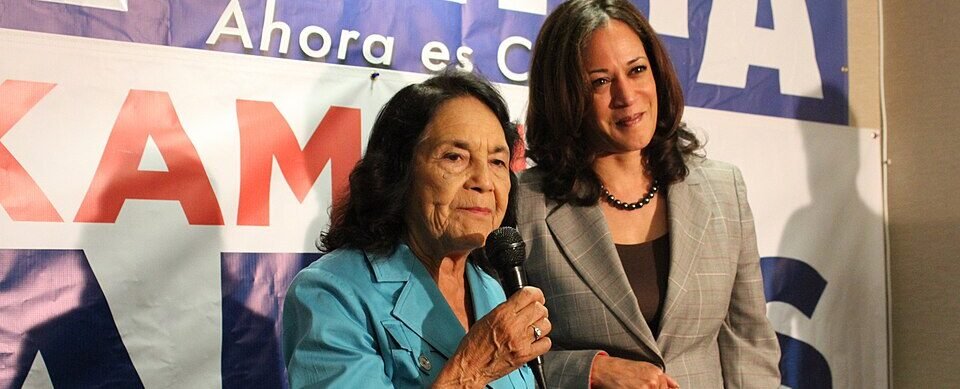
In 2002, she founded the Dolores Huerta Foundation, a community organizing group based in California’s Central Valley. The foundation has promoted civic engagement and the inclusion of labor and ethnic history in school curricula. She supported numerous political campaigns and continued to appear at rallies, conventions, and picket lines in her 90s.
She raised 13 children, according to NPR, while working in a movement that she and others said was often dominated by men. Accounts of her career frequently describe the sexism she encountered, from opponents and from within the movement itself.
Recognition
Huerta received the Presidential Medal of Freedom from President Barack Obama in 2012. She was also the subject of the 2017 documentary Dolores. In 2018, then-Gov. Jerry Brown signed legislation designating April 10, her birthday, as Dolores Huerta Day in California, and Gov. Gavin Newsom issued a proclamation marking the day this year. This year she also received a TIME100 Impact Award.
In 2026, Huerta spoke publicly about experiences of sexual abuse connected to the movement’s history. She said she had kept the matter private for decades, describing it in an interview with Latino USA as her personal pain. The disclosures prompted renewed public discussion of Chávez’s legacy and of how the movement’s history is remembered.
Tributes
Labor leaders, elected officials, and civil rights groups issued tributes. According to reports circulating after her death, former President Bill Clinton and former Secretary of State Hillary Clinton said in a joint statement that the country had lost a “stalwart champion of working Americans.” The Clintons had presented Huerta with the Eleanor Roosevelt Human Rights Award in 1998.
Her son Emilio Huerta has previously said his mother’s courage was among the most significant drivers of her life’s work. Others who knew her described her as someone who persisted when taking a stand carried personal and professional costs.
Legacy
Labor historians say many of the issues Huerta addressed remain unresolved, including wages, working conditions, immigration policy, and the bargaining power of agricultural workers. Her supporters point to the organizing methods she helped develop, including consumer boycotts, coalition building, and sustained legislative pressure, as templates still used by activists.
Funeral and memorial arrangements had not been announced as of Thursday.