Navigating Global Tensions BRICS Leaders Adopt Consensus Joint Declaration in New Delhi
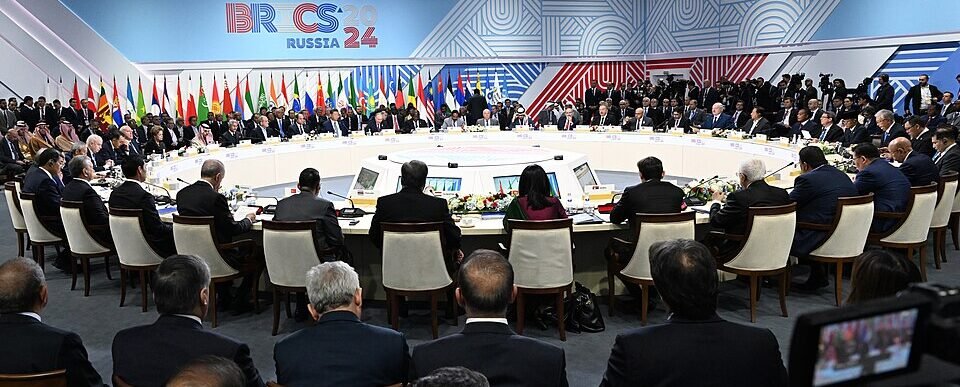
NEW DELHI — Against a backdrop of geopolitical tensions, conflict in West Asia and growing disagreements over international trade, BRICS leaders gathered in New Delhi for a summit that placed diplomacy and multilateral cooperation at the center of discussions.
The meeting brought together the expanded 11-member group, including India, China, Russia, Brazil, South Africa, Iran and the United Arab Emirates. Despite differences among members on major foreign-policy questions, leaders managed to reach agreement on a joint declaration covering security, trade, global governance and economic cooperation.
The outcome offered a notable display of consensus for a group whose members do not always share the same strategic priorities.
A Difficult Path to Consensus
Reaching agreement was not straightforward. BRICS members have different relationships with major powers and, in some cases, sharply contrasting positions on ongoing conflicts.
The situation in the Middle East presented one of the biggest challenges. Key BRICS members have been directly affected by regional tensions, while others have sought to maintain diplomatic relationships with multiple sides.
Against that backdrop, the final declaration adopted broad language calling for restraint and diplomatic engagement rather than directly targeting individual countries.
The leaders called on parties involved in hostilities to exercise maximum restraint and emphasized the importance of protecting civilian populations and maintaining humanitarian access.
The declaration also reiterated support for a two-state solution to the Israeli-Palestinian conflict, according to the summit coverage provided in the source material.
Global Governance Reform Takes Center Stage
One of the major themes of the New Delhi summit was the future of international institutions.
BRICS leaders called for greater representation of emerging and developing economies in organizations such as the United Nations, International Monetary Fund and World Bank.
For BRICS members, the issue reflects a broader argument that institutions created under an earlier global economic order should better reflect the economic and political weight of countries in the Global South.
The call for reform does not necessarily mean that all BRICS members share the same vision for international institutions. Instead, it reflects a common interest in giving developing economies a stronger voice in global decision-making.
Trade Tensions and Unilateral Tariffs
Trade policy was another important part of the joint declaration.
BRICS leaders criticized protectionist measures and unilateral tariffs, arguing that such policies can disrupt international supply chains and create additional uncertainty for businesses and economies.
The issue has become increasingly significant as major economies turn to tariffs and other trade restrictions as tools of economic policy.
For emerging economies, unpredictable changes in trade rules can have wider consequences, particularly for countries dependent on international markets, manufacturing networks and commodity exports.
The BRICS position therefore placed greater emphasis on predictable trade relations and cooperation rather than unilateral economic measures.
Stronger Economic Cooperation
The declaration also highlighted efforts to increase economic resilience among BRICS members.
Greater use of local currencies in trade and improved financial cooperation were presented as part of a wider effort to strengthen economic independence and reduce vulnerability to external financial pressures.
These proposals do not immediately replace the existing global financial system. Instead, they represent gradual efforts by BRICS countries to develop additional mechanisms for cross-border trade and financial cooperation.
For many members, particularly developing economies, expanding these options is seen as a way to increase flexibility in international commerce.
Security and Counter-Terrorism
Security remained another significant element of the declaration.
BRICS members reaffirmed their opposition to terrorism and violent attacks and emphasized the importance of international cooperation against terrorism.
The statement also referenced terrorist incidents, including the attack in Jammu and Kashmir, reflecting India’s focus on the security concerns it faces.
At the same time, the broader language of the declaration sought to maintain consensus among countries with different approaches to security and foreign policy.
India Seeks a Balancing Role
As host, India attempted to present BRICS as a platform for dialogue rather than an organization explicitly directed against Western countries.
That balancing approach reflects India’s broader foreign-policy strategy of maintaining relationships with multiple major powers while strengthening cooperation with developing economies.
Countries such as Russia and China have frequently emphasized the need for a more multipolar international system. India, meanwhile, has often stressed practical cooperation, development and strategic autonomy.
The New Delhi summit therefore provided an opportunity for India to demonstrate that BRICS can accommodate different national interests while still producing common positions.
What the Declaration Means
The adoption of the joint declaration is significant not because it eliminates the differences within BRICS, but because members were able to find enough common ground to produce a collective statement despite those differences.
The document reflects several priorities shared across the expanded grouping: greater representation for emerging economies, opposition to unilateral trade restrictions, stronger economic cooperation, counter-terrorism efforts and diplomatic approaches to international conflicts.
Whether those commitments lead to concrete policy changes will depend on what BRICS members do after the summit.
For now, the New Delhi meeting has demonstrated the continued importance of the bloc as a forum where countries with different political systems and foreign-policy interests can negotiate common positions.
As global tensions continue to reshape international relations, the challenge for BRICS will be turning those shared declarations into practical cooperation while managing the divisions that remain within the group.