
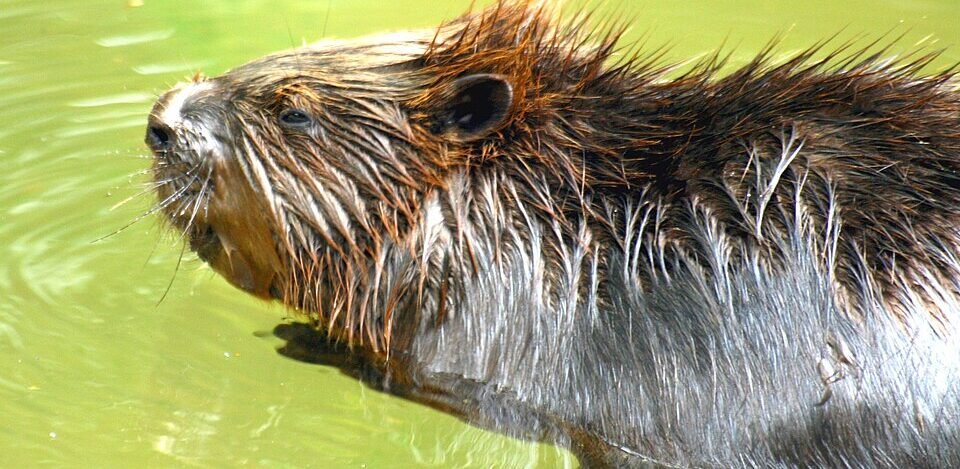
A rabid beaver attacked swimmers at a New Jersey lake. An 8-year-old is in the hospital. Witnesses say it just kept coming.
Nobody goes to a New Jersey lake expecting to be hunted. And yet.
A day at the lake turned into something out of a nature documentary gone wrong when a rabid beaver launched a series of attacks on swimmers and beach goers at a New Jersey lake, sending an 8-year-old boy to hospital after biting him on the leg. Witnesses filmed the incident on their phones — partly in disbelief, partly because there was genuinely nothing else to do when a large, apparently furious rodent is charging at people in the shallows.
The attack took place at Lake Henry, located within Continental Soldiers Park in Mahwah, Bergen County. Local health officials have confirmed that the beaver tested positive for rabies and are urging anyone who may have had contact with wildlife in that specific area to seek medical evaluation immediately.
In the footage that circulated online, bystanders can be heard reacting with understandable alarm as the animal — described by witnesses as massive — moves through the water toward groups of people. The general consensus among those filming was that this was not normal beaver behavior. That assessment was correct. Normal beavers are shy, nocturnal, and deeply uninterested in human beings. A beaver that is charging people in broad daylight at a public lake has, with near certainty, lost the plot — and in wildlife terms, that usually means one thing: rabies.
Normal beavers are shy, nocturnal, and deeply uninterested in human beings. This one was none of those things.
The 8-year-old victim, whose name has not been released, was bitten on the leg and taken to hospital. His current condition has not been publicly confirmed, but the key concern in any rabid animal bite is the post-exposure treatment window — a series of shots that are highly effective when administered promptly, and significantly less so when delayed. Wildlife officials have confirmed the animal is being tested for rabies. Given the behavior described, few experts are expecting a surprise result.
Here’s the thing about beavers that most people don’t know until a day like this one: they are not small. North American beavers are the largest rodent on the continent, regularly reaching 60 pounds and occasionally exceeding it. Their front teeth — the famous orange incisors — are built to cut through hardwood. They are not, anatomically speaking, something you want to be bitten by in a lake. The child who was attacked was fortunate the injury wasn’t worse.
Rabies in beavers is relatively uncommon compared to raccoons, foxes, and bats — the more typical carriers in the northeastern United States. But it does happen, and when it does, the behavioral change is dramatic and unmistakable. The animal loses its natural fear of humans, becomes aggressive, and will approach and attack unprovoked. The aggressive charging behavior captured on video is a textbook presentation. Which is exactly why you should never, under any circumstances, approach a wild animal that seems unafraid of you. The absence of fear is the warning sign.
The lake has been closed to swimmers pending the investigation. Wildlife officials are expected to address the situation directly — which, in these cases, is a polite way of saying the beaver will not be returning to the water. It’s a grim outcome for an animal that was, in all likelihood, itself a victim of a disease it had no way of avoiding. But with a child in hospital and rabies exposure on the table, there isn’t much of a middle-ground option available.
For anyone spending time near freshwater lakes in New Jersey or the broader region this summer: the risk remains very low. But if you see a beaver — or any wildlife — behaving aggressively or approaching humans without fear, leave the water, leave the area, and call animal control. Do not try to shoo it away. Do not film it from three feet. Do not, under any circumstances, assume it will stop.
2 thoughts on “A rabid beaver attacked swimmers at a New Jersey lake. An 8-year-old is in the hospital. Witnesses say it just kept coming.”
Leave a Reply




It would be very helpful if you provided us a location for this lake in NJ, so we can all know where to avoid same. Otherwise, your news article is completely useless.
Hi Joe, thank you for the feedback — you are absolutely right. The safety of our readers is our priority. The incident occurred at Lake Henry in Continental Soldiers Park (Mahwah, NJ). We have updated the article to include these specific details to ensure everyone in the area is aware. Stay safe!