The Strait That’s Holding the World Hostage Just Got a Lot More Dangerous
BREAKING WORLD· MAY 5, 2026
Trump’s “Project Freedom” naval push was supposed to break Iran’s grip on global shipping. Instead, it triggered a firefight — and may have put a fragile ceasefire on life support.
6 Iranian boats destroyed by U.S.
15,000 U.S. service members deployed
230+ oil tankers stranded in Gulf
When President Trump announced “Project Freedom” on Sunday, the pitch was straightforward: the U.S. Navy would guide commercial ships — many of them stuck in the Persian Gulf for two months — safely through the Strait of Hormuz and back into the global economy. By Monday morning, it had turned into a shooting war.
CENTCOM chief Admiral Brad Cooper confirmed that U.S. forces destroyed six Iranian small boats that were threatening commercial ships in the strait, while also intercepting drones and cruise missiles launched by Iran. Apache and Seahawk helicopters were used to sink the vessels. “We have defeated each and every one of those threats,” Cooper told reporters.
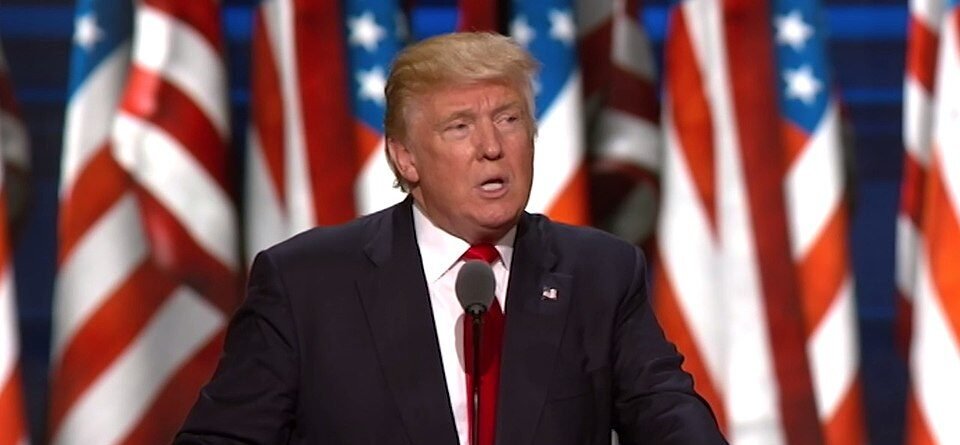
“They are very disjointed. They’re not able to get along with each other as leaders; they don’t know who the leader is.”— President Trump, on the state of Iran nuclear negotiations
The violence didn’t stay in the water. Iran launched attacks on the UAE, with a UAE-owned tanker struck by two Iranian drones in the strait — the first such attack since a ceasefire had come into effect. Missiles also struck Oman, injuring civilians in a coastal hamlet near the chokepoint. Egypt and Gulf nations condemned the strikes immediately.
The effective closure of the Strait of Hormuz has been Iran’s top source of leverage since the U.S. and Israel launched their air campaign against Iran in late February. With roughly one-fifth of the world’s seaborne oil and LNG unable to reach customers, the global economy has faced its worst energy crisis in decades.
The White House is sending mixed signals about what any of this means for diplomacy. Just days ago, Trump called talks with Iran “productive.” On Monday, he told reporters the negotiations were “extremely disjointed.” He also warned, via a Fox interview, that Iranian forces targeting U.S. ships would be “blown off the face of the Earth” — while simultaneously suggesting Iran was “malleable” enough for a deal.
The rules of engagement for U.S. forces in the region have been updated to allow strikes on immediate threats against ships crossing the strait — including IRGC fast-attack boats or Iranian missile batteries. Cooper described the overall effort not as escorting ships one by one, but as a “multiple layered” defensive package — destroyers, aircraft, drones, and electronic warfare — designed to make the strait passable by sheer presence alone.
Whether that strategy is working is still an open question. CENTCOM said two commercial vessels had transited the strait under Project Freedom, though Iran’s state media called that claim “baseless and entirely false.” Overall traffic through the waterway remained well below normal as of Monday afternoon.
The deeper risk is now whether a fragile peace can survive the week. Analysts who had been cautiously optimistic about talks just days ago are now watching the same cycle that has played out before: a brief spike in tensions, a few days of holding breath, then either a step back from the ledge or something worse. Iran attacking Gulf allies like the UAE and Oman changes that calculus significantly — it’s no longer just a U.S.-Iran standoff. It’s a regional one.