
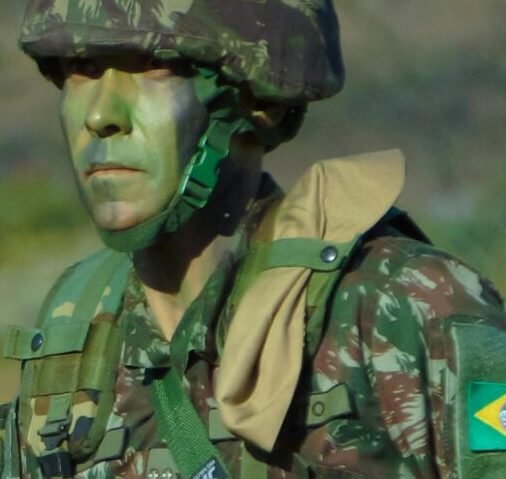
U.S. Special Forces Rescue Crew Member as Iran Conflict Intensifies
Dramatic Mission Behind Enemy Lines Highlights Military Coordination
Washington / Tel Aviv — A complex military rescue mission has successfully recovered a U.S. crew member who was stranded inside Iran territory for nearly 48 hours during the ongoing conflict linked to Operation Epic Fury.
According to officials and military sources, the operation involved hundreds of personnel, intelligence coordination, and aerial support from U.S. forces operating in the region. The rescue was carried out after the aircraft involved in the mission was shot down during combat operations.
High‑Risk Operation Inside Iranian Territory
Reports indicate that the downed crew member had been hiding along a mountain ridge while Iranian forces searched for him. Iranian authorities had reportedly offered financial rewards to civilians who could locate and capture the pilot.
To counter this, U.S. intelligence agencies used deception tactics and surveillance to mislead search efforts while preparing the extraction operation. Special forces units were deployed into hostile territory while aircraft provided air cover to prevent enemy forces from approaching the location.
Military analysts say the operation required precise coordination between ground forces, intelligence teams, and air support to safely locate and extract the service member.
Cooperation Between U.S. and Israel
Officials say the mission also demonstrated the close military coordination between the United States and Israel. According to regional officials, both countries have been conducting extensive aerial operations over Iranian territory as part of the broader campaign targeting military infrastructure.
Israeli officials praised the rescue effort, noting that in situations where a pilot is downed in hostile territory, the priority becomes ensuring the individual is safely returned.
Strategic Impact of the Rescue
Defense experts say the successful mission highlights the operational capabilities of U.S. special forces and intelligence networks. The ability to deploy teams into enemy territory and extract personnel without casualties is expected to be studied by military strategists for years.
The operation also underscores the level of air activity currently taking place over Iranian territory, with thousands of missions reportedly flown since the start of Operation Epic Fury.
Trump Issues 48‑Hour Warning
Amid the escalating conflict, Donald Trump has issued a stern warning to Iranian leaders, stating that the country has 48 hours to engage in negotiations or face intensified military strikes.
Officials say Iranian forces have continued launching drones and missiles toward regional targets, including attacks aimed at allied countries and Israeli positions.
The administration has indicated that if Iran does not de‑escalate, additional strikes targeting energy infrastructure and military assets could follow.
A Defining Moment in the Conflict
Military officials say the successful rescue has boosted morale among U.S. troops and demonstrated the principle that no service member will be left behind.
As the 48‑hour deadline approaches, diplomatic pressure continues to mount while military operations remain active across the region. Observers say the next steps taken by both sides could significantly shape the direction of the conflict in the days ahead.
Photo by Imprensa Agruban:
One thought on “U.S. Special Forces Rescue Crew Member as Iran Conflict Intensifies”
Leave a Reply



Trump should have not started this war with Iran , but in reality Iran would make it impossible with there support of factions such as the Houthis and Hesbola .