
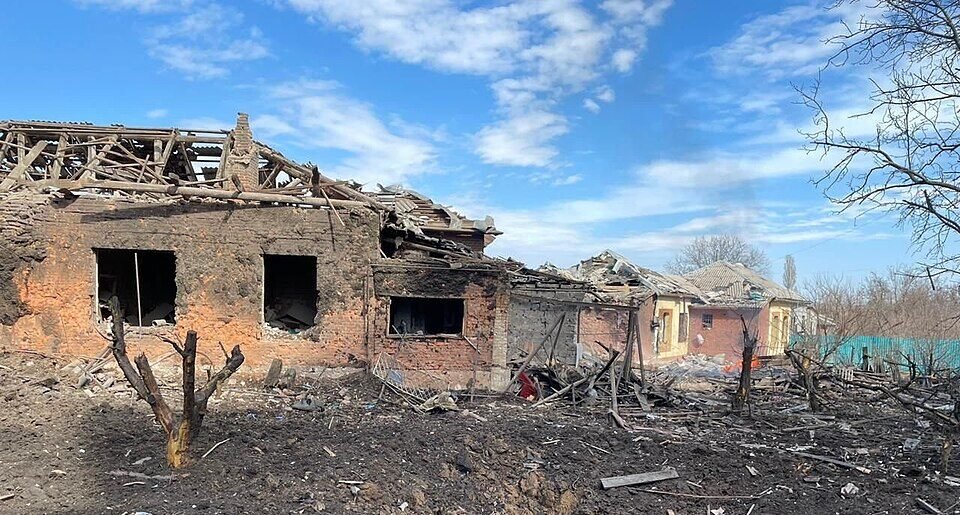
Zelensky Says Ukraine Is Responding to Russian Strikes With Long-Range Operations
Ukrainian President Volodymyr Zelensky says Ukraine continues to respond to Russian attacks with operations that reach far beyond the immediate battlefield, highlighting what he described as Kyiv’s growing ability to strike military and strategic targets linked to Russia’s war effort.
In a brief video clip broadcast by Al Jazeera English, Zelensky framed those operations as part of Ukraine’s broader effort to withstand and respond to Russian attacks as the conflict moves into its fifth year. While the remarks were short on operational details, they reflected a message Ukrainian officials have increasingly emphasized throughout the war: resilience at home paired with the capability to project force far from the front lines.
The comments come at a time when both Ukraine and Russia continue to rely on long-range weapons, drones, and attacks on strategic infrastructure as the conflict evolves beyond traditional battlefield engagements.
Zelensky Emphasizes Ukraine’s Resilience
In the televised remarks, Zelensky began by focusing on Ukraine’s ability to recover from repeated attacks.
According to the Ukrainian president, the country continues to adapt despite ongoing military pressure. He described a pattern in which Ukraine absorbs Russian strikes, recovers, and then seeks ways to respond.
The message reflects a central theme that has been present in many of Zelensky’s public appearances since Russia’s full-scale invasion began. Ukrainian leaders frequently portray the country’s endurance as evidence that Moscow has failed to achieve its broader strategic objectives despite years of fighting.
As the war has lengthened, maintaining public morale and reassuring international partners have become increasingly important elements of Kyiv’s communications strategy.
Claims of Long-Range Reach
The most notable part of Zelensky’s statement was his assertion that Russia is experiencing the effects of Ukrainian operations across a wide geographic area.
He referenced Russian oil refineries in Western Siberia and naval assets near Libya, suggesting that Ukraine’s response to Russian attacks now extends well beyond the immediate combat zone.
Although the brief clip did not provide specific evidence or operational details regarding individual incidents, the remarks align with a broader trend seen throughout the conflict. Ukraine has increasingly demonstrated the ability to target infrastructure, logistics networks, fuel facilities, and military assets located significant distances from the front line.
Long-range drone technology has played a key role in that evolution, allowing Ukraine to challenge targets that once appeared largely out of reach.
Military analysts have noted that attacks on energy facilities, transportation hubs, and naval assets can have strategic effects even when they do not alter territorial control on the battlefield.
The Strategic Importance of Infrastructure
Throughout the conflict, energy infrastructure has emerged as one of the most important targets for both sides.
Russia has repeatedly launched attacks against Ukrainian energy facilities, power grids, and industrial sites. Ukrainian officials argue those attacks are intended to weaken the country’s economy and civilian resilience.
At the same time, Ukraine has increasingly sought to disrupt infrastructure that supports Russian military operations. Oil refineries, fuel depots, logistics centers, and transportation networks have all become part of the wider struggle over economic and military resources.
Experts note that modern warfare increasingly involves attacks on strategic infrastructure rather than only frontline positions. Both sides have devoted significant resources to developing drone capabilities that can reach targets hundreds or even thousands of kilometers away.
Attention on Maritime Operations
Zelensky’s remarks also touched on naval operations, an area where Ukraine has sought to offset Russia’s conventional advantages through the use of unmanned systems.
Over the course of the war, naval drones and missile strikes have become prominent features of Ukraine’s military strategy. These attacks have targeted Russian vessels and facilities associated with maritime operations.
The president’s reference to Russian warships reflects the importance Ukraine places on contesting Russian influence in and around strategic waterways. Maritime security has remained a critical issue throughout the conflict, affecting trade routes, military logistics, and regional stability.
Reports surrounding some of the incidents mentioned by Zelensky continue to be examined by journalists, analysts, and international observers, with independent verification often challenging in active conflict zones.
Information Warfare and Public Messaging
The latest remarks also demonstrate how public messaging has become an important component of the conflict.
Both Kyiv and Moscow regularly use speeches, interviews, and media appearances to shape domestic and international perceptions of the war. Statements about military successes, resilience, and strategic achievements are often aimed not only at opponents but also at allies and citizens watching developments from afar.
For Ukraine, emphasizing successful long-range operations serves multiple purposes. It reinforces the message that the country remains capable of defending itself, reassures supporters, and highlights the costs Russia continues to face despite its larger military resources.
A Conflict With No Immediate End in Sight
Nearly five years into the war, neither side has shown signs of abandoning its core objectives, and fighting continues across multiple fronts.
The conflict has evolved considerably since its early stages, with drones, missile systems, cyber capabilities, and infrastructure attacks now playing a larger role than many experts initially anticipated.
Zelensky’s comments underscore that reality. Rather than focusing solely on territorial battles, Ukraine is increasingly highlighting its ability to challenge Russian assets across a much wider geographic area.
Whether such operations ultimately alter the broader trajectory of the war remains an open question. What is clear is that the conflict continues to expand beyond traditional battlefields, with energy facilities, naval assets, and long-range strike capabilities becoming central elements of the ongoing struggle between Ukraine and Russia.
As the war enters another year, both sides continue searching for military advantages while the international community closely watches for any signs of a shift in the conflict’s direction.


