US Military Denies Iranian Claims of Destroying American Radar System in Bahrain
American officials say two attack drones were intercepted before reaching their target, while growing uncertainty surrounding diplomacy highlights the fragile security situation across the region.
US Denies Iran Radar Destruction Claim
The United States military has rejected claims by Iran that it successfully destroyed an American early warning radar installation in Bahrain, adding another layer of tension to an already fragile security environment in the Middle East.
The dispute emerged after Iran’s Islamic Revolutionary Guard Corps (IRGC) announced that it had carried out a strike against a US military radar system located in Bahrain. Iranian officials presented the operation as a response to what they described as hostile American actions near the strategically important Strait of Hormuz, a critical maritime corridor through which a significant portion of the world’s energy supplies passes each day.
However, US Central Command (CENTCOM) quickly disputed the claim, stating that no American radar systems in Bahrain were damaged and that US forces successfully intercepted the incoming threats before they reached their intended targets.
According to the US military, two one-way attack drones were launched toward Bahrain but were detected and destroyed by defensive systems. Officials said the interception prevented any damage to infrastructure and resulted in no casualties.
The conflicting accounts underscore the ongoing information battle that often accompanies periods of heightened tensions between Washington and Tehran. In recent years, both countries have frequently offered sharply different narratives regarding military incidents, making independent verification difficult in many cases.
The latest exchange comes during a period of low-level confrontation that has characterized US-Iran relations across several theaters in the Middle East. While neither side appears eager to enter a full-scale military conflict, military analysts warn that recurring incidents increase the risk of miscalculation and unintended escalation.
Iranian officials framed the alleged strike as retaliation for what they claimed was a US attack on telecommunications infrastructure near the Strait of Hormuz. Tehran has also renewed criticism of American military activities in and around the region’s vital shipping lanes, accusing Washington of contributing to instability.
Iranian state media further circulated footage purporting to show an LNG tanker catching fire after allegedly encountering a naval mine. Iranian authorities claimed the vessel was operating along an unauthorized route within waters monitored by the IRGC. The circumstances surrounding the incident remain disputed, and independent confirmation has been limited.
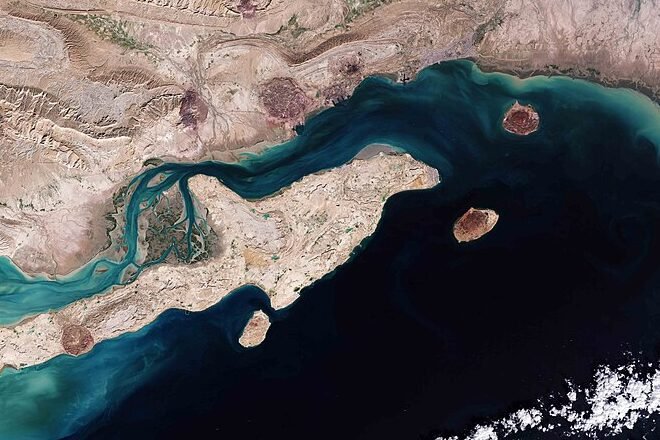
The Strait of Hormuz remains one of the world’s most strategically important waterways. Any disruption in the region can have implications for international trade, energy markets, and global shipping networks. As a result, military activity in the area is closely monitored by governments and industry stakeholders worldwide.
Security experts note that disputes over incidents in the Gulf have become increasingly common amid the absence of sustained diplomatic engagement between the United States and Iran. Without direct channels of communication, even relatively minor military encounters can create broader geopolitical uncertainty.
Despite the heightened rhetoric, senior US officials have indicated that Washington does not currently see signs of an imminent large-scale conflict. American policymakers have continued to emphasize deterrence while maintaining military forces throughout the region.
Speaking during a visit to Europe, Secretary of State Marco Rubio suggested that the United States remains focused on preventing escalation while protecting regional interests and allies. Officials have maintained that American forces are prepared to respond if necessary but are not seeking a wider confrontation.
The military dispute is unfolding alongside growing uncertainty over diplomatic efforts aimed at easing tensions between the two countries.
Recent mediation initiatives involving regional partners, including Qatar, had raised hopes that conversations between Washington and Tehran could eventually resume. However, public comments from both sides have revealed continued disagreements over the conditions required for meaningful negotiations.
President Donald Trump recently indicated that immediate direct talks were not currently a priority, creating further uncertainty over the future direction of diplomatic engagement. Meanwhile, Iranian officials continue to insist that their core demands must be addressed before substantive discussions can move forward.
Analysts describe the current situation as a “no war, no agreement” environment, in which neither side appears willing to take steps toward major military escalation while simultaneously struggling to make diplomatic progress.
Iranian political leaders have increasingly argued that the status quo cannot continue indefinitely. Officials in Tehran contend that economic pressures and security concerns require a more sustainable long-term arrangement with the international community.
At the same time, the United States and its regional partners have continued efforts to secure maritime routes and monitor military activity throughout the Gulf. These operations are intended to protect commercial shipping while deterring potential threats to navigation and trade.
For international observers, the greatest concern is not necessarily a deliberate decision by either side to pursue conflict, but rather the possibility that a misunderstanding or isolated incident could trigger a broader crisis.
Experts note that repeated drone interceptions, maritime confrontations, and competing public claims create an environment where tensions can rise quickly. Without reliable communication channels, opportunities to de-escalate misunderstandings become more limited.
The dispute over the alleged radar strike illustrates how quickly competing narratives can emerge following regional security incidents. While the United States insists that its defensive systems successfully neutralized the threat and prevented any damage, Iranian authorities continue to portray the event as a successful operation.
As both governments maintain their positions, analysts expect the pattern of low-level confrontations, military signaling, and diplomatic uncertainty to continue. Until broader disagreements between Washington and Tehran are addressed, the underlying issues driving regional instability are likely to remain unresolved.
For now, the episode serves as another reminder of the delicate balance of power in the Middle East, where even small incidents can attract global attention and raise concerns about wider repercussions for regional security and international commerce.

Related Posts

Nvidia Board Rejects Jensen Huang Return as Company Pushes Ahead With Leadership Transition

Putin and Xi Meet Ahead of Trump Summit as Global Power Dynamics Take Center Stage