
Trump’s Russia Sanctions Waiver Raises Questions Over Ukraine Strategy
Trump Waives Russia Oil Sanctions as Ukraine War Debate Intensifies
The president’s decision to ease restrictions on Russian fossil fuels has sparked questions about energy prices, allied coordination and Washington’s approach to Moscow.
President Donald Trump’s decision to temporarily waive sanctions related to Russian fossil-fuel sales has reopened a contentious debate over how the United States should balance energy costs, diplomatic flexibility and pressure on Moscow over its war in Ukraine.
According to the video transcript, Trump signed an executive order late Friday, just days before the measures were due to take effect under legislation he had signed the previous month. The White House described the waiver as being in the “national interest of the United States,” although the order reportedly offered limited detail about the criteria for the exemption or when it would expire.
The move has drawn criticism from national security commentators and raised concerns among some European partners. It has also highlighted the competing pressures facing the administration as it seeks to address domestic energy concerns while navigating an increasingly complicated international conflict.
The decision does not, by itself, establish a permanent change in U.S. policy toward Russia. Its broader significance will depend on how the waiver is implemented, how long it remains in place and whether Washington continues to use energy restrictions as leverage in negotiations.
A Policy Shift With International Consequences
The waiver comes amid continued fighting between Russia and Ukraine and disagreements over the military and economic measures intended to influence the conflict.
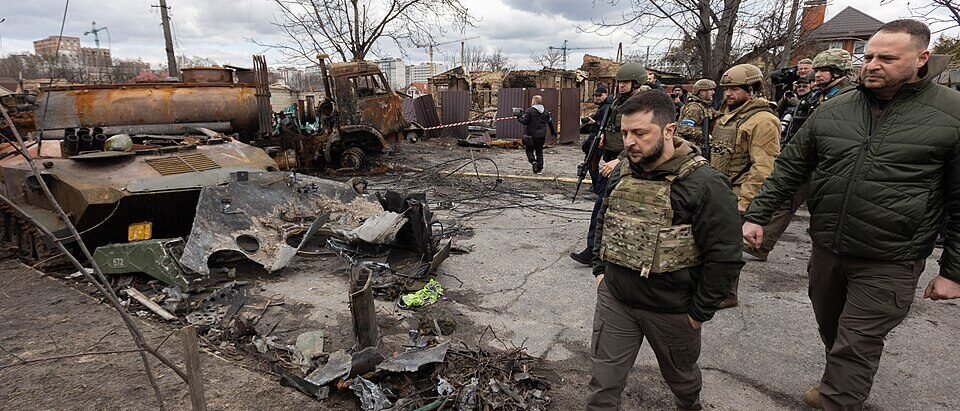
The transcript reports that the administration has also pressed Ukrainian President Volodymyr Zelenskyy to suspend long-range attacks on Russian oil refineries. Ukraine has defended those operations as a way to disrupt the economic and logistical infrastructure supporting Russia’s military campaign.
The timing has prompted questions about how the sanctions decision fits into Washington’s wider strategy.
Retired Air Force Colonel Cedric Leighton, a military analyst cited in the video, argued that easing restrictions could weaken the message sent to Moscow and leave Ukraine and European allies feeling less supported.
His assessment reflects one side of the debate: critics contend that relaxing economic pressure could reduce the costs Russia faces for continuing the war.
Other considerations, including energy-market conditions and the administration’s stated national-interest rationale, also form part of the policy discussion. The executive order’s limited public explanation, as described in the transcript, leaves questions about the precise reasoning behind the decision.
The Debate Over Fuel Prices
Domestic energy costs are another central issue.
Former U.S. Ambassador to NATO Kurt Volker, who previously served as the U.S. special representative for Ukraine negotiations during Trump’s first administration, questioned whether potential Russian diesel imports would make a meaningful difference to American fuel prices.
Volker argued in the video that the volumes being discussed would represent only a small share of U.S. daily diesel consumption. He also noted that the United States is a net exporter of diesel.
His comments raise a broader economic question: how much effect can a limited exemption involving Russian fuel have on prices paid by American consumers?
Fuel prices are influenced by several factors, including global crude-oil prices, refining capacity, transportation costs, seasonal demand and geopolitical risks. A sanctions waiver alone does not establish whether prices will rise or fall.
The administration’s challenge is to explain how the measure serves the national interest and what practical benefits it is expected to deliver.
Congress and the Sanctions Framework
The transcript identifies the restrictions as part of legislation referred to as the Graham Act, named after the late Senator Lindsey Graham, who was described as a prominent critic of Russia.
The decision to grant an exemption from measures scheduled under legislation has intensified discussion about the relationship between congressional policy and executive authority.
Presidents have significant responsibilities in conducting foreign policy, but sanctions can also be shaped by laws passed by Congress. The scope of an executive waiver therefore matters, particularly when lawmakers have established restrictions intended to influence another country’s behavior.
The transcript does not provide enough detail to establish the waiver’s full legal scope or the conditions governing its use. Those questions would require examination of the executive order and relevant statutory provisions.
For now, the episode illustrates the tension between maintaining a consistent sanctions framework and allowing the administration flexibility to respond to changing economic or diplomatic circumstances.
Ukraine Faces Continuing Military Pressures
While Washington debates energy policy, the conflict continues to affect Ukrainian communities and critical infrastructure.
The video describes recent overnight strikes on residential areas, reporting damage to civilian infrastructure and casualties. It also raises concerns about Ukraine’s supply of interceptor missiles for U.S.-made Patriot air-defence systems.
According to the military analysts cited in the transcript, Ukraine’s reported shortage reflects wider supply constraints and high demand across multiple regions, rather than necessarily indicating a problem unique to Ukraine.
Patriot systems are an important part of Ukraine’s effort to defend against incoming aerial threats. Any reduction in the availability of interceptor missiles can complicate decisions about how to protect cities, infrastructure and military facilities.
Zelenskyy has defended attacks on Russian oil infrastructure on the grounds that they affect the resources supporting Moscow’s war effort. The Ukrainian president also criticised the sanctions waiver, according to the transcript, arguing that it undercut legislative efforts to exert economic pressure on Russia.
These competing positions illustrate the difficulty of coordinating economic restrictions with military strategy while the conflict remains unresolved.
European Allies Watch Washington’s Next Move
The waiver has also raised concerns about coordination with European partners.
European governments have spent recent years reducing their dependence on Russian energy, although the pace and extent of that shift vary across countries. For those governments, sanctions have been one component of a broader effort to limit Moscow’s revenue and respond to the invasion of Ukraine.
Critics of the U.S. decision worry that easing restrictions could complicate those efforts or create differences between Washington and its allies.
At the same time, the long-standing U.S.-European relationship includes disagreements over how best to combine sanctions, diplomacy and security assistance.
The practical impact of this latest decision will depend partly on whether the waiver remains narrow and temporary or becomes part of a wider adjustment to American policy.
What Happens Next?
The immediate questions concern the waiver’s duration, the transactions it permits and the administration’s explanation of its expected benefits.
Negotiations involving American and Ukrainian officials are continuing, according to the transcript, while lawmakers and international partners assess the implications of the decision.
The policy debate is likely to persist because it touches on several competing priorities: limiting Russian revenue, managing energy costs, supporting Ukraine’s defence and preserving cooperation with European allies.
Trump’s administration retains room to argue that flexibility is necessary to protect U.S. interests. Critics, meanwhile, will continue to question whether easing restrictions risks reducing economic pressure on Moscow at a critical moment in the conflict.
The waiver’s ultimate significance will depend on its implementation and its measurable effects on energy markets and diplomatic negotiations.
For now, the decision has added another layer of uncertainty to an already difficult policy landscape—one in which energy, security and diplomacy remain closely connected.



One thought on “Trump’s Russia Sanctions Waiver Raises Questions Over Ukraine Strategy”