
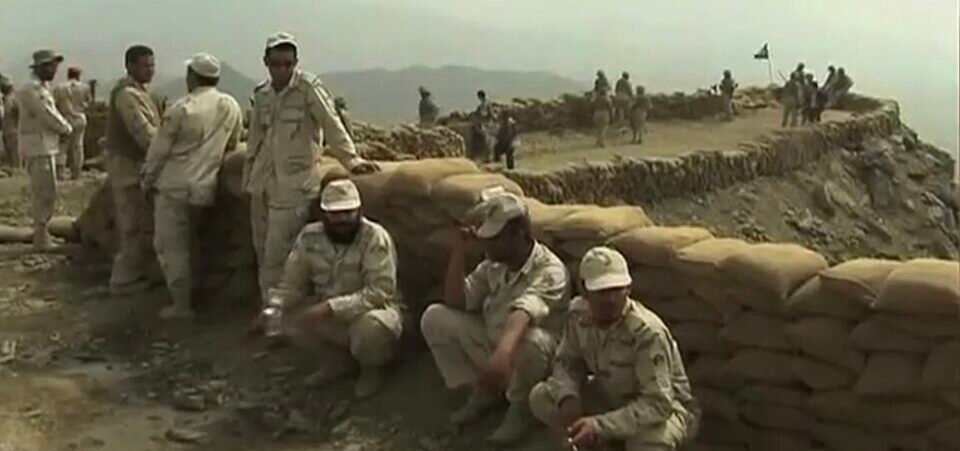
Yemen Clashes Escalate as Bab al-Mandeb Control Is Disputed
Yemeni Forces Claim Control of Strategic Bab al-Mandeb Strait Amid Escalating Clashes
Conflicting battlefield claims are emerging as government forces report advances along Yemen’s Red Sea coast while Houthi officials dismiss the reports as propaganda
Reports of intensified fighting along Yemen’s Red Sea coast have placed the strategic Bab al-Mandeb strait back at the center of regional attention.
According to the video transcript provided, internationally recognized Yemeni government forces announced that they had reclaimed control of areas surrounding the critical maritime chokepoint. Houthi representatives, however, rejected the claims and described them as battlefield propaganda.
The competing accounts could not be independently established from the transcript alone.
What is clear from the material is that military activity has intensified across southwestern Yemen, with reported ground advances occurring alongside increased coalition airstrikes. The developments are being closely watched because of the importance of the Bab al-Mandeb to international shipping and the wider security environment around the Red Sea.
A Strategic Chokepoint
The Bab al-Mandeb strait connects the Red Sea with the Gulf of Aden and provides an important maritime route between the Indian Ocean and the Mediterranean through the Suez Canal.
Its location gives the waterway major importance for international trade and energy transportation.
Any sustained disruption around the strait can create wider concerns for shipping companies, energy markets and governments that depend on reliable commercial routes.
That strategic importance has made the surrounding coastline an important military objective throughout Yemen’s prolonged conflict.
The transcript describes recent government claims that forces have advanced toward the strait and secured positions in the surrounding coastal area. Among the locations mentioned is Dubab, along with infrastructure roughly 50 kilometers from the Bab al-Mandeb.
But the transcript also emphasizes that controlling the strait is not simply a matter of holding coastal towns.
The Importance of High Ground
Military control along Yemen’s western coastline can depend heavily on surrounding mountains and elevated terrain.
High ground can provide observation over roads, supply routes and logistical corridors, making it strategically important even when fighting appears concentrated around coastal settlements.
The transcript notes that both sides have previously used tactical repositioning. Forces may withdraw from exposed areas to consolidate defensive positions or avoid heavy aerial bombardment before attempting counterattacks.
That makes battlefield maps particularly difficult to interpret in real time.
A government announcement describing the capture of a strategic area does not necessarily mean that the opposing side has been permanently removed from the wider region.
The Houthi rejection of the reported gains further underscores the difficulty of establishing the precise situation from competing statements.
Airstrikes Add to the Pressure
The reported ground operation has taken place alongside an intensification of coalition airstrikes.
The transcript describes attacks against Houthi-held positions along the Red Sea coast as well as strikes in Sana’a.
The increase in air activity represents another escalation in a conflict that has repeatedly shifted between periods of intense fighting and attempts at de-escalation.
According to the material, previous understandings had sought to limit direct attacks involving major population centers and regional capitals. Those arrangements have come under renewed pressure as military activity increases.
Houthi officials have also threatened attacks against important regional infrastructure, including energy facilities and transport networks.
Such threats add another layer of uncertainty to the security situation surrounding the Red Sea and Gulf region.
Why the Bab al-Mandeb Matters Beyond Yemen
The dispute is not only about Yemen’s internal political and military divisions.
The Bab al-Mandeb is part of a broader international shipping system connecting Europe, the Middle East, Africa and Asia.
Commercial vessels using the Red Sea route can be affected by instability, attacks or the perceived risk of attacks. Even when ships are not directly targeted, security concerns can influence insurance costs, shipping decisions and the routes companies choose.
That is why developments on Yemen’s coastline can have consequences far beyond the country’s borders.
The transcript also places the fighting within a broader regional security environment involving drones, missiles and tensions among several Middle Eastern powers.
Yemen’s Fragmented Political Landscape
Another complication is Yemen’s fragmented political structure.
The conflict involves more than a simple two-sided confrontation. Government forces, Houthi forces, regional actors, tribal groups and other political and military organizations have competing interests.
The transcript highlights shifting tribal loyalties and longstanding divisions between northern and southern factions as factors that can influence control of territory.
That means even a significant military advance may not automatically translate into lasting political stability.
Military operations can change the balance of power, but durable control generally requires political agreements and functioning local institutions.
What Happens Next?
The immediate question is whether the government forces described in the transcript can consolidate their reported advances.
If the claims prove accurate, holding the surrounding terrain and securing supply routes would be critical to maintaining the gains.
The Houthis, meanwhile, could attempt to counterattack or challenge the government’s control through other military and political means.
The situation around cities such as Taiz and along the Red Sea coastal corridor will therefore remain important indicators of how the conflict develops.
For international observers, the larger concern is the security of the Bab al-Mandeb and the potential effect on commercial shipping.
The transcript makes clear that the situation remains contested. Government forces claim important advances, while Houthi officials deny that the reported changes represent genuine control of the strategic waterway.
Until those competing claims can be independently verified, the most cautious conclusion is that the battle for influence along Yemen’s Red Sea coast is intensifying—and the consequences could extend well beyond Yemen itself.