Protecting the Vote Lawmakers and Experts Address Voter Concerns Over Congressional Transitions
Protecting the Vote Lawmakers and Experts Examine Safeguards for Congressional Transitions
A congressional discussion examined local election security, certification procedures and constitutional checks designed to protect changes in legislative power.
As Americans prepare for another cycle of elections, attention often focuses on campaigns, candidates and voting itself. But another part of the democratic process receives less attention: what happens after voters cast their ballots and political power changes hands.
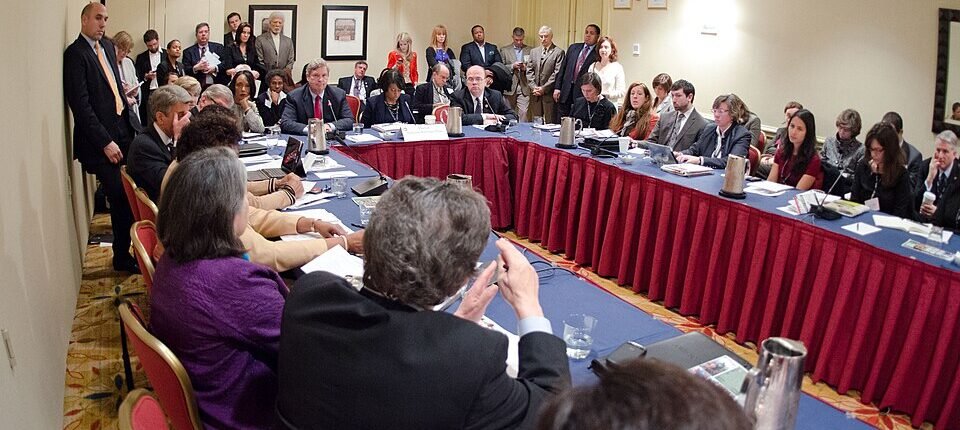
A recent congressional proceeding examined some of those questions, including how election results move from local jurisdictions to the federal government and what safeguards exist if political disputes arise during a transition.
The discussion also highlighted the role of local election officials, whose work forms the foundation of the country’s decentralized election system.
While the hearing addressed hypothetical concerns rather than announcing a specific crisis, it offered a closer look at the procedures intended to ensure that certified election results are ultimately respected.
Local Election Officials Remain at the Center
One of the strongest themes during the discussion was the importance of local election workers.
Lawmakers praised officials and volunteers in communities including Loudoun County and Fairfax for the care they take in handling ballots and conducting elections. The comparison to protecting something as valuable as material stored at Fort Knox underscored the level of responsibility placed on local election administrators.
That responsibility extends far beyond Election Day.
Local officials and temporary election workers help operate polling locations, process ballots, oversee tabulation and complete verification procedures. They work within state laws and administrative requirements that vary across the country.
The decentralized nature of American elections means that there is not a single federal agency responsible for conducting every election.
Instead, local and state authorities carry much of the responsibility, creating multiple layers between individual ballots and federal political institutions.
What Happens When Power Changes?
The hearing also addressed a hypothetical concern about a change in control of the House of Representatives.
The question centered on what could happen if voters elected a new congressional majority but political leaders attempted to interfere with that transition.
Such scenarios can generate considerable public anxiety, particularly when trust in political institutions is already under strain.
The expert discussion focused on the constitutional and procedural mechanisms that stand between election results and any attempt by an individual official to prevent a duly elected Congress from taking office.
The process begins at the state and local level.
Once election results are finalized under applicable state procedures, official certificates are transmitted to the federal government. For House elections, those certifications are sent to the Clerk of the House.
This structure creates an important separation between election administration and congressional leadership.
Multiple Layers of Institutional Checks
The hearing emphasized that no single federal official controls the entire process.
Even in a hypothetical situation involving a dispute over congressional administration, other members of Congress and established institutional procedures provide additional checks.
The discussion specifically raised the possibility of a Speaker attempting to remove or dismiss the Clerk of the House. The response emphasized that such a move would not necessarily give one individual unchecked control over the transition because the House itself retains authority to act.
A majority of members can exercise congressional powers and challenge decisions made by individual officials.
That illustrates a broader principle of the U.S. constitutional system: political authority is deliberately divided among institutions rather than concentrated in one office.
The system is not designed to eliminate political conflict. Instead, it provides procedures through which disagreements can be addressed.
Why Public Confidence Matters
The discussion comes at a time when confidence in elections remains an important public issue.
Questions about ballot security, certification and the transfer of power can become especially sensitive when political competition is close or when allegations of misconduct circulate publicly.
The hearing’s emphasis on local election workers and institutional safeguards offered a reminder that election administration involves thousands of people working through established procedures.
At the same time, explaining those procedures matters.
When voters understand how ballots are handled, how results are certified and how elected officials take office, it becomes easier to distinguish genuine procedural disputes from speculation about hypothetical institutional breakdowns.
Bipartisan Responsibility
Another theme raised during the discussion was the importance of institutional responsibility across party lines.
The American election system depends not only on written laws but also on officials and lawmakers following established procedures.
That means election integrity is not solely the responsibility of one political party.
Members of Congress, state officials, local administrators, election workers and courts all play different roles in maintaining the process.
The discussion therefore placed some emphasis on the idea that constitutional safeguards work most effectively when public officials respect both the letter and the purpose of those rules.
A System Designed for Political Change
Elections are ultimately mechanisms for transferring political authority.
Sometimes that means one party retains power. At other times, voters choose a completely different congressional majority.
The transition can be politically difficult, but the underlying procedures are intended to make the result manageable.
The congressional hearing highlighted several layers of that system: local election administration, state certification, transmission of official results and congressional procedures governing the seating and operation of a new House.
None of those safeguards guarantees that disputes will never occur.
But together, they create a framework intended to prevent political power from depending solely on the decision of one individual.
For voters, that may be the most important point.
Election security is not limited to protecting ballots on Election Day. It also involves ensuring that certified results can move through the constitutional system and ultimately produce the government chosen by voters.
As future elections approach, continued public discussion of those procedures may be just as important as debates over candidates and policies. Understanding how the system is supposed to work can help voters evaluate extraordinary claims more carefully—and recognize the institutional safeguards designed to keep political transitions orderly.