We Refuse to Be Afraid’ Women Take to the Streets in Delhi Demanding Safety and Reform
Protests following a series of sexual assault cases are renewing national debate over women’s safety, policing and the effectiveness of India’s justice system.
Global Social Issues | South Asia News
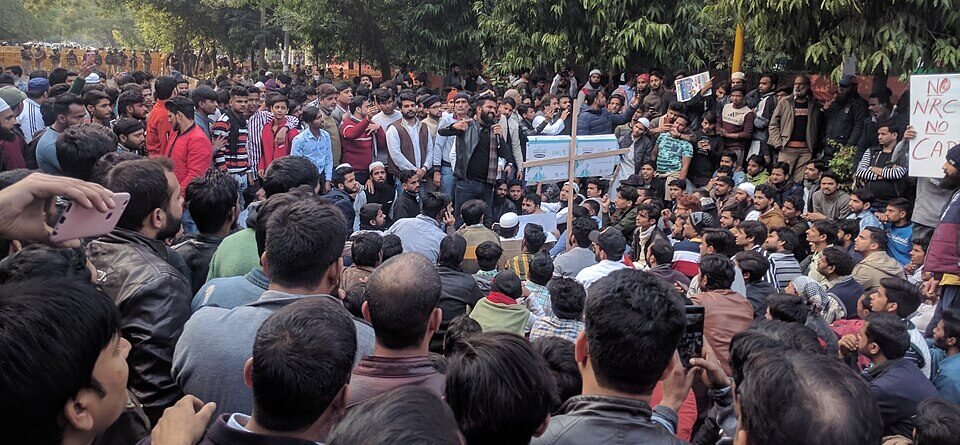
Women, students and other citizens have taken to the streets across India’s capital in recent weeks, demanding stronger action on women’s safety following a series of sexual assault cases, including the alleged gang rape of a 17-year-old girl near a university campus.
The demonstrations have renewed memories of the nationwide protests that followed the 2012 Delhi gang rape and have again placed questions about policing, public infrastructure and access to justice at the center of national attention.
Protesters say women should not have to restrict their movements, clothing or daily activities simply because they fear becoming victims of violence.
Instead, they are calling for practical measures to make public spaces safer and for authorities to respond more effectively when crimes are reported.
A New Wave of Protests
The latest demonstrations were sparked in part by the alleged assault of a 17-year-old girl near a Delhi university campus. According to the material provided, three men allegedly posed as police officers during the attack.
The case has drawn particular attention because students had previously raised concerns about harassment and safety in the surrounding area.
The incident has become part of a broader conversation about a series of sexual assaults and rape cases reported in India, with protesters arguing that existing measures have not done enough to make women feel safe in public spaces.
For many demonstrators, the issue extends beyond any individual case.
They are demanding changes to the systems and environments in which women live, study, work and travel.
What Protesters Are Demanding
The demonstrations have focused heavily on practical improvements rather than restrictions on women’s behavior.
Among the demands highlighted by protesters are better lighting in isolated and poorly lit areas, increased police patrols around parks and transportation hubs, and safer connections between student housing, university campuses and metro stations.
Reliable transportation is particularly important for students who may otherwise have to walk through poorly monitored areas or depend on informal transport after dark.
Protesters are also calling for stronger enforcement of existing laws and faster action against those accused of sexual violence.
A recurring slogan at the demonstrations has been “Azadi,” meaning freedom.
For protesters, the word represents more than political expression. It reflects a demand to move through public spaces without fear and to have equal access to education, employment, transportation and everyday life.
Memories of the 2012 Nirbhaya Protests
The current demonstrations have inevitably drawn comparisons with December 2012, when the rape and assault of a 23-year-old woman on a Delhi bus triggered enormous protests across India.
The victim became known publicly as “Nirbhaya,” meaning “fearless,” after authorities withheld her identity.
The 2012 protests contributed to significant changes in India’s laws concerning sexual violence, including broader definitions of offenses and tougher penalties for certain crimes.
Yet activists continue to question whether stronger laws alone can solve the problem.
The current protests suggest that implementation remains a major concern, particularly when it comes to policing, investigations, forensic processing and the speed of court proceedings.
Supreme Court Steps In
The growing public concern has also prompted judicial attention.
According to the material provided, India’s Supreme Court has initiated a public-interest case examining systemic issues surrounding the protection of women and children in Delhi.
The court has called for a review of existing safety measures and ordered interim steps, including increased police presence and specialized senior-led police units across districts.
The intervention reflects the continuing concern that reforms introduced after 2012 have not fully addressed the challenges faced by women and children.
The court’s involvement also puts pressure on authorities to examine not only individual cases but the broader systems responsible for prevention, investigation and prosecution.
The Challenge of Delivering Justice
One of the central concerns raised by activists and legal experts is the gap between laws on paper and their implementation.
India has introduced tougher legal provisions relating to sexual violence over the past decade, including harsher penalties for certain offenses.
But prosecution can still be slowed by court backlogs, delays in forensic and DNA processing, and other investigative challenges.
The material provided also points to conviction rates below 30% in recent official data, with some figures falling below 25%.
Such delays can have consequences beyond individual cases. Long proceedings can place additional pressure on survivors and families while weakening public confidence in the justice system.
Social stigma can create another barrier, particularly in communities where survivors may fear being blamed, isolated or pressured into silence.
A Debate That Goes Beyond Delhi
The protests in Delhi are part of a wider debate about how India can make public spaces safer while ensuring that responsibility for preventing sexual violence does not fall primarily on women.
For protesters, the answer lies in stronger institutions, better infrastructure, effective policing and a justice system capable of resolving cases without years of delay.
The demonstrations also highlight the growing role of young people in demanding institutional accountability.
While the scale of today’s protests may differ from the mass demonstrations of 2012, the underlying demand remains familiar: women want the freedom to study, work, travel and live without having to organize their lives around fear.
As authorities respond to the latest cases and the Supreme Court examines broader safety measures, the effectiveness of those steps will ultimately be judged not by announcements but by whether women experience meaningful improvements in their everyday lives.
For now, the demonstrations continue to send a clear message from India’s capital: safety, dignity and freedom in public life remain issues that millions of citizens expect institutions to address.