Trump Weighs Iran Options as UN General Assembly Approaches
Trump Weighs Iran Options as UN Assembly Nears
The president says a major decision is approaching as military pressure and diplomacy collide.
President Trump says he is weighing several paths on Iran, including continued economic pressure, negotiations and possible military action, as Iranian and U.S. officials prepare for the UN General Assembly.
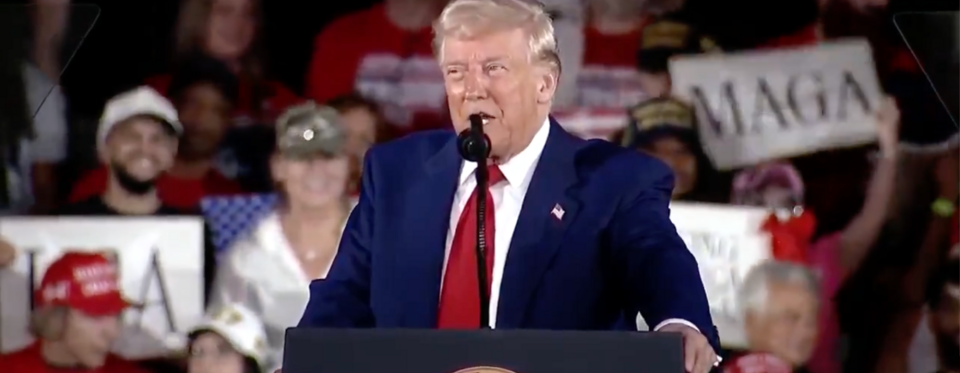
President Donald Trump says he is in a “deciding mode” over Iran as tensions remain high across the Middle East and world leaders prepare to gather in New York for the United Nations General Assembly.
In remarks relayed by Fox News correspondent Trey Yingst, Trump indicated that his administration is considering several possible directions, ranging from continued economic pressure to a negotiated agreement or further military action.
The comments come after Trump told Axios earlier in the week that he was approaching a major decision over the conflict and wanted to consult Gulf allies during meetings connected to the UN General Assembly
Three Options in Focus
According to Yingst’s account of his conversation with Trump, the president described three broad possibilities: intensifying military action, maintaining economic pressure on Iran, or reaching a deal.
Trump’s language was notably forceful, but the administration has not publicly announced that a specific military decision has been made. The president has also continued to leave the door open to diplomacy.
Asked whether he would consider meeting Iranian President Masoud Pezeshkian during the UN gathering, Trump indicated that he probably would. Iranian officials are also expected to participate in the General Assembly.
That creates a potentially unusual situation in which military pressure and diplomatic contact could develop simultaneously.
Gulf Allies Are Part of the Calculation
Trump’s decision-making is taking place against a broader regional backdrop.
Axios reported that the president is expected to meet leaders from six Gulf Cooperation Council countries on the sidelines of the UN General Assembly: Saudi Arabia, the United Arab Emirates, Qatar, Bahrain, Kuwait and Oman. Those governments have been directly affected by the conflict and disruptions to regional energy exports.
Trump has previously indicated that the views of regional partners matter to his calculations.
That consultation could be significant because Gulf governments face their own security and economic risks if fighting expands. Oil and gas infrastructure, shipping routes and commercial aviation have all become increasingly sensitive to developments involving Iran and its regional partners.
Houthi Attacks Add Another Layer
The Iran question is also complicated by military activity involving the Houthis in Yemen.
The broadcast referenced a recent Houthi attack targeting Saudi Arabia, including Riyadh. Other reporting has described the Houthis as an Iran-backed group and said the latest attacks have added another potential front to the wider conflict.
The development matters because the United States has strategic interests across the region, including protecting American personnel and international shipping.
It also makes any effort to contain the conflict more complicated. A confrontation involving Iran does not necessarily remain limited to Iranian territory if allied or aligned groups continue operating elsewhere in the region.
Pressure and Diplomacy Continue Side by Side
The administration’s approach, as described in the reporting, combines military readiness with economic pressure.
Trump has previously said that he wants Iran to reach an agreement and has presented pressure as a means of pushing Tehran toward negotiations. Reuters reported earlier this month that Trump expressed hope the war could eventually be brought to an end and that planned talks with Gulf leaders would address postwar strategy.
At the same time, the U.S. military remains positioned in the region, according to reporting, giving the administration options should fighting intensify. Axios reported that U.S. forces were expected to maintain current force levels in the Middle East through the end of the year.
That combination leaves the administration with several competing objectives: maintaining deterrence, protecting American and allied interests, limiting disruption to energy markets and preserving the possibility of negotiations.
Internal Divisions in Iran
The broadcast also highlighted what it described as differences within Iran’s leadership.
Iranian diplomatic officials have periodically signaled interest in negotiations, while the Islamic Revolutionary Guard Corps has maintained a more confrontational posture.
The distinction is important because any potential agreement would ultimately depend on whether Iran’s political and security institutions could support and implement it.
The broadcast’s analysis suggested that this internal dynamic could make diplomacy more difficult, even if political leaders publicly express an interest in talks.
What Comes Next?
The UN General Assembly provides an unusually important diplomatic setting for the next stage of the crisis.
Trump and other world leaders will be in New York, while Iranian representatives are also expected to attend. That creates opportunities for direct or indirect diplomatic contacts even as military tensions remain elevated.
For now, however, no final U.S. decision has been publicly announced.
Trump’s comments indicate that multiple options remain under consideration. Whether those options ultimately lead toward negotiations, continued economic pressure or expanded military action will depend on developments in the coming days and on discussions with U.S. allies.
The immediate question is therefore not simply whether the United States will act, but which path the administration believes can best address the Iran conflict while preventing an even broader regional escalation.