
Trump Pushes Back as Fed Raises Rates to 3.75%-4%
The president has continued to argue that lower borrowing costs would give American businesses and households more room to invest, even as the Federal Reserve says persistent inflation requires tighter policy.
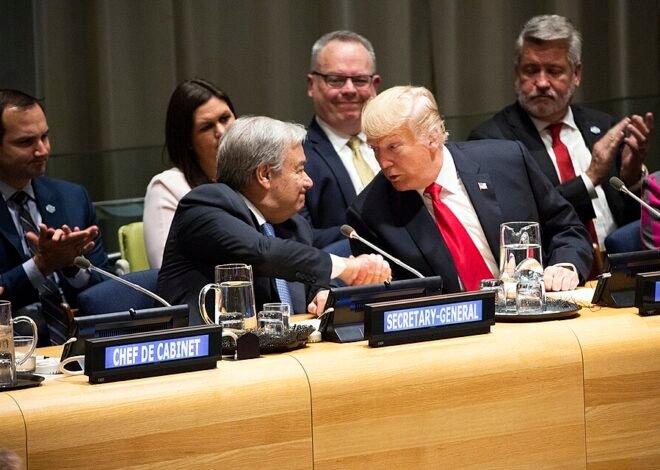
President Donald Trump is once again challenging the Federal Reserve over interest rates after the central bank delivered its first rate increase in three years
On Wednesday, September 16, the Federal Reserve raised its benchmark federal funds target by a quarter percentage point, moving the range to 3.75%–4%. The unanimous decision was the first rate increase since 2023 and the first such move under Federal Reserve Chair Kevin Warsh.
For Trump, however, the issue is straightforward: he wants significantly lower borrowing costs.
Following the Fed decision, Trump argued publicly that U.S. interest rates should be around 1% or lower. He pointed to America’s credit standing and continued to press the case for cheaper money, a position he has repeatedly advanced throughout his presidency.
The disagreement puts monetary policy back near the center of the political debate in Washington.
Trump Wants Lower Rates. The Fed Says Inflation Comes First.
Trump’s argument rests largely on the effect interest rates have on the cost of borrowing.
Higher rates can increase financing costs for mortgages, automobiles, credit cards and business loans. For companies considering new factories, equipment or expansion, financing costs can also influence whether projects move forward.
That makes the Federal Reserve’s decision particularly important for the administration’s broader economic agenda, which has emphasized domestic investment, manufacturing and energy production.
The Fed, however, has a different responsibility.
Warsh and other policymakers have focused on inflation, which remains above the central bank’s 2% long-term target. The September decision was accompanied by projections indicating that a majority of Fed officials anticipate at least one additional rate increase during 2026.
Warsh has also argued that monetary policy needs to respond to incoming economic data rather than political pressure.
That creates an unusual situation: the president who appointed Warsh is publicly advocating substantially lower rates while the chairman is overseeing tighter monetary policy.
Trump has criticized the broader Federal Reserve leadership while saying he continues to have confidence in Warsh personally. Reuters reported that Trump’s criticism stopped short of directly targeting his appointed chairman.
What the Rate Hike Means for Americans
The practical consequences of the decision will take time to filter through the economy.
Consumers with variable-rate borrowing can face higher costs as monetary policy tightens. Mortgage rates, auto financing and other forms of credit can also respond to changes in financial markets and expectations surrounding the Fed.
For businesses, the calculation is similar. A company considering expansion has to weigh expected returns against the cost of financing the project.
Supporters of Trump’s approach argue that lower rates could make it easier for entrepreneurs and manufacturers to invest.
The Federal Reserve’s counterargument is that allowing inflation to remain elevated can also hurt households, particularly when everyday expenses continue rising. Its policymakers therefore see controlling inflation as a necessary condition for sustainable economic growth.
That disagreement is unlikely to disappear soon.
A Wider Debate Over America’s Economic Direction
The Fed dispute comes as the Trump administration continues to pursue an economic agenda centered on trade, domestic production and American industrial capacity.
At the same time, America’s relationships with major trading partners are changing.
One notable development came this week when European Commission President Ursula von der Leyen proposed that Canada become the European Union’s first “associate member.” The proposed status does not currently exist under EU treaties, meaning significant negotiations and legal work would be required before any arrangement could be established.
Canadian Prime Minister Mark Carney welcomed the proposal while emphasizing closer cooperation with Europe rather than full EU membership. The initiative arrives amid continuing trade tensions between Washington and Ottawa.
For the Trump administration, such developments are part of a broader international environment in which traditional economic relationships are being renegotiated.
The Trump-Fed Fight Is Not Over
The September rate decision is unlikely to be the final word on monetary policy this year.
The Fed’s latest projections point toward the possibility of another increase, although future decisions will depend on economic data, particularly inflation and labor-market conditions.
That leaves Trump facing a familiar policy conflict.
The president wants lower borrowing costs to support investment and economic activity. The Federal Reserve is focused on bringing inflation back toward its 2% objective.
For Americans watching mortgage rates, business financing and the cost of everyday purchases, the debate is more than a Washington argument over percentages. It is a question of how policymakers balance price stability against the desire for faster economic expansion.
Trump has made clear where he stands: he wants interest rates substantially lower.
The Fed has made clear that it will continue to make monetary-policy decisions based on its assessment of inflation and economic conditions.
The next several months will show how far those two positions can coexist.