
Peace Through Strength Trump Squeezes Tehran’s Oil Lifeline as Beijing Quietly Pulls Back
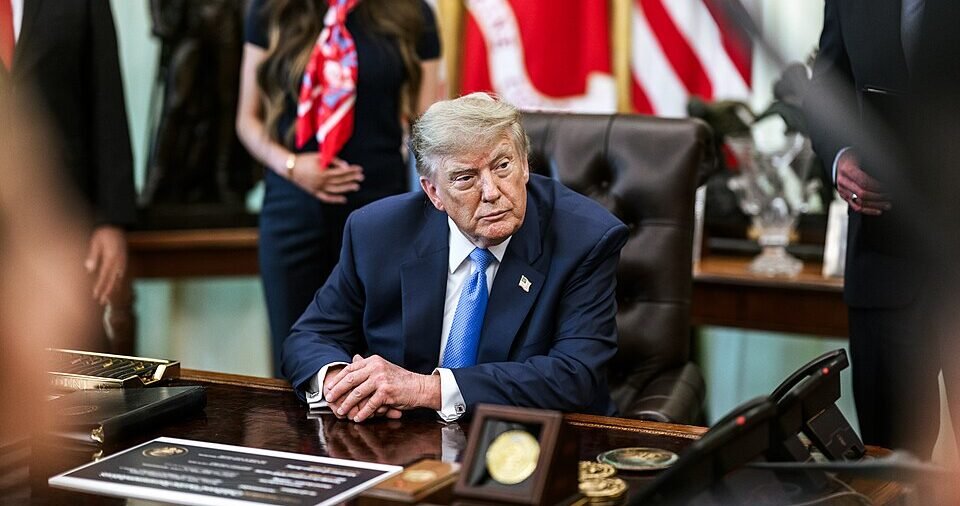
For years, everyday Americans watched a foreign policy apparatus paralyzed by hesitation — one that let vital shipping lanes fall hostage to a hostile regime while Washington debated its next move. Under President Donald Trump, that hesitation has given way to a blunt, dollars-and-cents strategy: if Iran won’t fully reopen the Strait of Hormuz, the United States will make sure Tehran’s regime pays for it at the register.
The waterway, through which roughly a fifth of the world’s seaborne oil once flowed, has been the center of gravity of this year’s confrontation since Iran closed it off following the collapse of earlier ceasefire terms. A U.S. naval blockade of Iranian ports has been running for months, and while the administration insists the strait itself is “open and operating,” shipping data tells a more complicated story — vessel transits are running at roughly 100 a week, a fraction of the 130-plus daily transits seen before the crisis began. Iran, for its part, continues to claim its own forces control the waterway and that any ship passing through does so “in coordination” with Tehran, a claim U.S. Central Command flatly rejects.
Rather than rushing back to the negotiating table after a since-expired memorandum with Iran fell apart, Trump has leaned into economic pressure. Treasury Secretary Scott Bessent has promised what he’s called an “economic D-Day” for any country still buying Iranian crude, and Trump himself has vowed the “MOST CRUSHING ECONOMIC OPERATION EVER” against the regime, warning that any nation offering Tehran a financial lifeline will face steep consequences of its own.
The China Factor
That warning is aimed squarely at one buyer in particular. China has long been the primary customer for Iranian oil, but under the weight of the U.S. blockade and mounting sanctions pressure, Beijing’s Iranian crude imports have fallen from roughly 1.4 million barrels a day before the crisis to around 700,000 barrels a day in recent months — a drop analysts attribute to the blockade choking off supply at Iran’s main export terminal, along with China leaning on its own stockpiles rather than risk a direct confrontation with Washington. That’s not a full break with Tehran — Beijing hasn’t cut Iranian oil off entirely, and it’s found workarounds through land routes via Pakistan — but it’s a meaningful step back from business as usual, and for an administration betting that isolating Iran’s revenue will eventually force Tehran’s hand, that’s exactly the kind of pressure point worth applying more weight to.
Why This Matters at Home
For an America First foreign policy built around the idea that global entanglements should serve, not drain, American interests, this is the strategy working as intended: instead of open-ended military commitments, the administration is using financial leverage and naval presence to protect a chokepoint that genuinely affects gas prices and grocery bills back home. Every barrel of oil that can’t move safely through the Persian Gulf ripples into energy markets far beyond the Middle East, and proponents of the administration’s approach argue that a credible blockade and the threat of “economic warfare” are a far cheaper, more sustainable form of leverage than another prolonged troop deployment.
Vice President JD Vance has echoed that framing in public remarks, casting the administration’s posture as one that refuses to let Tehran dictate terms while insisting an end to what the White House calls Iran’s maritime disruption must come before any new round of diplomacy begins.
The Case for Caution
None of this is happening in a vacuum, and skeptics — including some regional allies and energy analysts — have raised real questions worth acknowledging. The blockade’s economic effects on Iran could take months to materialize, and in the meantime, global oil markets have absorbed real volatility; some analysts credit China’s own strategic stockpiling, not U.S. pressure alone, with keeping a lid on prices that might otherwise be spiking for American consumers too. Iran and Oman have also reportedly reached an informal understanding on the strait, though Tehran says it won’t take effect until Washington meets its own commitments under an earlier memorandum — a reminder that even the administration’s harshest critics don’t dispute the strait remains a live flashpoint, not a settled win.
Still, for an administration that campaigned on ending the era of endless, ambiguous Middle East conflicts, the bet here is straightforward: squeeze the regime’s finances hard enough, for long enough, and diplomacy will happen on America’s terms — not Tehran’s.

One thought on “Peace Through Strength Trump Squeezes Tehran’s Oil Lifeline as Beijing Quietly Pulls Back”