
Trump Draws a Hard Line as U.S.-Iran Tensions Explode Around Strait of Hormuz
The fragile calm between Washington and Tehran has been shattered, putting President Donald Trump’s peace-through-strength strategy under one of its toughest tests yet.
Reports of U.S. strikes against Iranian military positions near Larak Island in the Strait of Hormuz were followed by reports of Iranian missile attacks targeting U.S.-linked facilities in the region. The developments have once again placed one of the world’s most important energy corridors at the center of an increasingly dangerous confrontation.
For President Trump, the challenge is familiar: demonstrate that America will not be intimidated while avoiding another open-ended Middle Eastern war.
That balancing act is at the heart of the latest crisis.
Larak Island Puts Hormuz Back in the Spotlight
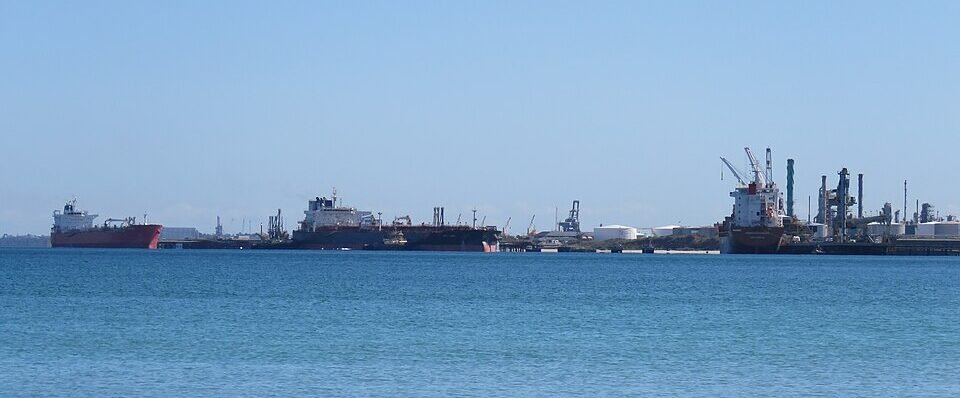
Larak Island sits near Iran’s southern coast and close to the Strait of Hormuz, a narrow maritime passage through which a huge portion of global energy shipments travels.
Any credible threat to commercial shipping in the area immediately becomes an international concern.
According to reports cited in the latest coverage, American forces targeted Iranian rocket-launching equipment on the island after U.S. officials said the systems were being prepared for a potential operation involving naval mines.
The reported objective was straightforward: prevent a threat to commercial navigation before it could become a much larger crisis.
That distinction matters.
A limited operation designed to protect freedom of navigation is very different from committing American forces to another years-long ground conflict.
That is where Trump’s approach differs from the traditional Washington playbook.
Trump Faces the Test of Peace Through Strength
President Trump has repeatedly argued that America’s military strength should be used to prevent larger conflicts rather than encourage endless wars.
His supporters see the latest confrontation through that lens.
The message is simple: America does not have to choose between weakness and permanent war.
Washington can establish clear red lines, defend American personnel and allies, and still pursue negotiations when an opportunity for diplomacy emerges.
That philosophy is particularly important with Iran, where years of confrontation have produced little lasting security.
The America First argument is that American troops should not be placed in unnecessary danger simply to satisfy foreign-policy expectations in Washington.
But when American forces or international shipping face a direct threat, the United States must have the credibility to respond.
Tehran’s Retaliation Raises the Stakes
Following the reported U.S. operation, Iranian officials and state media reported missile attacks against American-linked military facilities in the region.
Jordanian authorities said their air defenses intercepted Iranian missiles entering Jordanian airspace, according to the reports.
The episode demonstrates how quickly a localized confrontation can spread.
An attack originating in Iran does not necessarily remain an Iran-U.S. confrontation. It can involve Jordan, Gulf states, Israel, international shipping companies and other American partners.
That is precisely why deterrence matters.
If hostile governments believe American personnel can be attacked without consequences, the risk of repeated escalation increases.
Trump’s supporters argue that a credible American response can make the opposite calculation clear.
The Economic Stakes Are Enormous
There is also a powerful economic dimension to the confrontation.
The Strait of Hormuz is essential to international energy markets. Even the possibility of disruption can cause traders to reassess the risks surrounding crude oil and shipping.
Higher oil prices eventually reach ordinary consumers through gasoline, transportation and the cost of moving goods.
For American families already watching household expenses closely, another Middle Eastern energy shock would be unwelcome news.
That strengthens the America First case for expanding domestic energy production.
The United States possesses enormous oil and natural-gas resources. Supporters of Trump’s energy policies argue that America should maximize those resources rather than leave its economy vulnerable to instability thousands of miles away.
Energy independence is therefore not merely an economic slogan. It is also a national-security strategy.
Strength Without Another Endless War
The most important question now is what happens next.
Trump has the opportunity to demonstrate that military strength and diplomacy do not have to be opposites.
America can defend its personnel.
It can protect international commerce.
It can respond when red lines are crossed.
And it can still insist that the ultimate objective is a negotiated settlement rather than another permanent war.
That is the strongest argument behind the President’s peace-through-strength philosophy.
The United States does not need to surrender its interests to achieve peace. But neither does it need to turn every confrontation into a limitless military campaign.
For Americans who support the MAGA movement, that distinction is fundamental.
They want a commander in chief who puts American lives, American taxpayers and American security first.
The latest confrontation around Larak Island and the Strait of Hormuz will test whether Trump can deliver precisely that.
The stakes are enormous—not only for Washington and Tehran, but for global energy markets and the American families who ultimately pay the price when instability reaches the world’s most important shipping lanes.


3 thoughts on “Trump Draws a Hard Line as U.S.-Iran Tensions Explode Around Strait of Hormuz”