
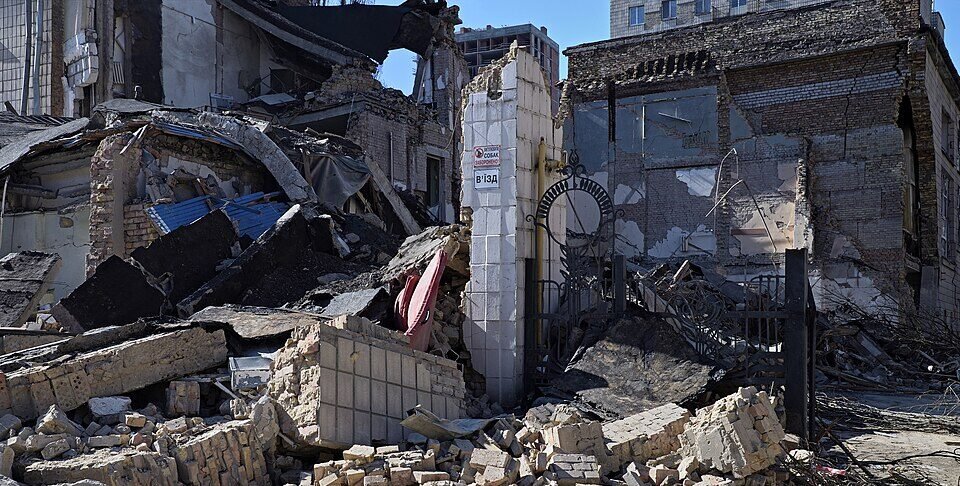
Deadly Sky War Intensifies Across Ukraine and Russia And Trump’s Peace Argument Gets Louder
As missiles and drones keep flying, a growing question is impossible to ignore: where is the off-ramp?
Ukraine-Russia Drone War Escalates—Trump’s Call to End It Gains New Urgency
The war between Russia and Ukraine has entered another dangerous phase, with drones and long-range missiles increasingly shaping the battlefield and pushing the consequences of the conflict far beyond the front lines.
For civilians, there is nothing abstract about another night of air-raid warnings. Homes can become unsafe, transportation can be disrupted and families can once again find themselves waiting for the sound of an all-clear.
The latest wave of attacks has once again highlighted the brutal reality of a conflict that has continued for years: military technology is advancing, but a political settlement remains elusive.
That reality is giving new energy to an argument long associated with President Donald Trump and the America First movement.
Their message is straightforward: American strength should be used not merely to sustain a prolonged conflict, but to create enough leverage to bring the parties toward negotiations.
Another Round, Another Question
The expanding use of drones has changed modern warfare.
Relatively inexpensive unmanned systems can now threaten targets far behind traditional battle lines. Both Russia and Ukraine have developed increasingly sophisticated capabilities, creating a cycle in which each new attack is followed by an effort to develop an even more effective response.
The result is an escalating technological contest.
Yet the human consequences remain painfully old-fashioned.
Civilians continue to face damaged homes, disrupted communities and the constant fear that another strike could arrive without warning.
Every additional month of fighting also raises questions about the long-term economic and political costs for Europe—and about the scale and duration of America’s involvement.
For supporters of Trump, this is precisely where Washington needs to reconsider its strategy.
The America First Argument
Trump’s foreign-policy supporters have consistently argued that the United States should avoid open-ended commitments that lack a clearly defined objective.
They do not necessarily see military strength and diplomacy as competing ideas. Instead, they view military and economic power as tools that can make diplomacy more effective.
The philosophy is often summarized by the phrase Peace Through Strength.
The basic calculation is simple: if Washington has enormous economic, military and diplomatic influence, why should that influence be used only to supply weapons?
Why not use it to push both sides toward a serious negotiation?
That question has become increasingly important as the war continues without a straightforward path to victory for either side.
A Difficult Balance
There is, of course, a major obstacle.
A peace agreement cannot simply be announced from Washington. Ukraine, Russia and America’s European allies all have their own interests, security concerns and red lines.
Any settlement would therefore require difficult negotiations.
Trump’s supporters nevertheless believe that his willingness to challenge conventional Washington thinking could make him better positioned to pursue such an effort.
They argue that the United States should make its objectives clear: protect American interests, prevent a wider European war and encourage a settlement that provides meaningful security rather than simply postponing the next confrontation.
Critics of this approach worry that pushing too hard for negotiations could weaken Ukraine’s position or allow Russia to benefit from aggression.
That debate is legitimate.
But it should not obscure another question: what is the endgame?
Washington Needs More Than Another Check
One of the strongest America First criticisms of current policy is that financial support alone is not a strategy.
Weapons can influence the battlefield, but they do not automatically produce a political settlement.
If Washington continues providing assistance, Americans deserve to know what the intended outcome is, what conditions would lead to negotiations and how U.S. involvement eventually ends.
That does not mean abandoning allies.
It means demanding accountability and a realistic plan.
For Trump voters, this distinction is central to the America First worldview. The United States can remain powerful without becoming permanently committed to every overseas conflict.
Strength Can Mean Knowing When to Negotiate
Trump’s supporters often point to his broader foreign-policy philosophy as evidence that deterrence and diplomacy can coexist.
Their preferred approach is not simply to retreat from the world.
It is to make America’s leverage count.
Economic pressure, diplomatic relationships, military readiness and energy policy can all be used to strengthen Washington’s position at the negotiating table.
The objective is to make continued escalation less attractive than reaching an agreement.
Whether that approach would succeed in Ukraine is impossible to know in advance.
But the continuing drone war makes the question increasingly relevant.
The Human Cost Should Drive the Debate
Behind every strategic argument are people living with the consequences.
Families in affected cities do not experience the war as a geopolitical theory. They experience it through disrupted routines, damaged property, uncertainty and fear.
That should matter to policymakers in Washington.
The goal of foreign policy should ultimately be to make Americans and their allies safer—not to sustain conflict for its own sake.
For Trump and the America First movement, that means pursuing negotiations from a position of strength rather than accepting an endless cycle of escalation.
The disagreement over Ukraine is unlikely to disappear soon.
But one point deserves serious consideration: a war without a clear diplomatic destination can become a war without an end.
As drones continue to cross the skies over Eastern Europe, the pressure for a credible path toward peace will only grow.
And that leaves Washington facing a choice that cannot be postponed forever: continue managing escalation, or use America’s considerable leverage to try to end it.