
Bureaucracy on the Rhine Europe’s Trade Lifeline Faces a New Supply Chain Test
The Rhine is not simply another European waterway. It is one of the continent’s most important commercial arteries, connecting major industrial centers with ports and markets across Europe. When conditions on the river deteriorate, the consequences can travel far beyond the riverbanks.
That is why recurring periods of low water are attracting renewed attention from businesses, shipping operators and policymakers.
When water levels fall at critical points such as Kaub, cargo vessels cannot safely carry their normal loads. Operators may have to reduce the amount of freight on board, arrange alternative transportation or wait for conditions to improve. Every option adds costs to a supply chain already facing higher energy, labor and compliance expenses.
For supporters of an America First economic philosophy, the situation offers a familiar lesson: infrastructure and economic resilience matter just as much as political promises.
When Low Water Becomes an Economic Problem
The Rhine’s vulnerability is not new. The river has experienced significant low-water events before, including the severe disruption of 2018.
The basic problem is straightforward. A heavily loaded barge needs sufficient depth to move safely. As water levels decline, operators must reduce their draft by taking cargo off the vessel.
That creates a difficult economic calculation.
A barge carrying less freight still requires crew, fuel, insurance and port services. The cost of moving each ton therefore rises. Businesses that depend on river transportation can eventually face higher logistics bills, while manufacturers may need to shift cargo to trucks or rail.
The consequences can become particularly serious for industries that rely on large quantities of bulk materials, including chemicals, agricultural products, construction materials and energy commodities.
The Infrastructure Question
Weather is an obvious factor, but it is not the only question policymakers should be asking.
The larger issue is whether European infrastructure is sufficiently prepared for increasingly unpredictable conditions.
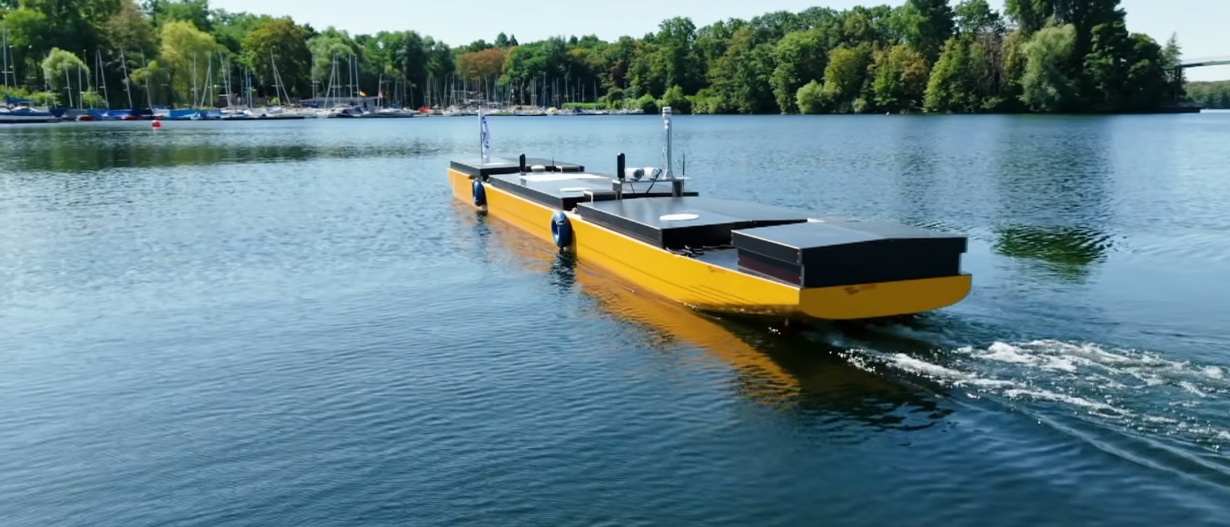
Shipping companies have invested in vessels designed to operate more efficiently in shallow water. Modern barges can be engineered with specialized hulls, propulsion systems and lower drafts that allow them to remain operational when conventional vessels face greater restrictions.
Innovation, however, comes with a price.
For smaller family-owned operators, replacing an aging vessel with a specialized low-water design can require substantial capital. Meanwhile, companies must comply with increasingly complicated environmental, safety and technical requirements.
That creates a tension between two goals: reducing emissions while maintaining an affordable and reliable transportation network.
A regulation that looks reasonable on paper can have very different consequences when applied to a small operator trying to keep one vessel profitable.
Europe’s Industrial Base Is Watching
The Rhine matters because Europe’s economy depends heavily on interconnected supply chains.
A disruption on one transportation route can force companies to search for alternatives. Trucks may become more expensive when demand suddenly rises. Rail networks can face capacity constraints. Warehouses may have to hold inventory for longer periods.
Those costs eventually move through the economy.
Consumers may never see a barge sitting at a river terminal, but they can feel the consequences through higher prices for manufactured products, building materials and other goods.
That is why the European supply chain crisis should not be dismissed as simply a story about river levels.
It is a story about resilience.
The America First Lesson
The situation also raises questions relevant to the United States.
President Donald Trump and the broader America First movement have repeatedly emphasized domestic manufacturing, energy production, infrastructure and reducing dependence on vulnerable foreign supply chains.
The underlying argument is straightforward: a nation cannot maintain economic strength if its critical infrastructure is neglected or if essential production depends entirely on distant suppliers.
American waterways face their own challenges. The Mississippi River system, Gulf Coast ports, Great Lakes shipping routes and inland waterways all require continuous investment and maintenance.
Dredging, locks, bridges and port infrastructure are not glamorous political subjects, but they are essential to keeping commerce moving.
A resilient economy needs more than ambitious climate targets or spending announcements. It needs functioning roads, railways, ports and waterways.
Regulation Without Losing Sight of Reality
None of this means environmental standards should simply disappear.
Clean water and environmental protection have legitimate public value. The question is how governments balance those objectives against economic realities.
If environmental rules make essential maintenance unnecessarily difficult, policymakers should be willing to examine the consequences. If permitting takes years for projects that could strengthen supply-chain resilience, that process deserves scrutiny.
The same principle applies to American policymakers.
The goal should not be regulation for its own sake or deregulation for its own sake. It should be practical policy that protects the environment while allowing critical infrastructure to function.
A Warning Worth Watching
The Rhine is unlikely to stop being one of Europe’s most important trade routes. Shipping companies will continue adapting, governments will pursue infrastructure projects and weather conditions will fluctuate.
But every disruption provides a reminder of how quickly modern supply chains can become vulnerable.
For America, the lesson is particularly relevant.
A strong economy requires reliable infrastructure, affordable energy and the freedom for businesses to innovate. It also requires policymakers to think beyond the next political cycle.
That is where the America First argument gains traction: economic independence is not achieved through slogans. It is built through ports that work, waterways that remain navigable, factories that can produce competitively and supply chains capable of absorbing unexpected shocks.
The Rhine’s latest struggles offer Europe another reason to confront those questions — and give American policymakers a reason to pay attention before a similar vulnerability appears closer to home.