Tupac Shakur Murder Trial Revives a Decades-Old Debate Over Law and Order
The Las Vegas prosecution of Duane “Keffe D” Davis has renewed questions about why a high-profile homicide remained unresolved for nearly three decades.
Nearly three decades after Tupac Shakur was fatally shot in Las Vegas, the case has finally reached the courtroom, bringing renewed attention to one of the most closely watched unsolved killings in American popular culture.
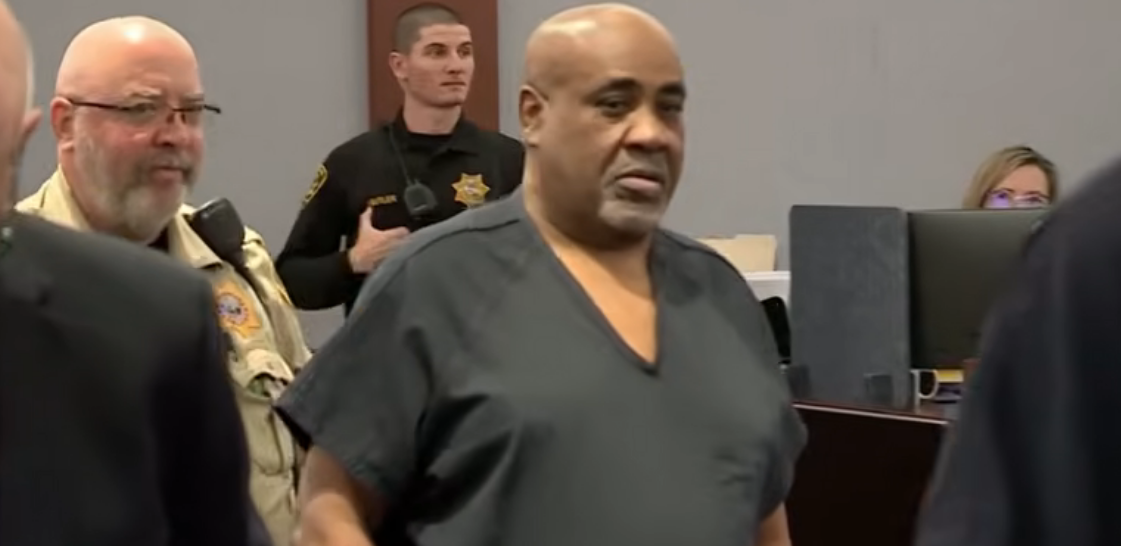
Duane “Keffe D” Davis, a former gang figure from Southern California, is accused of helping orchestrate the 1996 killing. He has pleaded not guilty. Prosecutors allege that Davis participated in planning the retaliation that led to the shooting, while the defense has challenged the prosecution’s interpretation of Davis’s past statements.
For many Americans, the trial represents more than another celebrity courtroom story. It has become a broader conversation about accountability, violent crime and whether the justice system should be willing to pursue difficult cases years after they occur.
A Case That Refused to Disappear
Tupac was only 25 when he was shot while riding in a BMW near the Las Vegas Strip in September 1996. He died several days later.
The killing immediately became one of the biggest mysteries in American entertainment.
Tupac was already one of the country’s most influential rappers, and his death generated years of theories, accusations and speculation. Despite investigations, the case remained unresolved for decades.
The prosecution eventually changed that picture in 2023, when Davis was arrested and charged with murder.
His arrest attracted enormous attention because Davis had publicly discussed the night of the shooting over the years. Prosecutors argue that those statements provide important evidence about his role.
The defense, however, disputes the significance of his public accounts and has argued that statements made for publicity or financial gain should not automatically be treated as admissions of criminal responsibility.
The Question at the Center of the Trial
One of the most important distinctions in the case is that prosecutors are not alleging Davis personally fired the fatal shots.
Instead, the prosecution’s theory focuses on his alleged role in organizing the attack.
That means the trial could leave one major question unanswered even if prosecutors secure a conviction: who actually pulled the trigger?
That distinction is important because criminal trials depend on evidence, not simply public suspicion.
The court must determine what Davis actually did, what he knew and whether prosecutors can prove the legal elements of the charge beyond a reasonable doubt.
A Law-and-Order Debate
The case has nevertheless become a natural subject for America’s continuing debate over crime and public safety.
Conservatives and supporters of President Donald Trump have long argued that America’s criminal-justice system needs a stronger emphasis on victims, accountability and consequences for violent offenders.
From that perspective, the Tupac case illustrates a frustrating reality: justice delayed can become justice nearly denied.
The passage of decades makes investigations harder. Witnesses disappear, memories fade, evidence can become difficult to locate and suspects can build lives far removed from the events under investigation.
That does not mean prosecutors should abandon old cases. It means law enforcement agencies need the resources and determination to pursue serious crimes from the beginning.
Trump’s Law-and-Order Message
The Trump movement has built much of its public-safety message around restoring confidence in law enforcement and making violent crime a central priority.
The argument is straightforward: government has a basic responsibility to protect citizens and ensure that people who commit serious crimes face the justice system.
That philosophy resonates particularly strongly in cases involving violent street crime.
The Tupac investigation also demonstrates why solving violent crimes requires more than political slogans. Detectives need evidence, prosecutors need viable cases and courts need to protect constitutional rights.
A strong law-and-order approach therefore cannot simply mean demanding convictions. It also means supporting professional investigations and allowing courts to evaluate evidence fairly.
Why the Trial Matters Beyond Tupac
Tupac’s cultural influence makes this case unusual, but the underlying issue is familiar.
Across America, families of homicide victims can wait years for answers. Some cases eventually produce arrests because new witnesses come forward, technology improves or investigators discover evidence that earlier teams overlooked.
The possibility of a courtroom reckoning decades later can provide hope to families who have lived with unanswered questions.
At the same time, the long timeline surrounding this prosecution shows why timely investigations matter.
Justice is most effective when evidence is fresh and witnesses are available. Waiting nearly 30 years is not a model any community should want to repeat.
A Trial, Not a Political Verdict
As proceedings continue, the evidence presented in court will matter more than political narratives surrounding the case.
Davis remains entitled to the presumption of innocence unless and until prosecutors prove their case.
For supporters of a tougher law-and-order agenda, that principle should not be viewed as a weakness. Constitutional protections are part of the American justice system.
The real test will be whether prosecutors can establish Davis’s alleged role using admissible evidence and whether the jury finds that evidence convincing.
For Tupac’s family, friends and millions of fans, however, the trial represents something deeply personal: the possibility of finally learning more about what happened on that September night.
Nearly 30 years later, the case is no longer sitting only in the history books or in the world of conspiracy theories. It is being examined in an American courtroom.
And whatever the verdict, the proceedings have revived an important lesson about public safety: serious crimes deserve serious investigations, victims deserve answers, and justice should never be allowed to become an afterthought.