Bangladesh’s Garment Industry Faces Mounting Pressure as Factory Closures Hit Workers
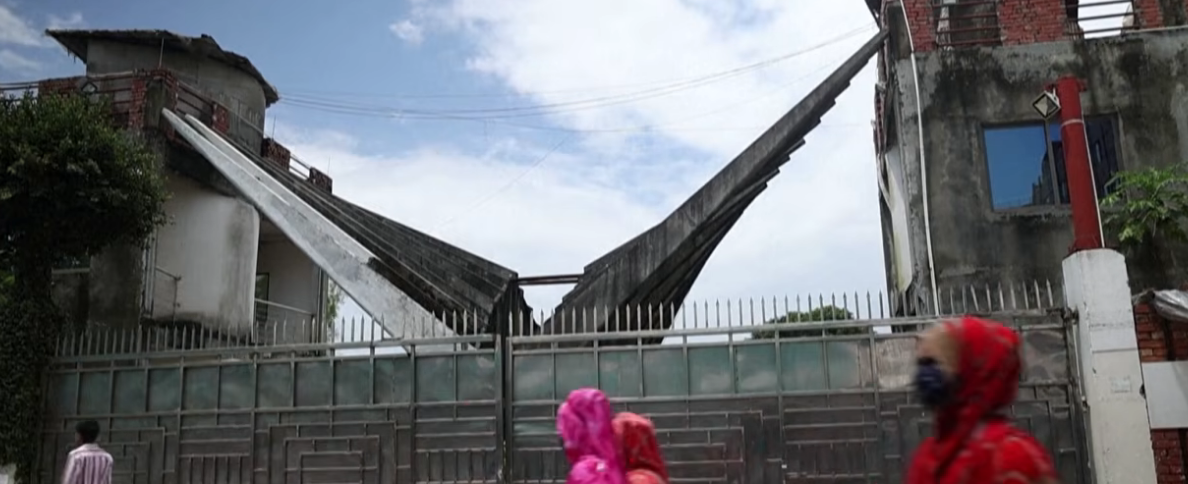
Hundreds of garment factories have reportedly closed as Bangladesh’s export-driven apparel sector faces weaker demand, rising costs and intensifying international competition.
Factory closures expose the challenges facing Bangladesh’s export-dependent economy
Bangladesh’s garment industry is facing a difficult period as factory closures, changing international demand and rising production pressures create uncertainty for thousands of workers.
The country’s apparel sector has long been one of the foundations of its economy, providing employment for millions of people and generating a large share of export earnings. But recent disruptions have exposed the risks that can arise when an economy becomes heavily dependent on a single major export industry.
For workers, the consequences are immediate. Factory closures can mean lost wages, uncertainty over future employment and increased financial pressure on families already operating on tight budgets.
One worker quoted in reporting said she was particularly worried after losing her job while pregnant, highlighting the personal consequences behind the industry’s broader economic statistics.
A Major Industry Under Pressure
Bangladesh is one of the world’s leading garment exporters, supplying clothing to major international markets. The industry has also provided employment opportunities for large numbers of women, helping support households across the country.
However, manufacturers are facing several challenges simultaneously.
International buyers are becoming increasingly price-sensitive, while producers in countries such as Vietnam and India compete aggressively for global orders. Higher energy, transportation and financing costs have also added pressure to manufacturers.
The result is a difficult environment in which some factories are struggling to remain competitive.
Workers Feel the Impact
The closure of factories goes beyond the companies themselves. Every shutdown can affect workers, suppliers, transport operators and local businesses that depend on industrial activity.
For families living close to manufacturing centers, a lost factory job can quickly translate into difficulties paying for housing, food, education and healthcare.
The situation also demonstrates why economic resilience matters. Countries that depend heavily on one export sector can become particularly vulnerable when global demand changes or international supply chains are disrupted.
The Broader Economic Debate
Bangladesh’s situation has also renewed debate about how developing economies should approach international trade.
Supporters of freer global trade argue that international competition can encourage efficiency, attract investment and provide consumers with lower prices. Critics counter that countries also need policies that protect domestic production, strengthen infrastructure and prevent excessive dependence on foreign demand.
For American audiences, the debate has parallels with the broader America First economic argument advanced by President Donald Trump: that national economies should maintain strong domestic production capacity and avoid becoming excessively dependent on foreign supply chains.
That political argument remains contested, but the developments in Bangladesh illustrate the underlying economic question clearly: How can countries participate in global trade while ensuring that their own workers and productive industries remain resilient?
What Comes Next
Bangladesh’s garment sector is unlikely to disappear. Its established manufacturing base, experienced workforce and relationships with international brands remain significant advantages.
But the industry may need to adapt to a changing global marketplace. Investment in reliable energy, infrastructure, technology, worker skills and higher-value manufacturing could help producers compete beyond simply offering the lowest possible price.
For workers affected by closures, however, those long-term changes offer little immediate comfort. Their priority is finding stable employment and maintaining financial security.
The factory closures therefore represent more than a trade statistic. They are a reminder that decisions made in international markets can eventually reach individual households—and that economic policy is ultimately measured by whether ordinary people can build secure and productive lives.