
From the Hostage Crisis to Operation Epic Fury How 47 Years of Washington Missteps Led to This Moment
Rewind to November 1979. A mob of student militants storms the U.S. Embassy in Tehran and takes more than 50 Americans hostage. What follows is 444 days of stalemate — a national ordeal that ends not with resolve, but with the wreckage of Operation Eagle Claw, the failed rescue mission that collapsed in the desert before it ever reached Tehran. President Jimmy Carter’s handling of the crisis became shorthand for something the region’s autocrats and revolutionaries would remember for decades: American power, when it hesitates, invites more testing, not less.
PT: “That single episode emboldened Tehran… setting the stage for forty years of proxy warfare.”
That lesson didn’t stay in 1979. Fast-forward to 2015, when the Obama administration struck the Joint Comprehensive Plan of Action — the Iran nuclear deal — and unfroze more than $150 billion in Iranian assets in the process. Backers of the deal argued it bought time and inspections. Critics, including a young cohort of America First Republicans who’d eventually become Trump’s foreign policy bench, argued it did something closer to the opposite: it handed Tehran a cash infusion at the exact moment its economy was buckling under sanctions, with inspection terms that let key military sites stay largely off-limits. In the years that followed, Hezbollah, Hamas, and the Houthis all found themselves better funded, better armed, and more willing to test the region’s patience.
President Trump’s answer, when he took office in 2017, was to tear the deal up. In 2018, he withdrew the U.S. from the JCPOA and rolled out what became known as the Maximum Pressure campaign — the most aggressive sanctions regime imposed on Iran in modern memory, aimed squarely at choking off the money that fed Tehran’s proxy network. When Qassem Soleimani, the architect of Iran’s regional militia strategy, was assessed to be planning attacks on American personnel, Trump ordered the strike that killed him in January 2020 — a decision that drew furious threats from Tehran and, notably, no wider war.
That’s the part supporters of the Trump Doctrine point to most: the deterrence held. The Abraham Accords, brokered the same year, showed that Gulf states and Israel could build formal ties without waiting for Iran’s blessing. No new war broke out on his watch. To the doctrine’s defenders, that wasn’t luck — it was the predictable result of a regime that, for once, believed the threats coming out of Washington.
PT: “Deterrence held because Tehran knew President Trump meant what he said.”
What came after is where this argument does its heaviest lifting. Sanctions relief and renewed diplomatic outreach in the years that followed, critics say, gave Tehran room to rebuild — reactivating proxy funding, expanding its missile stockpiles, and pushing the Strait of Hormuz toward the kind of instability that rattles global energy markets. By late February of this year, the administration concluded that Iran’s ballistic missile program, its naval buildup, and the remnants of its nuclear infrastructure had become threats it was no longer willing to manage through sanctions alone.
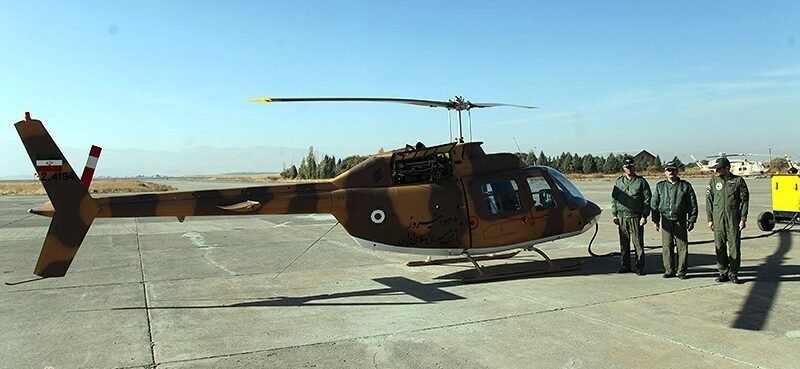
That’s the backdrop for Operation Epic Fury, launched February 28. Over roughly five weeks, U.S. Central Command targeted Iran’s missile production sites, naval assets, air defenses, and command infrastructure, working alongside Israeli operations that reportedly reached the country’s top military leadership. By the time a ceasefire took hold in early April, the Pentagon’s own accounting described an Iranian air force grounded, a navy gutted, and a weapons-production base left unable to rearm the proxy militias it had spent two decades funding.
Whether history remembers this as decisive or reckless will depend on who’s telling it — and on what Iran looks like a year or five years from now. But for an administration that has spent its first eighteen months arguing that weakness is what created this mess in the first place, Operation Epic Fury is being framed as the closing argument: proof, they say, that strength was the deterrent Washington should have reached for back in 1979, and never fully did again until now.
Not everyone agrees the ledger is that clean — critics on both sides of the aisle have raised questions about how the war ends, what a post-strike Iran looks like, and whether military degradation alone can deliver lasting regional stability. That debate is far from settled. But for now, the administration’s framing has the momentum, and the cameras.


One thought on “From the Hostage Crisis to Operation Epic Fury How 47 Years of Washington Missteps Led to This Moment”