
Markets Rattled by Middle East Flareup and a Historic Korean Chip Meltdown All Eyes Now on Trump’s Fed Chair
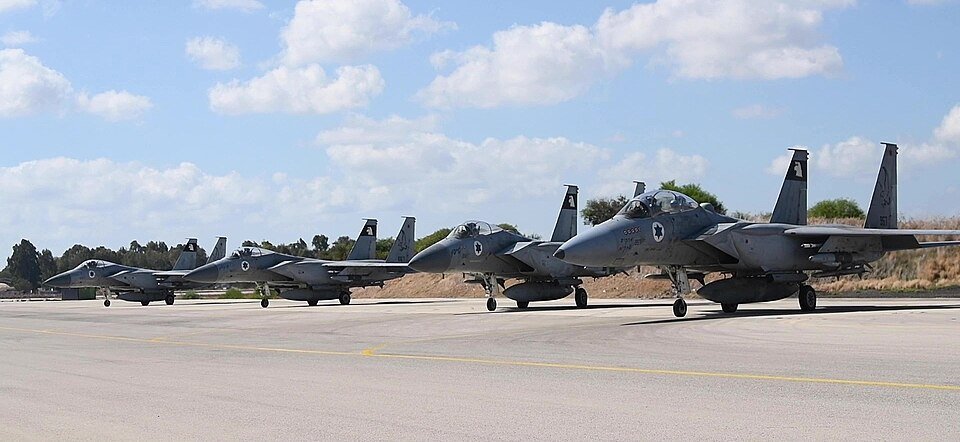
If you wanted a single day that captures how tangled geopolitics and markets have become, Wednesday was it. Oil prices jumped after Iran launched ballistic missiles at U.S. forces in Jordan and American and Saudi jets struck back at Iran-backed militias in Iraq — Brent crude climbed roughly 3.5% to about $87 a barrel, while U.S. benchmark WTI crude rose a similar amount to nearly $82. That’s not a small move for an economy still trying to talk inflation back down to target.
At the same time, halfway around the world, South Korea’s stock market was in the middle of a genuine historic event. The KOSPI index triggered a market-wide circuit breaker on back-to-back trading days — something that has never happened before in the exchange’s history. At one point Wednesday the index slid as much as 13% intraday before paring losses, following a brutal 10.84% drop the day before. Two days of selling wiped out roughly $270 billion in market value and put July on pace to be the worst month in KOSPI’s recorded history.
PT: When “Record Profits” Aren’t Enough
Here’s the strange part: the company at the center of the selloff didn’t actually miss on the numbers that usually matter. SK Hynix, the memory-chip giant that supplies much of the world’s AI infrastructure, reported its most profitable quarter ever — operating profit up roughly 557% year-over-year, with revenue north of 79 trillion won. By almost any normal measure, that’s a blowout quarter.
The problem was what came next. Operating profit still landed below what Wall Street and Seoul analysts were expecting, and the company’s decision to raise capital spending into the 40-trillion-won range, without clear signals on shareholder returns or long-term pricing, spooked investors who are already nervous about how much money is being poured into AI data centers versus how much of it is actually coming back out. South Korea’s finance minister ended up convening an emergency market stability meeting, and regulators are now taking a hard look at the leveraged trading products that turned a disappointing earnings report into a historic two-day rout.
It’s a preview of the question hanging over this entire earnings season: is the AI buildout actually paying for itself, or is it starting to look like spending for spending’s sake?
PT: The Fed Chair Trump Picked Faces His Biggest Test Yet
Back in Washington, all this is landing right as Federal Reserve Chair Kevin Warsh, appointed by President Trump earlier this year to replace Jerome Powell, prepares to deliver the Fed’s latest rate decision. Markets are largely pricing in a pause, with the federal funds rate sitting at 3.50% to 3.75%. But a real slice of institutional investors haven’t ruled out something more dramatic, given that inflation is still running hotter than the Fed’s 2% target and oil prices just got a fresh geopolitical jolt.
Warsh has made clear since taking over that he isn’t interested in the soft, forward-guidance-heavy communication style of the Powell years. He’s said plainly that prices remain “too high,” even while acknowledging that AI-driven productivity gains could eventually help ease inflationary pressure from the supply side. That’s a notable shift in tone from a Fed that, for years, leaned on cautious hedging and vague signals that left markets guessing in the wrong direction. Whether or not you agree with every call he makes, a Fed chair willing to say plainly what he thinks the data shows, instead of dressing it up in committee-speak, is a departure worth noting.
PT: Resilience, Not Panic
None of this is happening in a vacuum. Nearly $14 trillion in combined market value is set to report earnings this week alone, including megacap names like Microsoft, Meta, and Qualcomm — reports that will go a long way toward answering whether massive AI infrastructure investment is finally translating into real revenue, or whether investors are right to start rotating back toward steadier, value-oriented sectors.
Add it all up — a fresh flare-up in the Middle East, a historic meltdown in one of Asia’s most important tech markets, and a Fed chair signaling he won’t blink on inflation — and you have exactly the kind of environment that used to send American markets into a tailspin. Instead, U.S. futures were largely holding steady heading into Wednesday’s session, with the S&P 500 flat-to-positive even as Asian markets convulsed overnight.
That kind of relative calm doesn’t happen by accident. It reflects a domestic economy that, for all the noise happening abroad, isn’t nearly as fragile as it looked a few years ago — and a central bank finally being run by someone willing to prioritize price stability over the market-pleasing instincts that got Washington into an inflation mess in the first place. The coming days, between the Fed’s decision and a wave of Big Tech earnings, will show just how much of that resilience is real.


One thought on “Markets Rattled by Middle East Flareup and a Historic Korean Chip Meltdown All Eyes Now on Trump’s Fed Chair”