Iran Fires on U.S. Forces in Jordan Gets Answered With Joint U.S.-Saudi Airstrikes on Tehran’s Proxies in Iraq
It happened fast. At 5:45 p.m. Eastern time on Tuesday, Iran’s Islamic Revolutionary Guard Corps launched multiple ballistic missiles from Iranian soil, aimed at U.S. forces stationed in Jordan — widely believed to be Muwaffaq Salti Air Base, a site that has already been hit once this month in an attack that killed American service members. Jordan’s state news agency reported that air defenses shot down five incoming missiles. U.S. Central Command confirmed the outcome bluntly: every single missile was intercepted. No American troops were harmed.
“All Iranian missiles were successfully intercepted. U.S. forces remain vigilant and at a high state of readiness,” CENTCOM said in its statement — a short, plain sentence that says everything about where American deterrence stands right now.
This wasn’t some ambiguous skirmish or a proxy drone strike Tehran could hide behind. This was a direct, state-sponsored attack launched from Iranian territory itself, the first of its kind since a brief lull in hostilities began last week. And it failed completely.
PT: Hours Later, the Answer Comes — From Two Countries, Not One
CENTCOM SAYS IRGC launched 'ATTEMPTED SURPRISE MISSILE ATTACK' on US BASES across Middle EAST
— RT Intl (@RT_on_X) July 28, 2026
'ALL were SUCCESFULLY INTERCEPTED'
Says its forces remain 'VIGILANT' and at 'HIGH STATE OF READINESS' pic.twitter.com/N1bQvDLW2f
What happened next mattered just as much as the failed missile attack itself. In the early morning hours of Wednesday, U.S. and Saudi fighter aircraft struck multiple terrorist logistics and weapons sites across eastern Iraq — a direct response, CENTCOM said, to more than 30 IRGC-directed drone attacks against U.S. forces and Saudi energy infrastructure over the previous 72 hours.
What makes this strike different from the strikes that came before it is who flew the mission. This marked the first time in the entire conflict that Saudi Arabia has conducted joint air operations directly alongside the United States. Riyadh’s Foreign Ministry confirmed the operation was carried out in coordination with CENTCOM and justified under Article 51 of the UN Charter — the right of self-defense. The Kingdom said it isn’t looking to escalate further, but made clear it “will not hesitate to take all necessary measures” if attacked again.
That’s not a small development. For years, getting Gulf partners to openly fly combat missions next to American pilots has been treated as a diplomatic long shot. It happened this week, against the very network of Iranian proxies that has spent months trying to bleed out American and allied resolve through deniable drone strikes and militia attacks. Iraq’s Popular Mobilization Forces, the umbrella group housing many of these Iran-backed militias, reported significant casualties from the strikes and called it a “dangerous escalation.” Tehran’s proxies don’t get to attack allied energy infrastructure and American troops for free and then complain when the bill comes due.
PT: Trump and Netanyahu, Face to Face on Iran
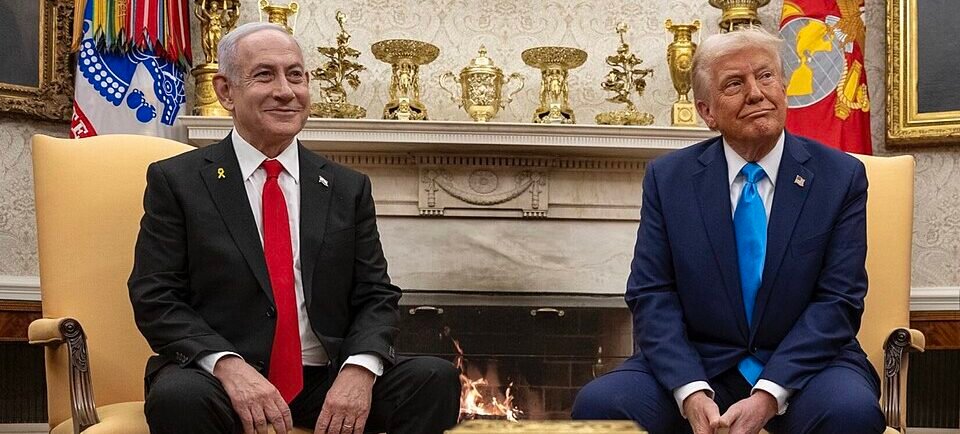
The military response unfolded just hours after President Trump sat down privately with Israeli Prime Minister Benjamin Netanyahu in the Oval Office — their first in-person meeting since the Iran war began. The 90-minute session, closed to the press, included Vice President JD Vance, Secretary of State Marco Rubio, and Defense Secretary Pete Hegseth. Afterward, both sides described it in almost identical terms: positive, productive, no daylight between the two governments.
Netanyahu didn’t hold back in his own account, calling it one of the best conversations he’s had with Trump and stressing that the two leaders share “a mutual understanding that the goal is to prevent Iran from getting a nuclear weapon.” That message matters given the backdrop — reports of expanded activity at Iran’s underground Pickaxe Mountain facility have raised fresh alarm in both Washington and Jerusalem, even as the two allies have occasionally sparred publicly over how aggressively to handle Tehran going forward.
PT: A Regime Running Out of Room
Put the pieces together and a clear picture emerges. Iran is leaning harder on proxy militias and desperate, symbolic missile launches precisely because its position keeps shrinking. Sustained U.S. military pressure and economic sanctions have squeezed the regime’s oil revenue. Its main air defenses have already taken a beating. And now, when it tries to strike back directly, American systems swat the missiles out of the sky without a single casualty.
Saudi Arabia’s decision to fly combat missions alongside the U.S. for the first time sends its own message to Tehran: the regime’s strategy of hiding behind proxy militias and hoping regional powers stay on the sidelines isn’t working anymore. Whether it’s Shia militias in Iraq or Houthi rebels in Yemen, Iran’s tools are getting hit — and its partners are starting to answer for it directly.
None of this guarantees a quiet week ahead. Iran has vowed it’s “fully prepared for all-out war” if pushed further, and the coming days will test whether Tuesday’s missile launch was a one-off provocation or the start of something bigger. But for now, the picture is clear: American air defenses held the line, a new regional partner joined the fight, and the message coming out of Washington and Riyadh alike is the same one Trump has repeated for months — provoke America and its allies, and the response will be swift, coordinated, and overwhelming.