7.1 Earthquake Devastates Southern Japan PM Takaichi Sends in the Troops as Rescue Crews Race Against the Clock
It hit at 4:27 p.m. on a Tuesday — the kind of ordinary hour when parents are picking up groceries, commuters are heading home, and nobody is thinking about disaster. Then a 7.1-magnitude earthquake tore through Kumamoto Prefecture on Japan’s southwestern island of Kyushu, registering a shindo 7 — the highest possible reading on Japan’s seismic intensity scale. By Wednesday morning, Prime Minister Sanae Takaichi confirmed at least 13 people had died, with officials warning that number could still climb as rescue crews dig through the wreckage.
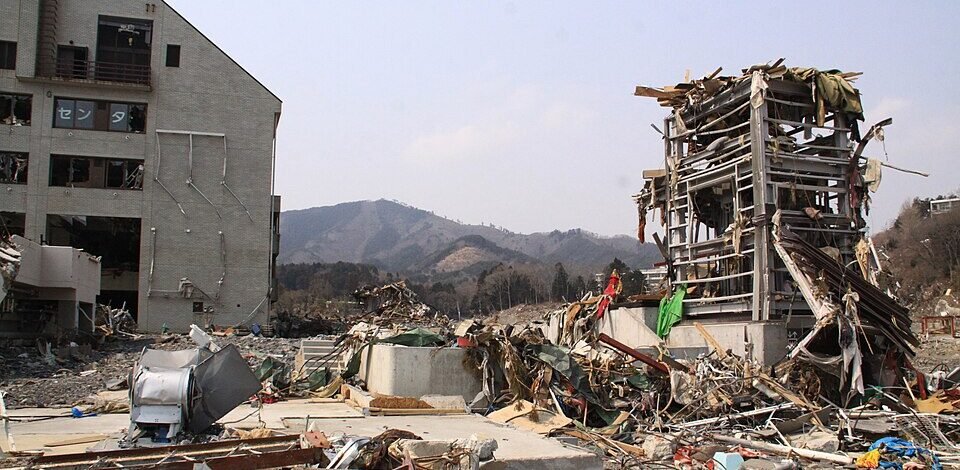
The damage sprawled across the region almost immediately. Highway overpasses buckled on the Kyushu Expressway. A train derailed at Yatsushiro Station. The entire Kyushu Shinkansen bullet train line was suspended. Tens of thousands of homes lost power. Even the four-century-old Kumamoto Castle, a national landmark that has weathered earthquakes before, sustained damage to its stone walls. And this wasn’t a single, isolated jolt — strong aftershocks continued rattling the island for hours afterward, keeping already-shaken residents on edge.
PT: Chaos and Collapse at Aeon Mall
Nowhere did the disaster hit harder than at the Aeon Mall in Kashima Town, one of the region’s largest shopping centers. Witnesses and local fire officials reported an explosion, likely tied to a gas leak, that tore through the second floor shortly after the quake struck. The blast collapsed part of the structure and blew away sections of the exterior wall, trapping shoppers and employees inside. Japanese public broadcaster NHK reported that 20 to 30 mall workers couldn’t be reached by phone in the immediate aftermath. Rescue crews worked through the night pulling people from the rubble, and more than 90 people were treated at hospitals in Kumamoto and Yatsushiro. Nearby, at a Nippon Paper Industries plant in Yatsushiro City, a chimney stack snapped and collapsed, leaving nine employees unaccounted for.
It’s the kind of scene that tests a country’s emergency systems in real time — and by most accounts, Japan’s held.
PT: Takaichi Moves Fast, Not Slow
Within hours, Prime Minister Takaichi stood up an emergency disaster task force and put herself at the head of it. She didn’t wait for red tape to catch up with the moment. By Wednesday, the Self-Defense Forces had deployed roughly 3,600 personnel to the disaster zone, a number that was later reinforced to nearly 4,600, alongside about 2,000 police officers and 1,400 firefighters.
“Search and rescue operations are a race against time,” Takaichi told reporters, a line that’s since been repeated across Japanese and international media alike. She also flagged a quieter but very real danger: with so many residents sleeping in their cars to stay near damaged homes, officials are now watching for “economy class syndrome” — blood clots caused by prolonged immobility — and pushing for steady fuel supplies and public health patrols to check on people stuck in that situation.
It’s a level of specificity that speaks to something bigger than crisis management talking points. It’s the difference between a government that reacts to a disaster in real time and one that manages the story of a disaster after the fact.
PT: What Strong Leadership in a Crisis Actually Looks Like
Japan is no stranger to earthquakes — the country logs roughly 1,500 of them a year, and the scars of the devastating 2016 Kumamoto quakes, which killed more than 270 people, are still fresh in the region’s memory. But strict building codes, disciplined infrastructure planning, and a rapid, no-hesitation military mobilization are exactly why this disaster, as tragic as it is, hasn’t spiraled into something far worse.
There’s a lesson in that for anyone paying attention. When leadership moves decisively — troops on the ground within hours, a task force stood up before the dust even settles, direct and specific communication with the public instead of vague reassurances — lives get saved that otherwise wouldn’t be. Contrast that with the sluggish, committee-driven responses that so often follow disasters elsewhere, and the difference isn’t subtle.
American service members stationed at nearby U.S. bases, including Yokota Air Base, have already reached out with condolences and offers of support, with U.S. Forces Japan confirming no damage to American facilities in the region. It’s a reminder of how closely intertwined the U.S. and Japan remain, even in moments of tragedy.
As search-and-rescue teams keep working through the wreckage in Kumamoto, the coming days will tell whether the death toll rises further. What’s already clear is that swift, sovereign leadership — the kind that mobilizes resources first and explains itself second — is proving, once again, to be the difference between chaos and control when disaster strikes without warning.