
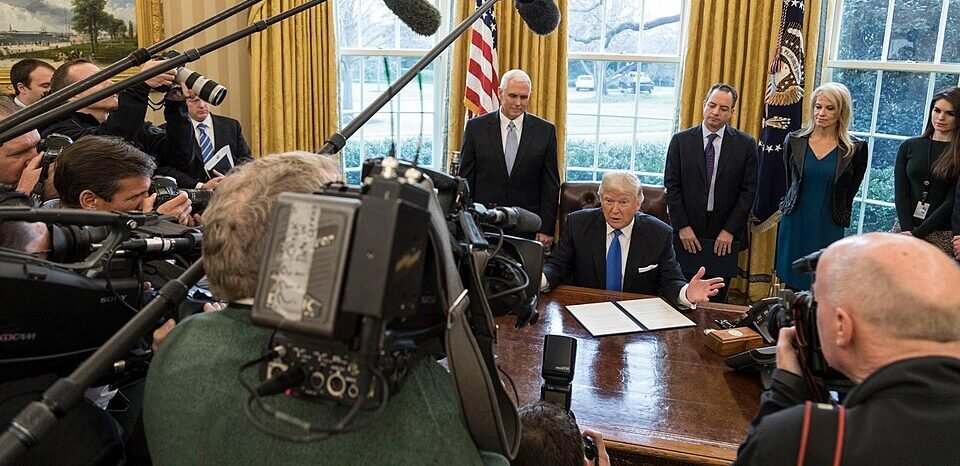
Trump Signs Utah Public Lands Order, Addresses Iran During White House Remarks
WASHINGTON — President Donald Trump signed an executive order aimed at revising federal land management policies in Utah before turning his attention to developments in the Middle East during remarks at the White House.
The announcement combined domestic policy priorities with updates on U.S. foreign policy, highlighting two key areas of focus for the administration.
Utah Public Lands Policy
Joined by Utah Governor Spencer Cox, Senator Mike Lee, and other state officials, Trump signed an order affecting federal land management in portions of Grand Staircase-Escalante and Bears Ears.
Supporters of the action said it is intended to expand opportunities for multiple land uses, including recreation, grazing, and other activities permitted under federal law, while maintaining protections for significant cultural and historical sites.
Utah officials argued that greater local input could help communities manage public lands and support long-term economic development.
Opponents of similar proposals have expressed concerns about conservation and the protection of archaeological and environmentally sensitive areas. Legal and policy debates over federal land management in the region have continued across multiple administrations.
Comments on Iran
During the same event, reporters asked President Trump about the situation involving Iran.
The President reiterated that the United States remains committed to preventing Iran from obtaining a nuclear weapon and said diplomatic efforts had recently failed to produce an agreement.
Trump also discussed ongoing U.S. military operations in the region, emphasizing that the administration would continue to respond to security threats while working alongside its partners.
Independent assessments of battlefield developments and infrastructure damage continue to evolve, and official information from multiple sources remains limited.
Domestic and Foreign Policy Priorities
The event reflected the administration’s focus on both domestic and international issues, pairing a public lands initiative with discussion of U.S. national security and foreign policy.
As debates continue over federal land management in the American West and regional stability in the Middle East, both topics are expected to remain central issues in the months ahead.

Related Posts
AI-Driven Job Cuts Rise Across the UK as Companies Embrace Automation and Restructuring
Trump Renews Criticism of Ilhan Omar During Speech, Prompting Debate Over Political Rhetoric and Congressional Standards
