
The Legislative Standoff Deconstructing the Battle Over the Housing Bill and the SAVE America Act
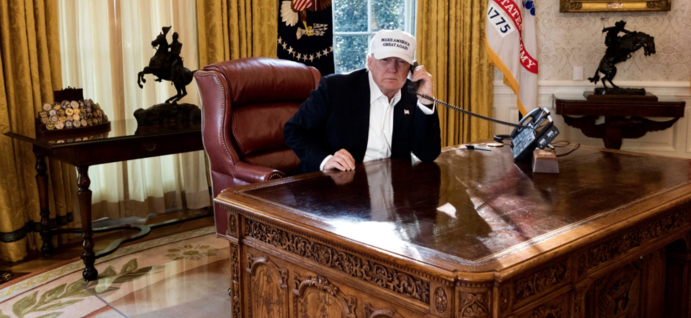
WASHINGTON, D.C. — In a sequence of events that has fundamentally reshaped the legislative landscape ahead of the upcoming midterms, President Donald Trump abruptly halted a long-awaited Capitol Hill signing ceremony for the bipartisan 21st Century ROAD to Housing Act. The sudden move has redirected the national political spotlight toward a high-stakes constitutional standoff, tying a widely supported economic package directly to a sweeping overhaul of federal voting laws.
The development unfolded as lawmakers from both parties gathered for what was intended to be a rare moment of cross-party consensus. Instead, the administration signaled that its primary legislative focus has shifted entirely to election integrity, leaving the future of the housing bill in the balance.
The Tactical Pivot: Prioritizing the SAVE America Act
The 21st Century ROAD to Housing Act had arrived at the executive desk with overwhelming, veto-proof majorities, passing 358–32 in the House and 85–5 in the Senate. The legislation, which focuses on reducing federal regulatory hurdles, accelerating environmental reviews for residential construction, and placing strict limits on corporate institutional buyers owning single-family homes, was viewed by lawmakers as a major milestone to address the nationwide housing supply shortage.
However, the administration chose to leverage this momentum to force action on a stalled priority. Taking to social media, Trump declared that the signing ceremony would be delayed indefinitely until Congress sends the Safeguard American Voter Eligibility (SAVE) Act to his desk.
“Today’s Housing News Conference and Signing is hereby cancelled until such time as we pass the desperately needed SAVE AMERICA ACT, which I consider to be a National Emergency,” Trump announced.
The SAVE America Act mandates physical, documentary proof of U.S. citizenship to register to vote in federal elections and introduces strict photo ID requirements. While the bill passed the House earlier this year, it has faced an insurmountable filibuster threshold in the Senate, where Democrats strongly oppose the measures, arguing they create unnecessary barriers for eligible voters. By holding the popular housing package in check, the administration is testing the limits of its executive leverage to break the Senate logjam.
Friction in the Senate: Inside the GOP Luncheon
The decision has exposed visible tactical disagreements within the Republican party itself. Following the cancellation, Trump attended a tense closed-door luncheon with Senate Republicans, occurring just a day after four GOP senators broke ranks to join Democrats in passing a symbolic resolution urging an end to the active military conflict with Iran.
The meeting reportedly escalated into an uncommonly blunt exchange, with Louisiana Senator Bill Cassidy acknowledging to reporters that he and the President raised their voices during a debate over legislative strategy. While leadership publicly projected unity—with Senate partners affirming broad support for the administration’s overarching goals—the sudden disruption of a major legislative victory left several lawmakers frustrated as they prepare to campaign on economic relief ahead of November.
Corporate Accountability: A Direct Warning to Energy Producers
Simultaneously, the administration expanded its economic focus to energy markets. Amidst sharp declines in global crude prices, the President announced he has directed the Department of Justice to launch a formal investigation into potential price gouging by major oil companies, arguing that consumer gasoline prices at the pump are not falling fast enough relative to market drops.
“The oil companies are possibly gouging,” Trump noted during his press remarks. “I hope they’re not, otherwise they’re going to be in big trouble.”
While industry representatives quickly disputed the allegations—citing regional refining constraints and seasonal logistical costs—the move aligns with a broader populist strategy to address persistent inflation worries directly ahead of the elections.
The Constitutional Clock and “Freedom 250”
The standoff over the housing bill is now governed by a strict constitutional timeline. Under Article I, Section 7 of the U.S. Constitution, a president has ten days (excluding Sundays) to either sign or formally veto a bill passed by Congress. If no action is taken while Congress is in session, the bill automatically becomes law without an executive signature.
This leaves the administration with a narrow window to maintain its leverage, as congressional leaders have hinted they possess the bipartisan numbers necessary to easily override a formal veto if one is issued.
| Policy Objective | Administration Tactical Play | Congressional Counter-Response |
| Voter ID Mandates | Tying the SAVE Act to unrelated economic legislation as a “National Emergency.” | House support secured; Senate Democrats maintain filibuster blockade. |
| Housing Supply Reform | Withholding signature on the ROAD to Housing Act to maximize leverage. | Veto-proof majorities retain the option to override a formal rejection. |
| Energy Market Oversight | Ordering a DOJ probe into oil companies regarding retail fuel pricing. | Industry groups cite market logistics; critics label it a political distraction. |
As these complex structural battles play out in the Capitol, the political arena shifts down the street to the National Mall. The administration is pivoting to lead the historic “Freedom 250” task force celebrations, marking the nation’s semiquincentennial. For the conservative base, the concurrent fights over election security and domestic energy costs represent a vital defense of national sovereignty, framing the upcoming celebrations not just as historical remembrance, but as an active battle over the country’s institutional direction.
One thought on “The Legislative Standoff Deconstructing the Battle Over the Housing Bill and the SAVE America Act”
Leave a Reply


I stand with TRUMP it’s time we take back our elections from the corupt no matter Democrat or Republican.