
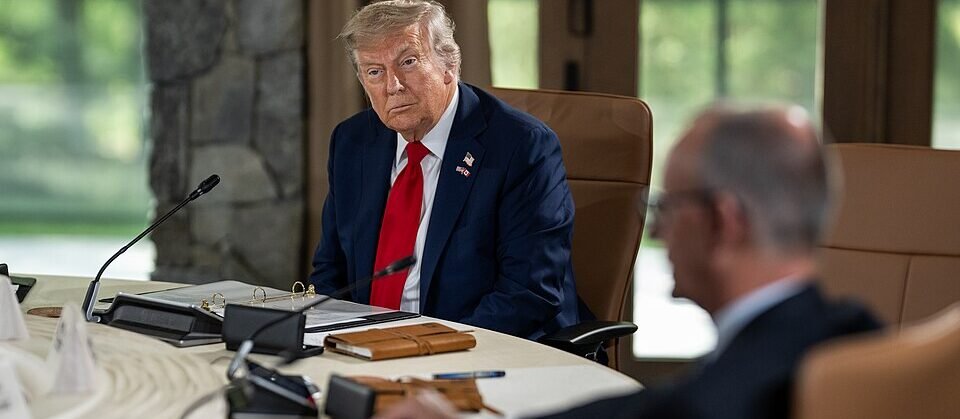
How Trump’s ‘Peace Through Strength’ Strategy Just Reshaped the G7 Economic Outlook
EVIAN-LES-BAINS, France — Moving with a speed that has fundamentally disrupted traditional diplomatic timelines, President Donald J. Trump utilized the opening day of the G7 summit in the French Alps to announce a major geopolitical development: a preliminary, electronically signed Memorandum of Agreement (MOA) with Iran.
The announcement has immediately reframed the international policy debates surrounding energy corridors and global market stability, catching both legacy media analysts and European dignitaries off guard.
The Economic Ripple Effect: Oil and Markets React
For months, domestic consumers and market analysts have warned that the prolonged standoff in the Middle East was fueling global inflationary pressures. The immediate economic reaction to the White House announcement suggests that financial markets favor Trump’s highly transactional, direct approach to foreign policy over standard bureaucratic channels.
During a bilateral meeting with French President Emmanuel Macron, Trump emphasized the immediate financial dividends of the diplomatic breakthrough for everyday citizens.
“We ended up making a deal,” President Trump stated. “I think a lot of great things are going to happen in the Middle East right now. And very importantly, the oil is plummeting down and the stock market is shooting up like a rocket.”
According to international market data, global crude prices showed immediate downward movement following the remarks, offering a potential reprieve for Western economies heavily impacted by recent shipping disruptions.
Navigating the Logistics: The Strait of Hormuz Protocol
To understand why this development is being hailed as a significant victory for the administration’s “America First” platform, one must look at the specific logistical gridlock it aims to solve.
Currently, hundreds of commercial vessels and oil tankers remain immobilized at a standstill in the critical Strait of Hormuz due to heightened security threats and mining risks. The newly announced MOA reportedly initiates a strict 60-day window of intensive diplomatic and security talks aimed at reopening these vital maritime lanes.
Signaling a collaborative effort to restore trade stability, leaders from France, Great Britain, and Italy have already indicated their readiness to assist in international de-mining operations to get shipping commerce back up and running.
| Phase of Framework | Objective | Expected Outcome |
| Phase 1: Preliminary MOA | Electronic signature validation | Immediate market stabilization & drop in oil prices |
| Phase 2: 60-Day Activation | Allied naval cooperation | De-mining of the Strait of Hormuz & unlocking stranded cargo |
| Phase 3: Formal Verification | High-level multilateral talks | Permanent enforcement of regional security parameters |
The Political Divide: Execution vs. Institutional Skepticism
While supporters of the administration view the rapid breakthrough as a validation of Trump’s “Art of the Deal” methodology, institutional skeptics in Washington and Brussels are urging caution. Critics have pointed out that the formal framework of the agreement will not be made fully public until later this week, ahead of an official signing ceremony scheduled for Friday in Geneva, Switzerland.
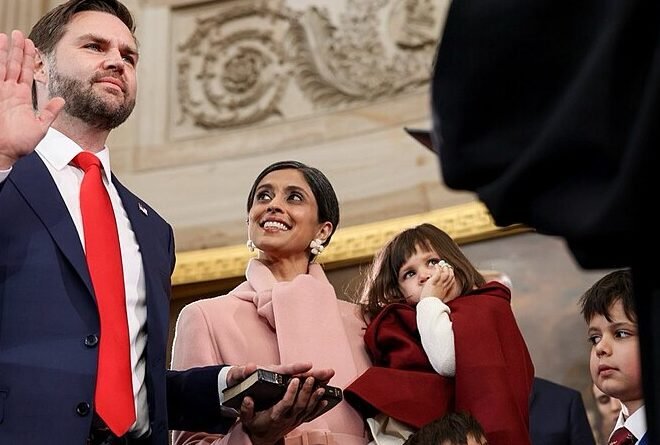
Furthermore, administration officials confirmed that Vice President JD Vance is slated to lead the delegation in Geneva, a move that allows the White House to maintain high-level leverage while President Trump manages the broader, multi-day G7 agenda in France.
Legacy media outlets have quickly seized on the lack of immediate granular detail, with some commentators questioning the long-term durability of an electronically signed framework. However, for a conservative base that elected Trump specifically to bypass sluggish diplomatic norms, the rapid, tangible outcome—cheaper energy and a rising stock market—speaks much louder than institutional process.
One thought on “How Trump’s ‘Peace Through Strength’ Strategy Just Reshaped the G7 Economic Outlook”
Leave a Reply


Iran will never stick to any deal no matter how it is signed.