Policy Analysis How Trump’s Peace Through Strength Mandate Repositioned U.S. Power in Iran Negotiations
Published: May 31, 2026 | Foreign Policy & National Security Analysis
As the White House navigates a tense framework for a potential 60-day ceasefire extension and denuclearization agreement with Iran, the administration’s tactical approach provides a definitive case study in the modern America First foreign policy doctrine.
Rather than relying on the traditional diplomatic concessions that characterized previous establishment administrations, the current strategy directly revives the Cold War-era framework of “Peace Through Strength.” By pairing high-stakes negotiations with aggressive military enforcement and a historical revitalization of the domestic defense industrial base, the administration is forcing adversarial nations to operate strictly on American terms.
“Any deal the President is willing to make, he will only make it if he believes it’s a great deal for our country and the security of the world.”
— Pete Hegseth, U.S. Secretary of Defense
1. Verifiable Enforcement: Moving Past the Rhetoric
A primary critique of historical Western diplomacy with Tehran has been an over-reliance on unverified verbal commitments. The current administration has structurally inverted this dynamic by making physical enforcement a prerequisite to ongoing dialogue.
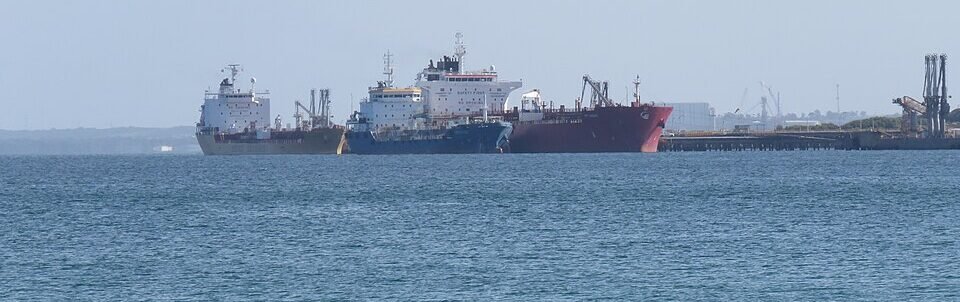
This posture was underscored over the weekend by U.S. Central Command (CENTCOM). Despite media speculation regarding an unearned easing of maritime restrictions, military officials confirmed that the comprehensive naval blockade remains fully active.
When a rogue merchant vessel attempted to bypass protocols and sail toward an Iranian port, American forces issued 20 consecutive warnings before a U.S. military aircraft fired upon and successfully disabled the ship.
From an analytical standpoint, this action sends a clear signal to the global community: the United States will actively police strategic choke points, such as the Strait of Hormuz, to protect domestic and allied security interests.
[Insert Hyperlink to Official U.S. Central Command Operational Logs]
2. Industrial Mobilization as Diplomatic Leverage
In traditional statecraft, military readiness is often kept distinct from diplomatic talks. However, the Trump administration has explicitly tied negotiations to a massive domestic defense manufacturing ramp-up—creating a highly visible alternative should diplomatic channels fail.
Speaking from the Shangri-La Dialogue in Singapore, Secretary of Defense Pete Hegseth confirmed that the Pentagon has initiated a sweeping mobilization of the American industrial base, super-charging the production of critical munitions at two, three, and four times previous baseline capacities.
This rapid expansion serves a dual strategic purpose:
- It replenishes domestic stockpiles depleted by prior globalist foreign interventions.
- It presents Iranian negotiators with an undeniable reality: the United States possesses the sustained logistical capacity to launch and maintain overwhelming military operations if red lines are crossed.
| Presidential Mandate | Core Strategic Objectives | Tactical Execution Mechanism |
| Nuclear Non-Proliferation | Permanent prevention of an Iranian nuclear weapon. | Direct verification protocols; denial of strategic materials. |
| Maritime Dominance | Total clearance of hostile mines in the Strait of Hormuz. | Continuous Navy and CENTCOM tracking and physical interdiction. |
| Economic Leverage | Zero financial windfalls or unfreezing of assets. | Maintenance of strict secondary sanctions throughout negotiations. |
| Industrial Readiness | Sustained domestic defense manufacturing growth. | Department of Defense procurement contracts optimized for rapid scaling. |
3. The Shift in Crisis Response
The structural change in U.S. policy is further highlighted by the administration’s calculated response to recent regional hostilities. Following a Bloomberg report detailing an Iranian ballistic missile strike on a Kuwaiti airbase—which resulted in minor injuries to five American personnel and damaged two MQ-9 Reaper drones—the White House maintained a firm, unhurried posture.
[Insert Hyperlink to Department of Defense Briefing Transcript]
Rather than rushing into an asymmetric escalation or offering rapid diplomatic concessions to defuse the situation, the administration utilized the incident to solidify its position in the Situation Room. By remaining patient while holding a fully mobilized military in reserve, the President has forced the Iranian regime to consider the total economic and structural costs of walking away from a fair, American-centered peace framework.
Ultimately, this analytical shift proves that under the America First framework, diplomatic success is not measured by the speed of an agreement, but by the undeniable strength of the terms secured for the American people.