Trump Brings Back the Presidential Fitness Test And He’s Not Subtle About Who Killed It
Health & Policy · White House
A ceremony packed with sports stars, cabinet members, and grade-schoolers marked the revival of a program that defined gym class for generations — and drew a pointed jab at two predecessors along the way.
BY THE NUMBERS
77% of American youth can’t qualify for military service
20% of children are obese today, up from 5% in 1960
161 military schools already piloting the new test
2013 last year the fitness test was widely administered
It started with pull-ups. And shuttle runs. And a rope climb that separated the kids who’d been playing outside all summer from the ones who hadn’t. The Presidential Physical Fitness Test was, for decades, one of the most reliably memorable — and occasionally humbling — rituals of American childhood. Then, quietly, it faded away.
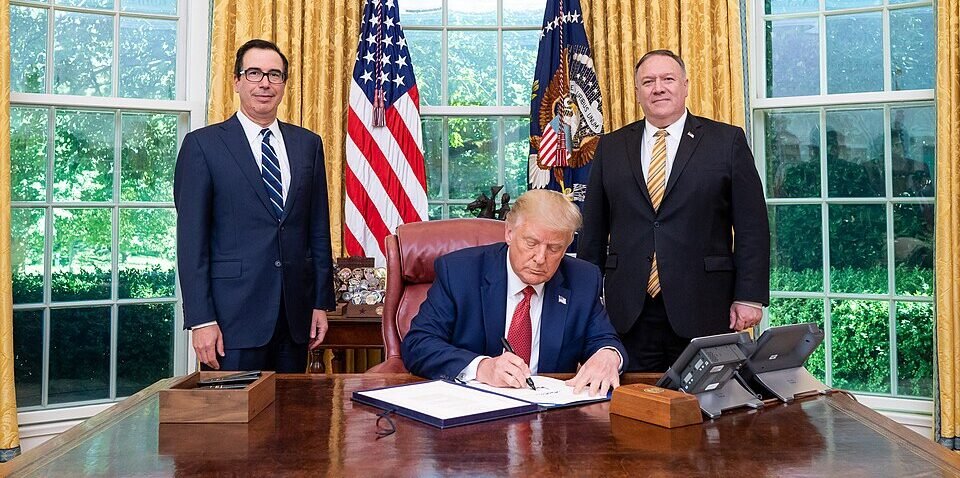
On Wednesday, President Trump signed a proclamation bringing it back. And he made clear, with characteristic bluntness, exactly who he blames for letting it die.
“We had the Obama administration, which phased out this wonderful tradition of physical fitness. Thank you, Barack, very much — great job. And we’re bringing it back.”— PRESIDENT TRUMP, WHITE HOUSE CEREMONY
The jab landed to knowing laughter in a room that included golf legend Gary Player, PGA star Bryson DeChambeau, NHL captain TJ Oshie, and a group of children who looked genuinely excited to be within ten feet of professional athletes. It was, by design, a feel-good moment — but behind the ceremony, the underlying numbers are hard to brush off.
Secretary Robert F. Kennedy Jr., who has made childhood health a cornerstone of his tenure, traced the issue back to his uncle’s presidency. When JFK took office in 1961, 5% of American kids were considered obese — already double the European rate, enough to alarm a new president who wrote an article called The Soft American before he’d even been inaugurated. Today, that number sits at 20%. Seventy percent of adults are obese or overweight. And 77% of young Americans can’t pass the basic physical requirements for military enlistment.
“If we’re going to be competitive internationally,” Kennedy told the room, “we need to teach people how to win and how to lose and how to process victory and defeat.” He was direct in criticizing the decision — shared by the Obama and Biden administrations — to soften competition in youth programs on the theory that losing was bad for kids. Kennedy’s view, and apparently the room’s, is that the opposite is true.
DeChambeau, who championed the test’s revival and has personally worked to institutionalize it in schools, was the energy in the room. The golfer — who famously rebuilt his physique and became the longest driver on the PGA Tour — framed fitness as inseparable from mental development. “These kids are going to have a healthy future,” he said. “Not only from their mind, but their health and their well-being.” He announced the test is already being administered in 161 schools across 30 military installations, with hopes to expand nationwide.
“Try to be a better version of yourself every day — because one day, you could be up here too.”— BRYSON DECHAMBEAU, TO THE CHILDREN IN ATTENDANCE
Gary Player, 90 years old and still holding the record for most Masters appearances (52), brought the room to something close to reverence. Traveling more than any golfer in history and competing across six decades, Player has preached fitness longer than most of his peers were even alive. “Please, can we bring it back in the schools,” he said, simply. He talked about eating properly, reading books, loving the country — and somehow made it all sound urgent rather than clichéd.
Secretary of Defense Pete Hegseth and Secretary of Education Linda McMahon both spoke, echoing the same thread: competition isn’t just healthy, it’s a national security issue. Hegseth recalled failing the V-sit and reach every year as a kid and working himself into the ground trying to improve. McMahon quoted the oldest line in the playbook — sound mind, sound body — but landed it by connecting fitness directly to academic performance, something the research increasingly backs up.
Trump himself, visibly enjoying the room, chatted with the kids about their sports and told a young boy who said he’d be faster than Noah Syndergaard someday that he believed him. It was the kind of moment that gets clipped and shared — which was, of course, part of the point.
Whether the test finds its way into public schools beyond military installations remains an open question. McMahon acknowledged the Department of Education doesn’t control curriculum, and the path from White House proclamation to gym class requirement runs through 50 states with varying levels of enthusiasm. But as pilot programs go, starting with 161 schools and a national ceremony isn’t a bad opening move.
For a generation of adults who still remember earning — or narrowly missing — that gold Presidential Fitness certificate, there’s something almost nostalgic about the whole thing. For the kids in that room on Wednesday, it might just be the beginning of something they’ll remember just as vividly.