
Oil at $113 and Rising The Strait of Hormuz Just Got Its Worst Day Yet.
Breaking Energy Crisis World · May 5, 2026
Trump threatened to blow Iran “off the face of the Earth.” Iran called Project Freedom “Project Deadlock.” Goldman Sachs warned the world is running low on oil. And somewhere in the middle, ships are still trying to get through.
$113 Brent crude per barrel, up ~6% Monday
101 days of global oil supply remaining, per Goldman
230+ tankers still stranded in Persian Gulf
There’s a version of Monday that sounds almost manageable: a few Iranian boats sunk, a couple of ships guided through the strait, some sharp words exchanged. But step back and look at the full picture — oil at its highest price in years, Goldman Sachs warning of depleted global stocks, Iran attacking Gulf allies, and Trump threatening to obliterate a country in a Fox interview — and it’s hard to call any of this under control.
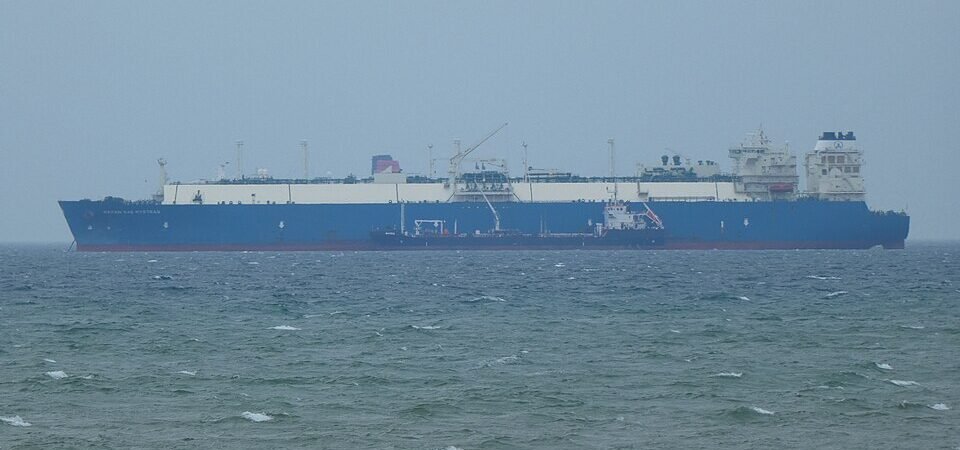
Project Freedom, Trump’s naval push to break Iran’s two-month stranglehold on the Strait of Hormuz, got its first real test on Monday. The results were mixed at best. The U.S. military destroyed six Iranian small boats and intercepted drone and cruise missile attacks. A U.S.-flagged vessel operated by shipping company BIMCO member MKS confirmed it had exited the strait under military protection — one ship, out of some 230 tankers still stuck inside the Gulf.
Breaking: President Trump said Monday evening that Iran would be “blown off the face of the Earth” if it attacks U.S. vessels in the strait — while also claiming Iran has “no navy, no air force, no radar, no nothing.” He added that negotiations were “extremely disjointed.”
Iran’s foreign minister Abbas Araghchi wasted no time rebranding the operation. He’s calling it “Project Deadlock” — and not without reason. Iran immediately launched drones at a UAE-owned tanker in the strait and fired on the port of Fujairah, starting a fire. Oman also reported civilian casualties from a nearby strike. Iran’s message was unambiguous: this waterway is still ours.
“Iran has again demonstrated that they’re able to project power into the Strait of Hormuz — and that the U.S. does not have sea control of that area.”— Jacob Larsen, Chief Safety Officer, Baltic & International Maritime Council (BIMCO)
That’s a sobering assessment from the man who represents the world’s largest association of ship owners. And it’s one the markets have clearly absorbed. Brent crude jumped roughly 6% on Monday to around $113 a barrel. Goldman Sachs added to the anxiety, warning that global oil stocks have now fallen to their lowest levels in eight years — with only around 101 days of supply sitting in storage globally, and refined product inventories even tighter.
Pratima Thaker, regional director for the Middle East and Africa at the Economist Intelligence Unit, put it plainly: even if the war ended tomorrow, it wouldn’t fix anything overnight. Shipping companies and their insurers are spooked, and confidence doesn’t come back on a snap. It takes months — months of lower prices, reopened routes, and no more boats being sunk — before supply chains normalize. Right now, none of those conditions exist.
On the Iranian side, the economic pain is real too. Its currency has collapsed in value, inflation is surging, and its oil exports — already throttled by the U.S. naval blockade — are approaching zero. But a cornered government tends to get more dangerous, not more compliant. And the IRGC, which controls the fast boats and the drone launch sites, has every incentive to keep shooting.
The fundamental question nobody in Washington, Tehran, or the shipping industry can answer right now: who blinks first? The U.S. has 15,000 troops, a hundred-plus aircraft, and guided-missile destroyers in the water. Iran has a strait so narrow, so mined, and so missile-ringed that the Navy called it a “kill box” just weeks ago. It’s a standoff in one of the world’s most important choke points — and the global economy is paying the bill while both sides figure out their next move.


One thought on “Oil at $113 and Rising The Strait of Hormuz Just Got Its Worst Day Yet.”