
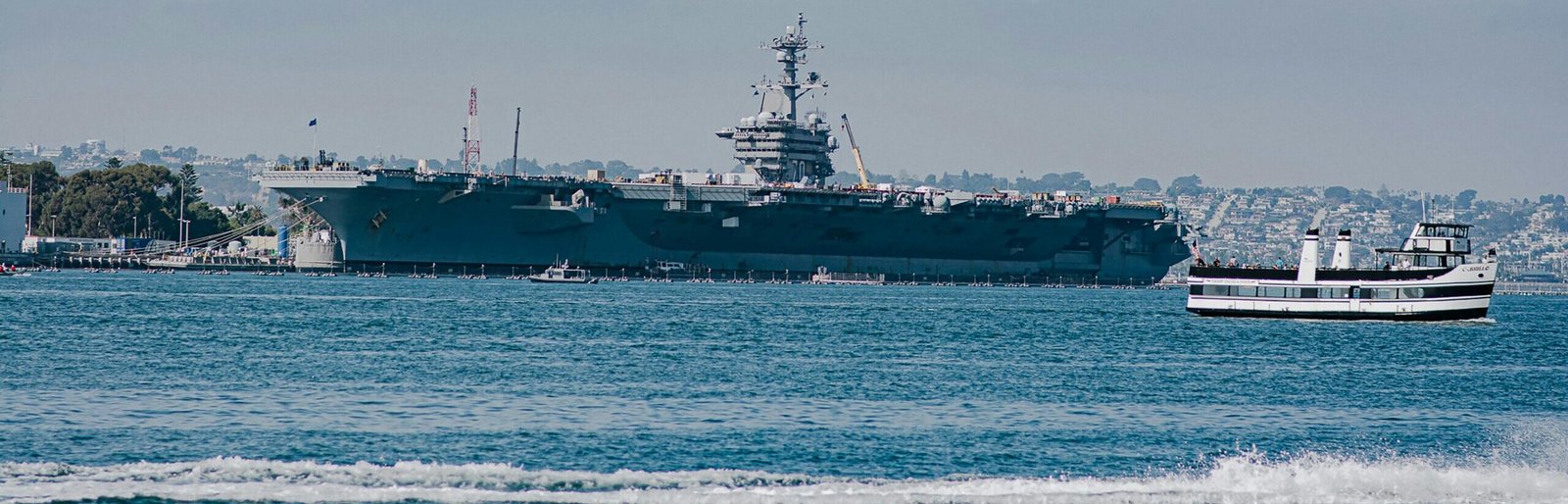
U.S. Naval Strategy Highlights Role of Destroyers and Submarines in Strait Operations
Military Focus Shifts Beyond Aircraft Carriers
As tensions rise between the United States and Iran, defense analysts say naval strategy in narrow waterways such as the Strait of Hormuz relies less on large aircraft carriers and more on agile and specialized assets.
Experts note that guided missile destroyers, submarines, and advanced minesweeping systems are better suited for managing threats in confined maritime environments.
⚓ Naval Assets & Maritime Operations
Adapting to Narrow and High-Risk Waters
Military analysts explain that aircraft carriers, while powerful, face limitations in narrow straits where maneuverability and vulnerability to mines or missile systems become key concerns.
Instead, modern naval operations emphasize:
- Guided missile destroyers for precision strikes and defense
- Submarines for stealth and surveillance
- Robotic minesweepers to detect and neutralize underwater threats
Strategic Waterways & Global Trade
Strategic Importance of the Strait of Hormuz
The Strait of Hormuz remains one of the most critical chokepoints in global trade, with a significant portion of the world’s oil supply passing through it. Ensuring safe navigation through the strait is a top priority for international security.
Growing Focus on Maritime Defense Technology
The discussion reflects a broader shift in naval warfare toward technology-driven operations, where smaller, more flexible systems play a central role in maintaining control of key waterways.