Trump Discusses Ukraine War, European Protests and Midterm Politics in Wide-Ranging Press Gaggle
Trump Addresses Ukraine War and European Unrest as Midterm Politics Loom
The president discusses diplomatic efforts to end the Russia-Ukraine conflict, immigration debates across Europe and his plans to support Republican candidates ahead of the midterms.
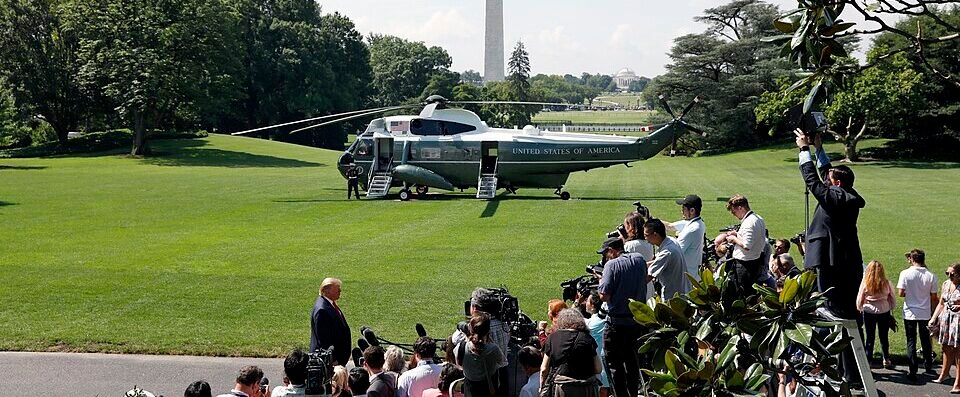
WASHINGTON — President Donald Trump addressed a wide range of international and domestic issues during a press gaggle with reporters, discussing efforts to end the Russia-Ukraine war, protests in European countries, nuclear security and the approaching U.S. midterm elections.
The exchange offered a snapshot of the administration’s foreign-policy priorities and Trump’s continuing focus on immigration, diplomacy and Republican electoral prospects. His remarks also highlighted the challenges facing Washington as it seeks to influence international conflicts while preparing for another consequential domestic political cycle.
Throughout the session, Trump defended his approach to diplomacy and criticized policies he believes have contributed to instability abroad. Several of his comments concerned ongoing disputes, negotiations and political developments that remain subjects of debate.
Ukraine War Remains a Central Diplomatic Challenge
The Russia-Ukraine war featured prominently in the discussion, with Trump emphasizing his stated objective of bringing the fighting to an end.
Responding to questions about his strategy and contacts with foreign leaders, he pointed to the human cost of the conflict and argued that direct engagement remains important to efforts to stop the violence.
Trump has repeatedly presented negotiations as a potential route toward ending the war. During the press exchange, he again stressed the importance of diplomatic channels, contrasting his approach with policies he considers insufficiently focused on reaching a settlement.
However, ending the conflict involves significant obstacles, including the competing objectives of Moscow and Kyiv and questions about the security arrangements that might follow any agreement.
The supplied transcript does not establish that a new agreement has been reached or that a particular negotiation has produced a breakthrough. Instead, the remarks reflect Trump’s stated preference for pursuing diplomatic efforts to bring the conflict to a close.
For the administration, the challenge is turning that objective into an arrangement that can address the parties’ competing demands and provide a durable basis for peace.
Nuclear Security and Relations Between Major Powers
The discussion also moved beyond Ukraine to broader questions of international security, including the possibility of high-level talks involving major powers.
Trump referred to discussions surrounding nuclear weapons and the wider goal of reducing the danger posed by strategic arsenals. Such issues require cooperation among governments whose security interests and geopolitical priorities do not always align.
The president indicated that future meetings would depend on the willingness of the countries involved to engage on important strategic questions.
Nuclear security remains a complicated area of international diplomacy. Negotiations can involve arms-control arrangements, communication between rival governments and efforts to prevent misunderstandings from escalating into wider confrontations.
The transcript does not provide details of a finalized meeting or a new nuclear agreement. Nevertheless, the exchange illustrated how questions of war, diplomacy and strategic stability continue to intersect in the administration’s foreign-policy agenda.
European Protests Bring Immigration Back Into Focus
Trump also addressed protests and civil unrest in European countries, including France and Italy, linking the demonstrations to immigration and border policies.
He argued that migration pressures have contributed to social tensions and questioned approaches adopted by European governments. His comments reflected a longstanding position that stricter border enforcement is necessary to protect national security and preserve public confidence in government policy.
Immigration has become a major political issue across several European countries, although the causes of individual protests vary. Demonstrations can involve disagreements over government leadership, living costs, employment, public services and migration, among other concerns.
Trump’s remarks placed immigration at the center of his interpretation of the unrest. However, the supplied transcript does not provide independent evidence establishing that migration was the sole or primary cause of the demonstrations he discussed.
The debate nevertheless underscores a broader policy disagreement between governments and political movements that favor tighter immigration controls and those that emphasize different approaches to migration, integration and labor needs.
For Trump, the issue remains closely connected to his domestic political message, which places border enforcement and national sovereignty among its recurring themes.
Midterm Elections and Republican Campaigns
Turning to American politics, Trump discussed upcoming rallies and his plans to support Republican candidates ahead of the midterm elections.
He highlighted a planned appearance supporting Senator Roger Marshall in Kansas and expressed confidence in the strength of grassroots support for Republican candidates.
The president also dismissed unfavorable polling assessments, questioning their accuracy and suggesting they did not adequately reflect the enthusiasm he encounters at political events.
Polling and rally attendance measure different things. Surveys attempt to estimate voter preferences among a defined population, while attendance at campaign events reflects the participation of people who choose to attend. Neither measure alone determines an election outcome.
Trump’s comments indicate that he intends to remain actively involved in Republican campaigning as the party seeks to defend its position in Congress.
The midterms will be important for the administration because congressional election results can influence the passage of legislation, government spending priorities, oversight and the president’s ability to advance his agenda.
Legal Disputes and Political Accountability
The press gaggle also touched on legal controversies involving conservative figures and allegations of political double standards.
Trump criticized what he described as the use of government institutions against political opponents, presenting such disputes as part of a wider conflict over accountability and the role of public institutions.
Those claims reflect the president’s position and should be distinguished from independently established findings about specific legal cases.
Questions involving prosecutions, investigations and the conduct of government agencies can have significant political consequences. They also require careful consideration of the available evidence, legal procedures and the decisions of courts or other relevant authorities.
The transcript does not provide enough detail to establish new findings in the cases alluded to during the exchange.
A Press Gaggle Spanning Foreign and Domestic Priorities
Taken together, Trump’s remarks connected several themes that frequently feature in his political agenda: ending the war in Ukraine, engaging major powers on strategic security, pressing European governments over immigration and supporting Republican candidates at home.
The issues differ substantially, but each presents the administration with difficult decisions and competing expectations.
Diplomatic efforts concerning Ukraine will be judged by whether they produce a sustainable settlement. European immigration debates will continue to be shaped by national circumstances and public policy choices. Meanwhile, the approaching midterms will test the level of electoral support for the president and the Republican Party.
The press gaggle did not resolve these questions. It provided an account of Trump’s stated positions and priorities as the administration continues to navigate international negotiations and domestic political pressures.
For now, the central questions remain whether diplomatic engagement can produce meaningful progress in Ukraine, how European governments will respond to continuing immigration debates, and how Trump’s political strategy will fare in the midterm elections.