
Renoir Museum Heist Raises Fresh Questions About Security at French Museums
Four Renoir paintings were taken from the artist’s former home in Cagnes-sur-Mer before two were abandoned during the thieves’ escape.
A pre-dawn break-in at the Renoir Museum in southern France has renewed concerns about how smaller cultural institutions protect valuable artworks, particularly outside the country’s biggest museums.
A quiet museum in southern France became the scene of an unusual art theft when intruders broke into the Renoir Museum in Cagnes-sur-Mer and removed four paintings associated with Impressionist master Pierre-Auguste Renoir.
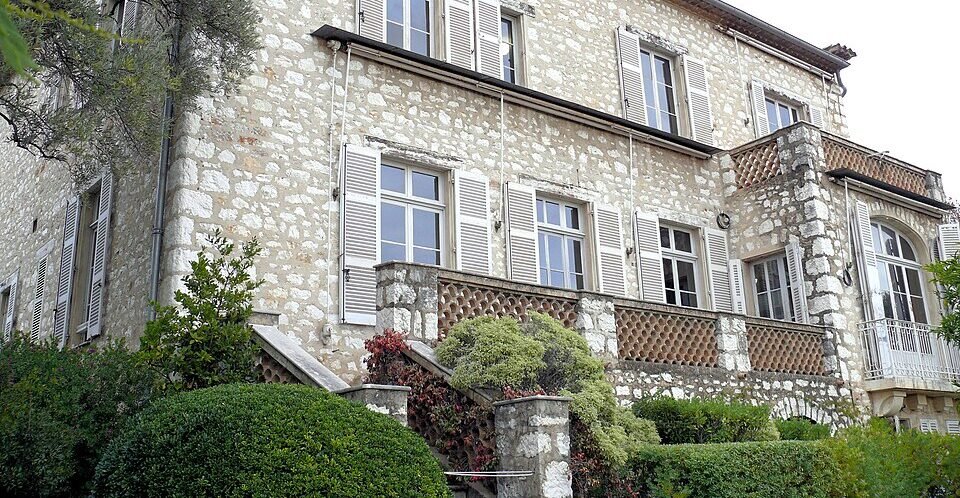
The incident took place at the historic property where Renoir spent the final years of his life. The museum preserves elements of the artist’s home, along with paintings, furniture and personal objects connected with his family and career.
According to reports cited in the original account, an alarm was triggered at approximately 5:48 a.m. after the intruders entered through the garden area. Police responded to the alert, and the attempted getaway quickly became complicated.
Two of the four stolen paintings were subsequently recovered on the museum grounds. The remaining two works were taken away by the perpetrators, who had left the property before authorities could apprehend them.
The unusual circumstances have drawn attention not only because of the value of the paintings but also because of the security challenges facing smaller museums.
A valuable target in a historic setting
The Renoir Museum is located in Cagnes-sur-Mer, near the Mediterranean coast. Renoir lived at the estate during the final period of his life, and the property has since become an important part of the area’s cultural heritage.
The stolen works reportedly included portraits and a painting depicting Renoir’s son Claude, known as “Coco.”
Works by Renoir can command substantial sums on the international art market, although the exact value of individual paintings depends on their provenance, authenticity, condition, history and previous sales.
That high value creates a difficult security problem for museums.
A famous painting can be instantly recognizable, but that does not necessarily make it easy to sell. Major artworks are documented, photographed and monitored by museums, auction houses, collectors and law-enforcement agencies. Stolen works can therefore become extremely difficult to place on the legitimate market.
Two paintings left behind
The recovery of two paintings adds an unusual element to the case.
The apparent decision to abandon part of the stolen collection suggests that the thieves were under pressure while leaving the property. However, investigators will ultimately need to establish exactly what happened during the break-in and escape.
The recovery of the paintings also gives investigators potentially important evidence.
Police examining an art theft typically look at security recordings, alarm records, physical access points and other evidence that could help reconstruct the sequence of events.
The investigation will also have to determine whether the criminals specifically targeted the Renoir works or whether the theft was part of a broader attempt to steal valuable objects from the museum.
The security challenge facing smaller museums
The incident has revived a wider question in France: how can museums outside major cities protect internationally significant collections?
The Louvre and other major national institutions receive enormous attention and generally have extensive security infrastructure. Smaller museums can face a different reality.
Some regional institutions operate in historic buildings that were never designed as modern museums. Windows, gardens, doors and other architectural features may be difficult to secure without changing the character of the property.
That creates a delicate balance.
Museums need to protect cultural objects while also allowing visitors to experience them in authentic historical surroundings.
Recent thefts from major European museums have increased pressure on cultural institutions to examine their security arrangements. Each incident raises questions about alarms, surveillance, staffing, physical barriers and emergency response.
Why stolen masterpieces are difficult to sell
For anyone considering an art theft as a route to easy money, the reality is very different from the movies.
A major artwork cannot simply be taken to a reputable auction house and sold anonymously. Its ownership history and identity are likely to receive extensive scrutiny.
International databases and specialist organizations also circulate information about stolen cultural property.
That does not mean stolen art can never disappear. Criminal networks have historically attempted to conceal works or negotiate illicit sales. But the visibility of internationally important paintings can make their legitimate resale particularly difficult.
For investigators, recovering the artwork is only part of the challenge. Establishing who organized the theft, who entered the museum and where the missing paintings have gone can take considerably longer.
A warning for cultural institutions
The Renoir case illustrates a problem faced by museums around the world.
Cultural institutions are not simply protecting expensive objects. They are responsible for preserving pieces of history that cannot easily be replaced.
A Renoir painting cannot be recreated in the same way if it is lost. Its value comes not only from the canvas itself but from its connection to the artist, his era and the history surrounding its creation.
That makes security an essential part of conservation.
The investigation in Cagnes-sur-Mer will now determine what happened during the break-in and where the two missing paintings are located.
For museums, meanwhile, the incident provides another reason to examine whether their existing security systems are capable of protecting valuable collections against determined intruders.
The story may have begun as a nighttime burglary, but its larger significance reaches beyond the four paintings. It is another reminder that protecting cultural heritage requires both careful preservation and effective modern security.