Grand Canyon Flash Flood Disaster Raises Tough Questions About Safety, Infrastructure and Federal Management
A devastating flash flood at the Grand Canyon has turned a summer weekend into a desperate search-and-rescue operation, leaving families mourning, visitors missing and emergency crews facing the enormous challenge of working through rugged terrain.
The disaster is a reminder that some of America’s most spectacular public lands can also be among its most dangerous. It is also raising a difficult question that deserves more attention: are America’s federally managed parks receiving the practical investment they need to keep visitors safe?
For an America First audience, that question goes beyond politics. It comes down to something simple—whether government is doing the basics well.
When the Canyon Turns Dangerous
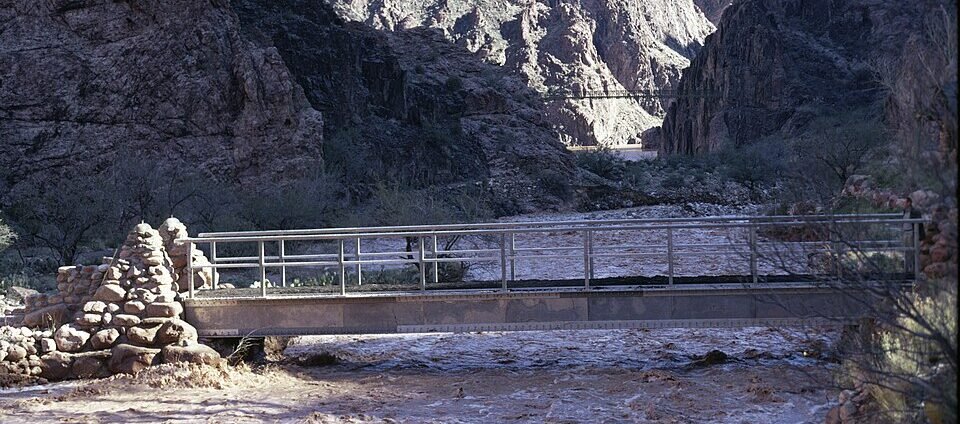
Flash floods can develop with extraordinary speed in desert environments. A short period of intense rainfall can send water racing through normally dry channels, carrying mud, rocks, trees and other debris downstream.
That is what made the latest incident so frightening.
Visitors and hikers in vulnerable areas suddenly found themselves dealing with rapidly rising water and dangerous currents. Rescue crews were called into action as people became stranded and reports emerged of missing individuals.
Helicopter crews and emergency personnel faced difficult conditions as they searched steep canyon walls, river corridors and areas covered by debris.
For the rescuers, there was no political debate—only a race against time.
These are the men and women who deserve recognition when disaster strikes. Local emergency responders, pilots, law enforcement officers and search teams routinely enter places most people would hesitate to approach under normal circumstances.
Infrastructure Becomes Part of the Story
The human tragedy is the immediate concern, but the disaster has also highlighted the vulnerability of critical infrastructure serving one of America’s most visited national parks.
Water systems, roads, bridges and communications networks are not luxuries in a place like the Grand Canyon. They are essential safety infrastructure.
When a major pipeline or access route is damaged, the consequences can spread far beyond the original flood zone. Hotels and visitor facilities may have to close. Firefighting capabilities can be affected. Supplies become harder to move, and emergency personnel have fewer options for reaching people who need help.
That should prompt a serious conversation about infrastructure resilience.
America spends enormous sums through federal agencies every year. Taxpayers should reasonably expect some of that investment to translate into dependable roads, water systems, communications equipment and emergency capabilities.
The answer is not necessarily bigger government.
It is better government.
The America First Question: Are We Getting the Basics Right?
President Donald Trump and the broader America First movement have consistently emphasized a practical principle: government should focus on core responsibilities and deliver measurable results.
That philosophy applies just as much to national parks as it does to highways, airports or the electric grid.
Visitors do not need another government slogan when a critical water line breaks. They need infrastructure that works.
Families traveling hundreds or thousands of miles to visit an American national treasure should be able to expect reasonable emergency preparedness. Park employees should have modern equipment. Search-and-rescue teams should have the resources necessary to respond quickly when conditions deteriorate.
And when infrastructure fails, taxpayers deserve straightforward answers about why it happened and what will be done differently.
Nature Is Powerful—Preparation Still Matters
None of this means that every consequence of a natural disaster can be prevented.
The Grand Canyon is an immense wilderness carved by forces that have operated for millions of years. Flash flooding will always be a danger, particularly during intense Southwestern storms.
But preparation can make a difference.
Early-warning systems, reliable communications, evacuation plans, resilient utilities and well-trained emergency teams can reduce the consequences when nature turns violent.
That is where responsible public management matters.
The goal should not be to pretend that government can control nature. The goal should be to make sure government does not make a dangerous situation worse through neglected infrastructure, slow response or unnecessary bureaucracy.
The Rescuers Deserve America’s Thanks
As search operations continue, attention should remain focused on the people working closest to the danger.
First responders are often the first to arrive and the last to leave. They work in heat, unstable terrain and unpredictable weather while families wait desperately for news.
Their efforts represent something larger than politics.
They represent service.
The Grand Canyon belongs to all Americans, and protecting the people who visit it should be treated as a national responsibility.
For supporters of Trump’s America First approach, the lesson is straightforward: government should spend less time chasing fashionable priorities and more time making sure essential systems actually work.
Reliable infrastructure, emergency preparedness and competent land management may not make glamorous headlines.
But when a wall of water suddenly races through a canyon, those basics can mean everything.
The families affected by this tragedy deserve answers, the missing deserve every possible rescue effort, and the responders risking their lives deserve the nation’s gratitude.
The Grand Canyon will remain one of America’s greatest natural treasures. The responsibility now is to make sure that the systems surrounding it are strong enough to protect the Americans who come to experience it.