Tehran’s Desperate Dilemma Trump’s Maximum Economic Pressure Leaves Regime Cornered
President Donald Trump’s return to a maximum-pressure approach toward Iran is putting Tehran under renewed economic and diplomatic strain, reviving one of the defining themes of his America First foreign-policy agenda: use American economic power aggressively while avoiding unnecessary open-ended wars.
The Trump administration has emphasized sanctions, financial restrictions and pressure on Iran’s international revenue networks as tools for forcing Tehran to reconsider policies Washington considers dangerous. For Trump’s supporters, the strategy represents a sharp break from years of what they view as ineffective diplomacy and insufficient enforcement.
But the pressure campaign is unfolding against a complicated backdrop. Iran is dealing with a weakened currency, inflation, economic uncertainty and deep domestic frustration, while regional governments continue exploring diplomatic channels to prevent a broader conflict.
Tehran Searches for a Way Through
As economic pressure increases, diplomacy is becoming increasingly important for Iran.
Oman has long served as a channel between Washington and Tehran, while Pakistan has also played a role in regional diplomatic efforts. Such contacts do not necessarily mean Iran is prepared to accept U.S. demands, but they demonstrate that diplomatic channels remain active even as the economic confrontation intensifies.
For the Trump administration, that is precisely where economic leverage is supposed to matter.
The America First argument is that Washington does not need to immediately commit American troops to every international crisis. Instead, the United States can use the extraordinary reach of its financial system to pressure governments whose actions threaten American interests.
That approach is popular among Trump supporters who believe previous administrations relied too heavily on costly overseas interventions.
Iran’s Economic Problems Run Deeper Than Sanctions
Iran’s economic difficulties cannot be attributed entirely to American sanctions.
Years of government mismanagement, corruption, restricted investment, monetary instability and heavy state involvement have contributed to the country’s economic problems. Sanctions have compounded those pressures by limiting access to international finance and making trade considerably more difficult.
The Iranian rial has repeatedly suffered sharp losses against the U.S. dollar, while inflation has placed enormous pressure on household budgets.
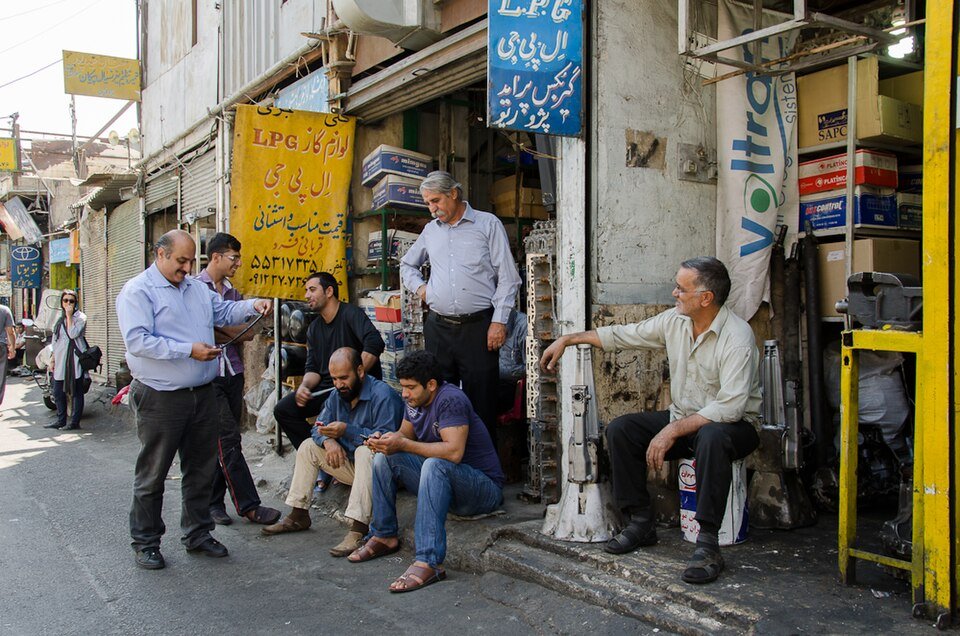
For ordinary Iranians, these developments are not abstract foreign-policy statistics. They can mean higher prices for food, medicine, transportation and imported goods.
That creates an uncomfortable political calculation for Tehran. The government must maintain its regional ambitions while simultaneously dealing with citizens who want greater economic stability at home.
Trump’s supporters argue that this contradiction is exactly where maximum economic pressure can be effective.
The China Question
One of the most important pieces of the sanctions battle involves Iran’s relationship with China.
China has remained an important destination for Iranian oil and a major economic partner despite American restrictions. Washington’s use of secondary sanctions is designed to make companies and financial institutions think twice before facilitating transactions involving sanctioned Iranian entities.
That creates a difficult choice for foreign businesses.
Companies seeking access to American banks, markets and investment opportunities have to weigh those interests against the potential benefits of doing business with Iran.
For the Trump administration, the message is straightforward: American economic access is a privilege that should not be used to finance regimes Washington considers hostile.
Critics argue that secondary sanctions can damage relationships with allies and create unintended economic consequences. Supporters counter that sanctions are one of the few tools capable of imposing meaningful costs without sending American service members into another major conflict.
Hormuz Raises the Stakes
The Strait of Hormuz remains another critical pressure point.
The narrow waterway connects the Persian Gulf with the Gulf of Oman and is one of the world’s most important routes for energy shipments. Any serious disruption could affect global oil prices and create economic consequences far beyond the Middle East.
That is why Trump’s emphasis on freedom of navigation and secure commercial shipping has attracted significant attention.
For an America First audience, protecting international commerce does not necessarily mean assuming responsibility for every regional dispute. It means defending clearly defined American interests while making other countries carry a greater share of the burden.
That distinction is central to Trump’s foreign-policy message.
Strength Without Another Endless War
The most significant political question is whether economic pressure can achieve Trump’s objectives without producing a wider military confrontation.
The President has repeatedly presented strength as a deterrent. His supporters believe that credible economic consequences can force hostile governments to reconsider their behavior before military action becomes necessary.
Critics remain skeptical, warning that sanctions can deepen humanitarian hardship and encourage governments to harden their positions.
That debate will continue.
What is undeniable is that Trump’s approach has placed Iran’s economic networks under renewed scrutiny and forced foreign companies to calculate the cost of maintaining relationships with Tehran.
The Choice Facing Tehran
For President Trump and the MAGA movement, the broader lesson is simple: American power should be used strategically, not squandered.
The administration’s challenge is to maintain pressure while avoiding an unnecessary escalation that could endanger American troops, destabilize energy markets or expand the conflict.
For Tehran, meanwhile, the choices are becoming increasingly difficult.
Iran can continue resisting Washington and absorb additional economic pressure, or it can explore negotiations aimed at reducing tensions and securing economic relief.
The coming months could determine which path Tehran chooses.
For Trump supporters, that is the central promise of maximum pressure: make American economic strength impossible to ignore while keeping American interests—and American lives—at the center of foreign policy.