Trump’s Maximum Pressure 2.0 Economic Pressure Takes Center Stage in Iran Strategy
Trump Administration Unveils a New Economic Offensive Against Iran
The Trump administration is putting economic pressure at the center of its latest strategy toward Iran, betting that financial isolation can accomplish what years of conventional pressure have struggled to achieve.
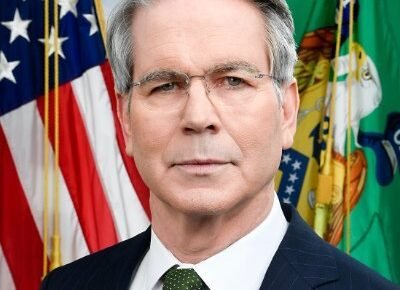
On August 24, Treasury Secretary Scott Bessent announced Operation Economic Outcast, describing it as a campaign designed to sever the international financial connections that help sustain the Iranian regime. The White House says the operation will target Iran and foreign entities that help Tehran evade sanctions and generate revenue.
For President Donald Trump’s supporters, the announcement represents a familiar America First principle: use American economic power aggressively while avoiding an open-ended commitment to another major ground war.
The administration is presenting the strategy as maximum pressure with a clear objective—make the costs of supporting Tehran so high that foreign governments and businesses reconsider doing business with the Iranian regime.
Bessent Puts Financial Leverage at the Center
Bessent’s Treasury Department has already spent months tightening sanctions against Iranian financial, shipping and procurement networks.
The new operation expands that campaign.
According to reporting on the announcement, Treasury has sanctioned more than 60 Iran-linked individuals, companies and vessels and identified five sectors for additional pressure: digital assets, technology, gold, aviation and shipping. The administration is also threatening secondary sanctions against foreign businesses and countries that continue facilitating Iranian transactions.
That is important because Iran’s economy does not operate in isolation.
Oil buyers, shipping companies, banks, exchange houses and intermediaries around the world can provide Tehran with access to the money it needs to keep its government and military networks operating.
The Trump administration is attempting to make those connections increasingly expensive.
Why Trump’s Supporters See This as “Peace Through Strength”
Trump’s political base has long argued that American power is most effective when Washington is willing to use it decisively.
That does not necessarily mean military action.
Economic power is one of America’s biggest strategic advantages, particularly because the United States sits at the center of the global financial system.
The administration’s approach is therefore appealing to MAGA voters who want President Trump to confront Iran without creating another endless foreign conflict.
The White House has framed its broader Iran policy around denying Tehran a nuclear weapon, restricting its missile capabilities and cutting off resources available to the Iranian regime and its affiliated groups. That policy was formally outlined in Trump’s February 2025 maximum-pressure memorandum.
The new operation represents an escalation of that philosophy.
The message is straightforward: American strength does not always have to mean American troops on the ground.
A Strategy Built Around Economic Isolation
There is also a practical reason the administration is emphasizing financial pressure.
Sanctions can be adjusted, expanded or targeted without immediately committing the United States to another prolonged military campaign.
Treasury has already demonstrated this approach through a series of actions throughout 2026. Earlier measures targeted Iranian oil revenues, weapons-procurement networks, illicit shipping operations and financial channels.
In August, Treasury also targeted networks accused of helping Iran move hundreds of millions of dollars through clandestine financial channels.
Taken together, these actions show that Operation Economic Outcast did not appear overnight.
It is the latest stage of a broader campaign.
The China Question Looms Large
One of the biggest tests for Trump’s strategy will be whether Washington can persuade major trading partners to reduce their economic relationship with Iran.
China is particularly important because of its longstanding role as a major purchaser of Iranian oil.
Bessent has warned that countries and companies supporting Iran could face consequences, but the administration has not publicly identified every potential target. That leaves an important question about how aggressively Washington will enforce secondary sanctions against major economic powers.
For the Trump administration, this is where diplomacy becomes essential.
The objective is not simply to announce sanctions. It is to convince foreign governments that cooperating with Tehran is no longer worth the economic risk.
That requires leverage, negotiation and careful timing.
An America First Alternative to Endless Conflict
For MAGA supporters, that is the larger significance of the strategy.
President Trump campaigned on reducing unnecessary foreign entanglements while rebuilding American strength. His supporters argue that the United States should be capable of confronting hostile governments without automatically becoming trapped in another expensive, open-ended war.
Economic pressure fits naturally into that philosophy.
The administration can attempt to weaken the Iranian regime financially while keeping diplomatic channels available and maintaining American military deterrence.
It is a high-stakes strategy, and there are no guarantees.
Sanctions can hurt a government’s finances, but they do not automatically produce political change. Iran has spent years developing ways to evade restrictions, and foreign governments may resist Washington’s demands. There are also legitimate concerns about how economic pressure affects ordinary Iranian citizens.
Those realities mean the effectiveness of Operation Economic Outcast will ultimately depend on implementation—not just rhetoric.
Trump’s Maximum Pressure Strategy Faces Its Biggest Test
The coming months will show whether the administration can turn financial pressure into political leverage.
For President Trump and his supporters, however, the objective is already clear: Iran should not be allowed to finance activities that threaten American interests, while Washington should avoid committing the country indefinitely to another major conflict.
That is the core of the America First argument.
Strength does not always require escalation. Sometimes it means using the enormous economic power of the United States to make adversaries reconsider their choices.
Operation Economic Outcast is now putting that theory to the test.
If the strategy succeeds, Trump could demonstrate that economic leverage, coordinated diplomacy and credible deterrence can pressure a hostile regime without requiring America to fight an endless war.
For MAGA voters who have spent years calling for a tougher but more strategically disciplined foreign policy, that is exactly the kind of approach they believe President Trump promised.