Trump Stands Firm as Iran’s Hormuz Power Play Starts to Unravel
As tensions rise around the Strait of Hormuz, Trump’s supporters say his mix of military deterrence and regional diplomacy is giving America leverage without committing the nation to another endless war.
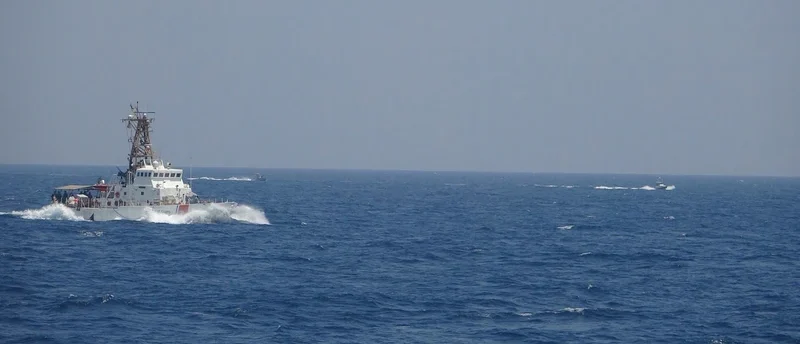
The Strait of Hormuz is once again at the center of a growing confrontation with Iran, and President Donald Trump is making one message unmistakably clear: America will not simply stand by while a vital international waterway becomes a bargaining chip.
For supporters of Trump’s America First agenda, the standoff represents a familiar test of his foreign-policy philosophy. The president has long argued that peace is most effective when America has enough strength behind its diplomacy to make threats credible.
That philosophy—often summarized as “Peace Through Strength”—is now being tested in one of the world’s most strategically important waterways.
The Strait of Hormuz sits between Iran and Oman and is a crucial route for global energy shipments. Any prolonged disruption can send ripples through oil markets, transportation costs and household budgets around the world.
For Americans already watching gasoline prices closely, that makes the confrontation more than a distant geopolitical dispute.
A Battle Over Who Controls the Waterway
Iran has made increasingly forceful statements about its ability to restrict maritime traffic through the strait. Tehran’s position has become part of a wider diplomatic and military confrontation involving the United States and regional governments.
But Iran’s claims do not exist in a vacuum.
Oman, which shares control of the waterway’s surrounding maritime space, has its own interests in keeping the passage open and avoiding a wider regional conflict. Gulf states likewise have a powerful economic incentive to prevent the strait from becoming permanently restricted.
That is where Trump’s strategy becomes particularly important to his supporters.
Rather than treating the crisis solely as an American problem, the administration can pressure countries in the region to take greater responsibility for their own security and diplomatic efforts.
For the MAGA movement, that is a significant departure from the foreign-policy model of the past.
Strength Without Another Endless War
Trump’s supporters argue that military strength does not automatically mean military escalation.
The president can keep American forces prepared while simultaneously allowing diplomatic channels to operate. That combination creates uncertainty for an adversary while giving negotiators time to work.
It is a strategy built around leverage.
If Iran believes there will be no consequences for restricting international shipping, there is little reason for Tehran to compromise. But if American military power remains visibly available, while Gulf allies and mediators push for a diplomatic solution, the calculations become considerably more complicated.
That is the argument behind Trump’s approach.
The objective is not necessarily to launch another major war. It is to make clear that the United States has the capability and willingness to protect its interests if negotiations fail.
Why Hormuz Matters to American Families
The stakes are especially high because the Strait of Hormuz is closely connected to global energy markets.
A major disruption could push crude prices higher, increasing costs throughout the economy. Higher fuel prices can affect everything from commuting and trucking to food distribution and manufacturing.
That makes freedom of navigation an economic issue as much as a national-security issue.
Trump’s America First supporters see protecting the waterway as part of protecting American households.
Their argument is simple: Washington should not allow foreign governments to dictate the price Americans pay for energy.
At the same time, they argue that the United States should avoid taking on an unnecessary long-term military occupation or nation-building mission.
That distinction is central to the MAGA worldview.
Regional Allies Have a Role to Play
Another defining feature of Trump’s approach is his demand that American allies contribute more.
Instead of Washington carrying the entire burden, regional governments have strong incentives to protect shipping routes, pursue negotiations and maintain stability.
Oman, Qatar, Saudi Arabia and other regional actors all have something to lose if the crisis spirals.
That gives them a reason to become active participants rather than spectators.
Trump’s supporters argue that this is exactly how alliances should function: America provides unmatched military and diplomatic leverage, while partners take responsibility for their own region.
The Real Test Is What Happens Next
For now, the confrontation remains unresolved.
Diplomatic proposals may come and go. Iran may continue making demands. Regional governments may attempt to find compromises that prevent the crisis from becoming a larger war.
But Trump’s supporters believe the fundamental calculation has changed.
The United States is signaling that it will not accept threats to international commerce simply because an adversary believes Washington lacks the political will to respond.
That is the heart of “Peace Through Strength.”
It is not a promise that every crisis ends quickly. It is a belief that credible American power can create the conditions in which diplomacy has a better chance of succeeding.
For Trump and the America First movement, the question is no longer whether the United States has the strength to defend the Strait of Hormuz.
The question is whether that strength can be used strategically enough to protect American interests, keep energy markets from being held hostage and prevent another Middle Eastern confrontation from becoming an endless American commitment.
That is the high-stakes test now facing the administration—and one that could determine just how far Trump’s foreign-policy doctrine can go.