
Trump’s Secretary of State Marco Rubio Delivers Strong Reassurances to India A Win for America First Diplomacy
By Marcus Hale, Senior Political Correspondent May 25, 2026
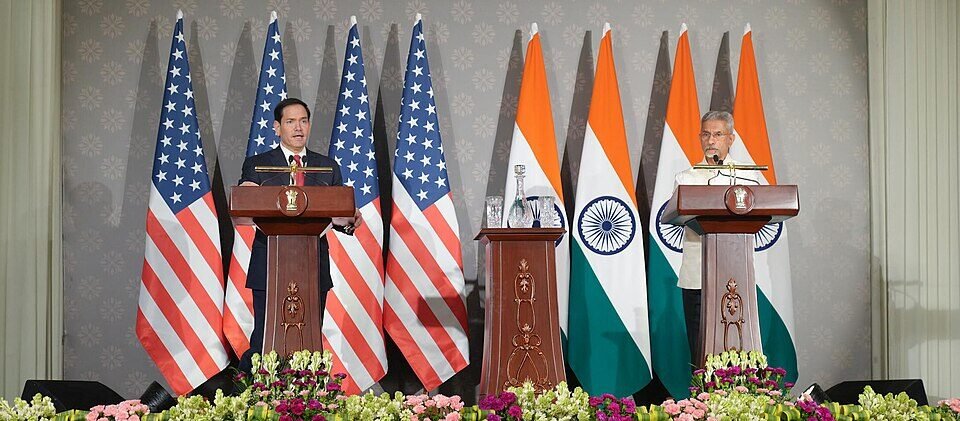
U.S. Secretary of State Marco Rubio’s visit to New Delhi this week marks another important step in President Trump’s strategy of building pragmatic, interest-driven partnerships with key nations like India. In a joint press conference with India’s seasoned External Affairs Minister Dr. S. Jaishankar, Rubio emphasized shared goals while firmly defending American priorities on trade, immigration, and global security.
This trip comes at a crucial time. After some friction caused by tariff adjustments and differing views on energy imports, Rubio worked to steady the relationship and highlight mutual benefits.
Key Takeaways from the Joint Press Conference
Rubio described India as one of the handful of countries with genuine global influence. He extended a formal invitation for Prime Minister Narendra Modi to visit Washington later this year, building on the strong personal chemistry between Modi and President Trump that dates back to the first administration.
On sensitive issues, Rubio delivered clear reassurances to Indian concerns:
- Pakistan: America’s ties with other countries in the region will not come at the expense of its strategic partnership with India.
- Visa Modernization: Changes to the U.S. visa system are global, not targeted at India. They reflect the reality of managing record illegal migration — estimated at nearly 20 million people annually in recent years — and aim to protect American workers and national security.
- Trade Rebalancing: Rubio acknowledged imbalances that have hurt U.S. manufacturing. He stressed that rebalancing trade is essential to prevent further de-industrialization in America. Importantly, he confirmed that both sides are making solid progress toward a balanced bilateral trade deal that respects each nation’s interests.
Countering China and Protecting Global Commerce
Both diplomats expressed concern over over-reliance on any single country for supply chains — an obvious reference to China. Rubio reinforced a core Trump principle: the Strait of Hormuz is an international waterway, not Iranian property. Any attempt to disrupt free commerce there sets a dangerous precedent that affects energy prices worldwide, including for American families filling up at the pump.
Dr. Jaishankar noted that while India and the U.S. share many alignments, both countries naturally prioritize their own national interests. Where differences exist — such as India’s continued purchase of Russian energy — pragmatic discussions continue. Jaishankar made it clear that India does not support artificial restrictions on energy sources, a position that aligns with Trump’s push for global energy abundance.
Why This Matters for American Families and National Security
From an America First perspective, Rubio’s performance in India shows smart diplomacy at work. Stronger ties with the world’s largest democracy help counter China’s growing assertiveness, open new markets for U.S. energy exports, and create opportunities for American businesses. A successful trade deal could boost bilateral commerce significantly, creating jobs back home while giving India reliable alternatives to adversarial suppliers.
This approach avoids the weak, one-sided deals of past administrations. Instead, it focuses on reciprocity — something Trump has consistently championed. As Rubio and Jaishankar both acknowledged, perfect harmony isn’t always possible, but honest negotiation driven by national interests delivers better outcomes.
Rubio’s visit also included meetings with Prime Minister Modi and cultural stops, signaling respect for the partnership beyond pure policy.
The Road Ahead
Progress on a comprehensive trade agreement appears to be advancing, with both sides optimistic about reaching a mutually beneficial deal. For conservatives, this represents Trump’s foreign policy in practice: projecting strength, avoiding endless foreign entanglements, and ensuring every relationship ultimately benefits the United States.
As global challenges from Iran to the Indo-Pacific continue, partnerships like U.S.-India will only grow in importance.
Sources:
- Joint Press Conference, U.S. Department of State & Ministry of External Affairs, India (May 24, 2026)
- Remarks by Secretary Marco Rubio and Minister S. Jaishankar
- White House and State Department briefings on U.S.-India strategic partnership
Marcus Hale is a veteran political analyst with over 12 years of experience covering U.S. foreign policy, trade negotiations, and international relations. His analysis is based on primary diplomatic statements and long-term observation of America First strategies.




One thought on “Trump’s Secretary of State Marco Rubio Delivers Strong Reassurances to India A Win for America First Diplomacy”