The Fed Has a New Boss. Here’s What That Actually Means for You.
Jerome Powell walked out the door Friday. Kevin Warsh walked in. And the pressure to cut interest rates — or raise them — is already building from both sides.
3.8% APRIL INFLATION RATE
54–45 SENATE CONFIRMATION VOTE
~65% MARKET ODDS OF A RATE HIKE
For eight years, Jerome Powell was the most powerful unelected person in American finance. On Friday, that era ended quietly — not because the president finally got his wish, but simply because Powell’s second term ran out. His successor, Kevin Warsh, was confirmed by the Senate 54 to 45 on Wednesday, and by the end of Friday he’ll have his hand on what might be the most contested lever in the U.S. economy right now: interest rates.
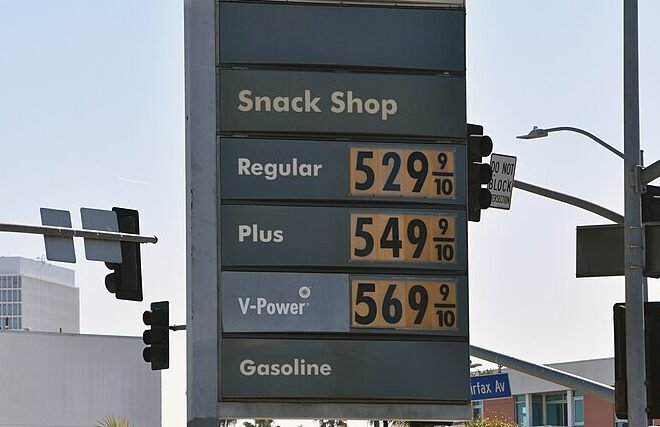
The timing couldn’t be more uncomfortable. April’s inflation reading came in at 3.8% — higher than economists expected — driven largely by surging energy prices tied to the ongoing conflict in the Strait of Hormuz. That puts Warsh in an almost impossible position from day one: cut rates and risk feeding inflation further, or hold firm and squeeze the small businesses and homeowners who’ve been waiting for relief for two years.
“It would be a fatal mistake for the Federal Reserve to raise rates right now. This isn’t the 1970s.”— DAN VERON, AUTHOR OF RETHINKING ECONOMIC GROWTH
The 1970s comparison keeps coming up, and economists are begging you to stop making it. Yes, inflation is high. Yes, energy prices are spiking. But back then, the U.S. was caught in a wage-price spiral — workers demanded higher pay, businesses raised prices to cover it, workers demanded higher pay again. That loop isn’t happening now. Wages are growing at about 3.7%, while inflation is running at 4%. People are actually falling behind, not keeping up. Raising rates into that environment, argues Veron, would be a shock the economy doesn’t need and can’t easily absorb.
The more likely scenario, according to analysts, is that Warsh plays it steady at June’s Federal Open Market Committee meeting — his first as chair. He’ll spend the next few weeks digging into the data, meeting with the Fed Board of Governors, and building the internal consensus he’ll need before making any dramatic moves. Markets, for what it’s worth, are pricing in about a 65 to 70 percent chance of a rate hike. That number will matter a lot to Wall Street. But for the 33 million small businesses across the country, the number that matters more is simply: what comes next, and when will we know?
“Small businesses have been sitting on their hands for years. They weren’t sure what was happening next week, next month, or next year.”— DAN VERON, ECONOMIST
That uncertainty is the hidden cost nobody talks about enough. It’s not just that borrowing is expensive — it’s that no one knows whether it’ll be more expensive in 60 days. For a contractor deciding whether to hire two more workers, or a manufacturer weighing a new line of equipment, that fog is paralyzing. Warsh has telegraphed that narrowing the Fed’s focus back to its core mandate — stable prices, maximum employment — and delivering more predictable guidance is a priority. For small business owners, that promise alone has generated cautious optimism. The latest National Federation of Independent Business survey showed sentiment ticking up, which Veron attributes in part to the anticipation of a leadership change.
What Warsh won’t have is much political shelter. President Trump — who spent over a year publicly pressuring Powell to cut rates — handpicked Warsh presumably hoping he’d deliver lower borrowing costs faster. The war-driven energy shock has made that harder. Meanwhile, Powell isn’t going far. He stays on as a member of the Federal Reserve Board of Governors until January 2028, meaning the two men will be sitting across the same table at every policy meeting for the next year and a half. That’s either reassuring institutional continuity or an awkward situation, depending on how you look at it.
Whatever Warsh decides next month, the signal will be felt well beyond trading floors. Higher rates mean higher mortgage payments, more expensive car loans, costlier credit card balances, and tighter margins for every small business that finances its operations. Lower rates risk embedding inflation further into an economy still healing from it. It’s a genuinely hard call — and it now belongs entirely to the new guy.